Key takeaways
- Shoulder arthroscopy fluid volumes are too large for absorbency alone, so drapes rely on an impervious sheet, an adhesive seal and a pouch.
- In the beach-chair position fluid runs down the body from a high shoulder; in the lateral position it runs towards the axilla and back.
- Lateral positioning adds a traction sleeve and a planned junction between sterile and non-sterile equipment.
- An impervious stockinette keeps the hand and forearm out of the field in both positions.
Of the joints routinely examined with an arthroscope, the shoulder is probably the most awkward to drape. It sits at the junction of the neck, chest, back and arm, with no flat surface around it. It cannot be isolated with a tourniquet. And the operation depends on a continuous flow of irrigation fluid, much of which leaves the joint through the portals and runs over the patient. A shoulder drape has to seal on an irregular surface, keep the whole arm sterile and mobile, and deal with a volume of water that would overwhelm an ordinary absorbent sheet.
Shoulder arthroscopy is performed in one of two positions, the beach-chair and the lateral decubitus, and the draping differs between them. The choice of position belongs to the surgeon; the notes here are general and are not a substitute for local protocol.
Why fluid dominates the design
Arthroscopy works by distending the joint with fluid, usually delivered by a pump or by gravity from large bags, so that the surgeon has a clear view and bleeding is controlled by pressure. Over the course of a shoulder procedure the total volume commonly runs to many litres. Some returns through the outflow, and the rest escapes around instruments and through portals each time an instrument is changed.
Absorbent material cannot hold volumes of that order. A shoulder arthroscopy drape therefore relies on three things working together:
- an impervious sheet around the joint, so that nothing soaks through to the patient or the table;
- an adhesive seal against the skin, so that fluid cannot run under the drape and down the patient’s back or chest;
- a collection pouch at the lowest point, to capture run-off and send it to suction.
If any of the three fails, the result is a wet patient, a wet floor and a wet surgeon. The principles are shared with other irrigated procedures and are explained in our guide to fluid management in the operating theatre.
The pouch
The pouch on a shoulder arthroscopy drape is a clear film bag bonded to the drape around or below the opening. Its mouth is usually stiffened with a mouldable strip so that it can be shaped to stand open and to sit close under the shoulder. One or more ports at the base connect to suction tubing.
Points that separate a good pouch from a poor one include:
- Capacity and seam strength, since a full pouch is heavy and hangs from the drape.
- A rim that holds its shape when wet and when leaned upon.
- A port that fits the tubing in use and sits at the true low point, so the pouch empties instead of pooling.
- A position that does not obstruct the posterior portal or the surgeon’s stance.
The beach-chair position
In the beach-chair position the patient is semi-seated, with the back of the table raised, the head supported and the operative shoulder brought clear of the table edge.
For draping, the key fact is that the shoulder is high and the body slopes away below it. Fluid runs down the back, the chest and the arm. The usual layout is:
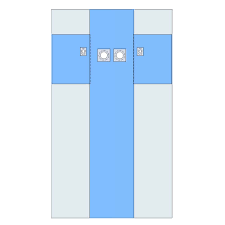
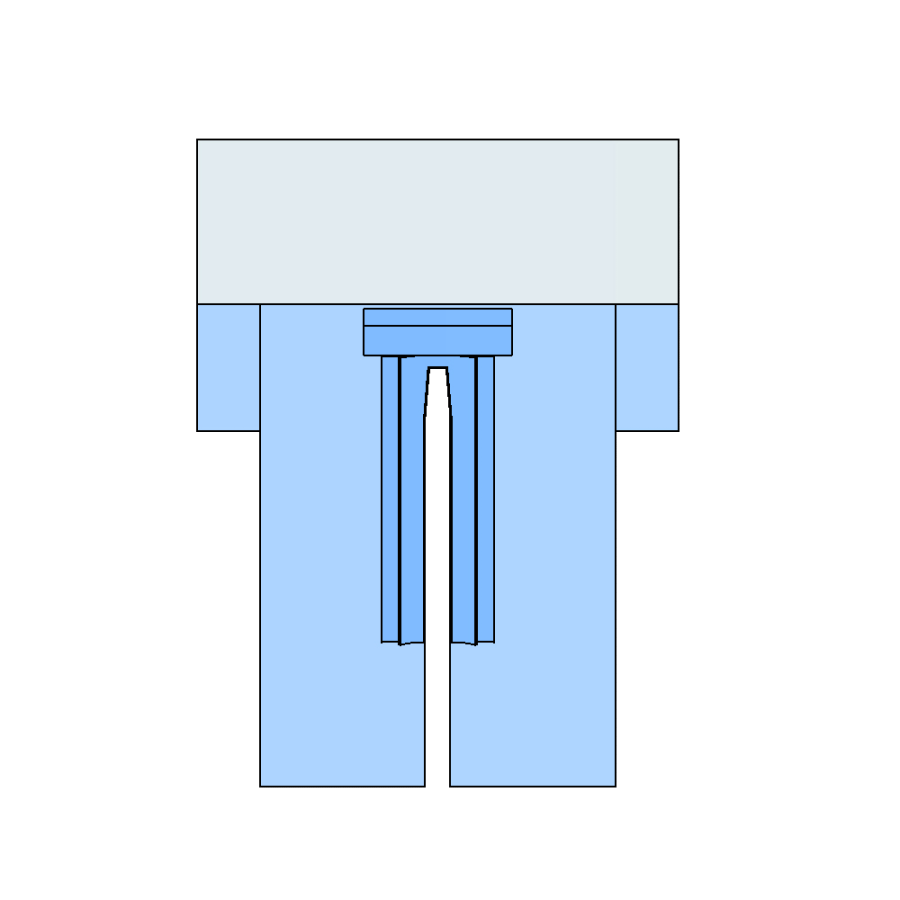
- An impervious split sheet (U-drape) applied from below, with the base of the U in the axilla and the adhesive tails brought up over the front and back of the shoulder.
- A second split sheet or a top sheet from above, closing the field at the neck and forming the anaesthesia screen.
- Alternatively, a single drape with an elastic or adhesive fenestration through which the arm and shoulder are passed, with the pouch built in below.
The arm is prepared and draped free so that the surgeon or an assistant can move it. It may rest on a padded support or be held in a sterile limb positioner attached to the table.
The lateral decubitus position
In the lateral position the patient lies on the non-operative side, and the operative arm is suspended in traction: the forearm and hand are held in a sleeve connected by a cord to weights over a pulley tower. Traction opens the joint space and gives a stable, hands-free view.
The draping consequences are different from the beach-chair set-up:
- The arm points upwards and away from the patient, so fluid tends to run down towards the axilla, neck and back.
- The traction equipment crosses the boundary of the sterile field. The sleeve around the forearm and hand is sterile, while the tower and weights are not, and the join between them has to be planned.
- The pouch sits beneath the shoulder on the posterior side, where most of the outflow collects in this position.
- The patient’s head and airway are close to the field and largely hidden, so the screen between the surgical and anaesthesia teams needs care.
| Aspect | Beach-chair | Lateral decubitus |
|---|---|---|
| Patient position | Semi-seated, shoulder off the table edge | On the side, operative shoulder uppermost |
| Arm | Free, or in a sterile limb positioner | Suspended in traction through a sterile sleeve |
| Direction of run-off | Down the back, chest and arm | Towards the axilla, neck and back |
| Pouch position | Below the shoulder, front and back | Beneath the shoulder, mainly posterior |
| Particular draping concern | Seal at the neck and base of the shoulder | Sterile and non-sterile junction at the traction device |
Covering the arm: stockinette and wraps
In both positions the hand and forearm, which are difficult to prepare thoroughly, are enclosed. The standard item is an impervious stockinette: a tubular cover rolled up the arm from the hand, usually to above the elbow, and secured with a cohesive bandage or adhesive tape. It keeps the hand out of the field, gives the assistant something sterile to hold and stops fluid tracking along the skin.
In the lateral position the traction sleeve is applied over or in place of the stockinette, depending on the system in use. Both items are normally part of the drape set. The wider family of limb drapes is described in our article on orthopaedic draping systems.
What a shoulder set usually contains
A complete set for shoulder arthroscopy generally includes the main drape or split sheets with pouch, an arm stockinette, adhesive tape strips, a camera cover, a table cover and a mayo stand cover. Tube holders on the drape keep the camera cable, light lead, inflow, outflow and shaver lines from pulling on the field. When comparing products, check:
- which position the drape is designed for, since few suit both equally well;
- the adhesive area and how it performs on skin still slightly damp from preparation;
- the barrier standard and level of the impervious zone.
Shrisay Medical manufactures shoulder arthroscopy drapes in Faridabad, made to order for the position and pack configuration a team prefers; to discuss a specification, please contact us.
Frequently asked questions
Can the same drape be used for beach-chair and lateral shoulder arthroscopy?
Some general split-sheet sets can be adapted to both, but pouch position and arm handling differ, so most drapes are designed with one position in mind.
Why does a shoulder arthroscopy drape need a pouch with a drain port?
The procedure uses many litres of irrigation fluid, far more than an absorbent layer can hold. The pouch collects run-off and the port connects it to suction.
What is the stockinette for?
It is an impervious tubular cover rolled over the hand and forearm, which are hard to prepare fully. It keeps them out of the sterile field while leaving the arm free to be moved.