Key takeaways
- A surgical drape isolates the prepared operative site from non-sterile surfaces and must keep doing so when wet and under strain.
- Most draping set-ups are built from a few basic forms: plain sheets, fenestrated drapes, split drapes, incise films and equipment covers.
- Fabric weight alone does not describe barrier performance; ask for test data against a recognised standard.
- Features such as reinforcement, pouches and tube holders exist to control fluid and keep the field orderly, so specify only those the procedure needs.
A surgical drape is a sterile barrier sheet placed over the patient, and over the furniture and equipment close to the operative site, to create and maintain a sterile field. Its task is easy to state and hard to achieve: stop micro-organisms and fluids passing between non-sterile and sterile areas while the material is wetted, stretched, leaned on and repositioned for the length of an operation. This guide explains the main drape types, the materials they are made from, and what each part of a modern drape is there to do.
What a surgical drape is expected to do
Skin can be disinfected but not sterilised, and the theatre table, the patient’s gown and the anaesthetic equipment are not sterile at all. The drape separates the prepared incision site from everything around it. To do that reliably it needs several properties at once:
- Resistance to liquid penetration. Blood, irrigation fluid and skin-prep solution must not soak through, because a wet pathway through a drape can carry micro-organisms with it. Theatre staff usually call this strike-through.
- Resistance to microbial penetration in both dry and wet conditions.
- Low linting. Loose fibres and particles can settle in the wound and carry organisms with them.
- Strength. Adequate tensile and burst strength, wet and dry, so the drape does not tear when it is pulled, clipped or leaned on.
- Drapeability. It has to conform to the patient and stay where it is placed.
- Fluid control. Absorbing or channelling fluid rather than letting it pool under the patient or run to the floor.
The main types of surgical drape
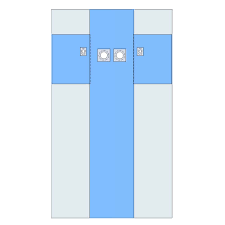
Most draping set-ups are assembled from a small number of basic forms. Procedure-specific drapes simply combine several of these in one piece so that the team has fewer items to open and place.
| Type | What it is | Typical use |
|---|---|---|
| Plain sheet | Rectangular sheet, with or without an adhesive edge; sold as side, top, bottom or utility drapes | Squaring off a site, covering the legs or head end, back-table covers |
| Fenestrated drape | Sheet with an opening (aperture) positioned over the operative site | Minor procedures, line insertion, abdominal and eye surgery |
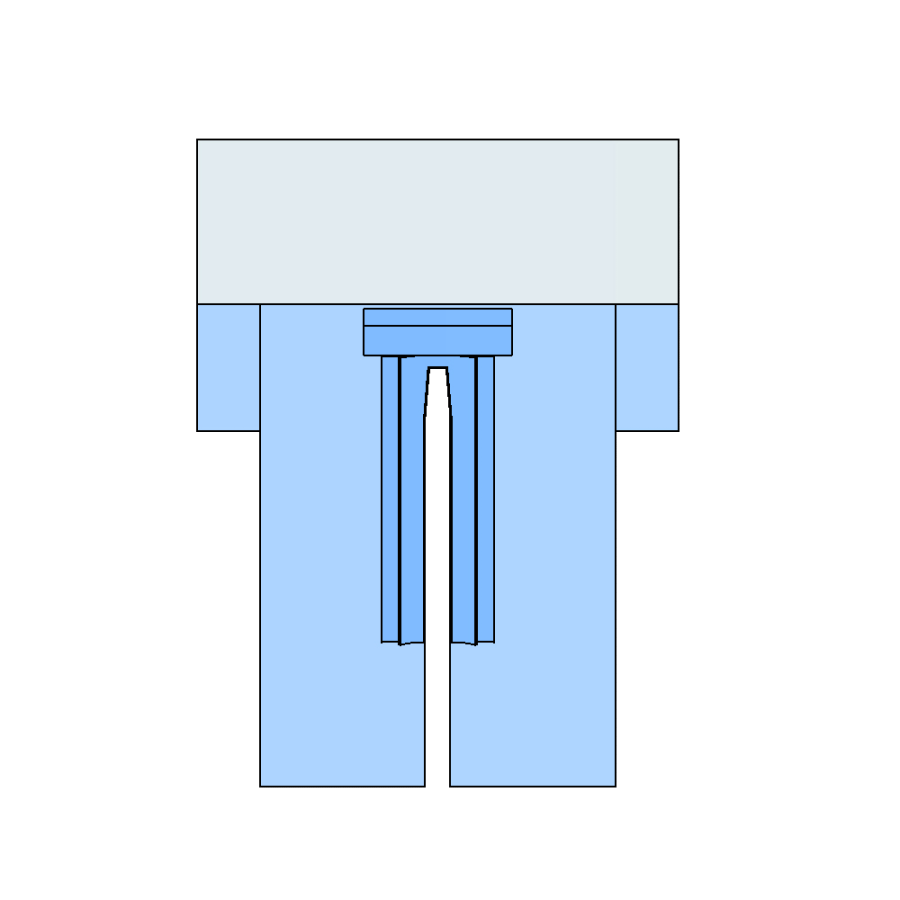
| Split or U-drape | Sheet with a U-shaped slit, usually adhesive-edged | Limbs, head and neck, isolating the perineum |
| Incise drape | Thin transparent adhesive film applied to the prepared skin | Where the team wants skin covered up to the wound edge |
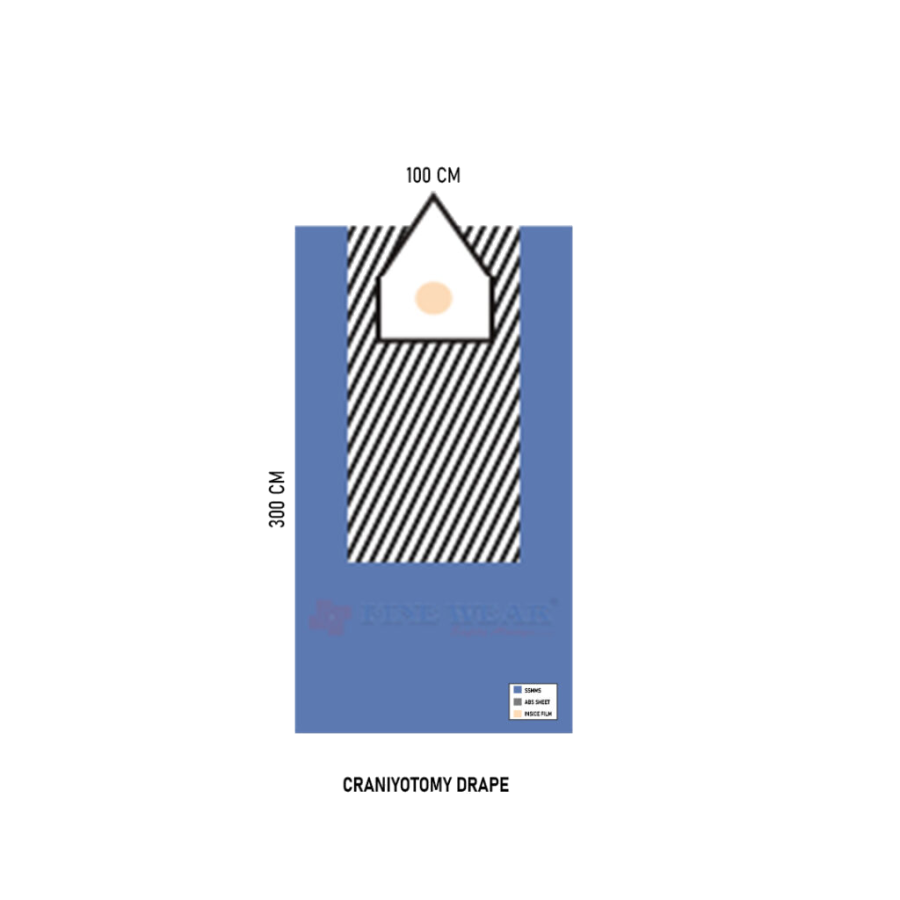
| Procedure-specific drape | One large drape with fenestration, reinforcement and pouches built in | Laparotomy, caesarean section, hip, knee, lithotomy, ophthalmic |
| Equipment cover | Shaped covers for Mayo stands, tables, cameras, microscopes and C-arms | Bringing non-sterile equipment into or next to the field |
The full surgical drapes range shows how these forms are adapted to individual specialities.
Materials: what drapes are made from
Single-use drapes are made from non-woven fabrics, plastic films, or laminates of the two. The common constructions are:
- SMS polypropylene (spunbond–meltblown–spunbond). The outer spunbond layers give strength and the fine meltblown layer in the middle provides most of the barrier. It is light, breathable and repellent rather than absorbent, and is widely used for general drapes and table covers.
- Spunlace, typically a hydroentangled blend of wood pulp and polyester. It is softer and more cloth-like, drapes well, and is treated to repel fluid.
- Film laminates. A polyethylene film bonded to an absorbent non-woven face, in two or three layers. The film makes the drape impervious; the non-woven face holds fluid where it lands. These are chosen where fluid volumes are high.
- Reinforcement patches. An extra absorbent or impervious layer bonded around the fenestration, where fluid and mechanical stress are greatest.
Reusable drapes are made from tightly woven polyester or laminated textiles that are laundered and re-sterilised between uses. Whatever the material, fabric weight in GSM is only an indicator. Two fabrics of the same weight can perform quite differently, so barrier claims should rest on test results rather than weight alone.
Anatomy of a drape: what each part does
- Critical zone. The area around the incision that is most likely to be wetted and handled. It usually carries the reinforcement and is expected to meet the higher barrier requirement.
- Fenestration. The opening through which the surgeon works. Its shape, size and position are matched to the incision and are one of the most commonly customised features.
- Adhesive strips. Skin-friendly adhesive along an edge or around the aperture fixes the drape to the patient so the boundary of the sterile field does not shift.
- Incise film window. Some drapes have transparent adhesive film across the aperture instead of an open hole.
- Fluid collection pouch. A film pocket below or around the site that catches run-off, often with a drain port for suction tubing and a mouldable rim to hold it open.
- Tube and cord holders. Hook-and-loop tabs or punched slots that hold suction tubing, diathermy leads and camera cables on the field.
- Integrated covers. Leggings, arm-board covers or an anaesthesia screen extension built into the main sheet.
- Fold and orientation markings. Printed arrows and “head” or “foot” symbols, with a fold sequence designed so the drape can be opened without the sterile face touching anything non-sterile.
Standards that describe drape performance
Three documents are referred to most often. EN 13795-1 sets requirements and test methods for surgical drapes and gowns, with standard-performance and high-performance classes and separate limits for critical and less critical product areas. AAMI PB70 classifies liquid barrier performance in four levels, Level 4 being the highest. In India, IS 17334:2019 is the Bureau of Indian Standards specification covering surgical gowns and surgical drapes. Each is revised from time to time, so check the current official text when writing a tender or specification. Our quality and certifications page sets out how we approach compliance.
What to check before you specify a drape
Before requesting quotations, it helps to have clear answers to a few questions:
- Which procedure and patient position is the drape for, and how much fluid is expected?
- Which standard and performance class does your hospital require, and can the supplier provide test reports for the fabric used in the critical zone?
- What fenestration size and position suit your surgeons’ usual incision?
- Which features are actually used in theatre, and which only add cost and waste?
- How is the drape folded, packed and sterilised, and how is each lot traced?
Shrisay Medical manufactures single-use surgical drapes in Faridabad and customises sizes, fenestrations and pack contents to requirement; you can send us your specification to discuss a suitable construction.
Frequently asked questions
What is the difference between a surgical drape and a surgical sheet?
In practice the terms overlap. A drape is any sterile barrier used to establish the sterile field; plain rectangular drapes are often called sheets, while shaped or fenestrated designs are simply called drapes.
Does a heavier GSM mean a better drape?
Not necessarily. Weight indicates how much material is present, but barrier performance depends on the construction and treatment of the fabric and should be confirmed by test results against a recognised standard.
Are all surgical drapes sterile?
Drapes used to create a sterile field are supplied sterile or sterilised before use. Some manufacturers also supply non-sterile drapes in bulk for inclusion in packs that are sterilised later, so always check the label.