Key takeaways
- Cardiac draping has to cover a chest field and a leg field at once, often with the groins kept accessible.
- All-in-one drapes cut draping time and joins, while component sets cope better with variation between cases.
- The reinforced zone around the sternotomy is wide because it stays wet and under pressure for hours.
- Tube holders and pouches should be positioned where the team actually routes its bypass and suction lines.
Open-heart surgery asks more of a draping system than almost any other operation. The field is not one site but two or three: the chest for the sternotomy, one or both legs for harvesting the saphenous vein, and sometimes a forearm for the radial artery or a groin for femoral cannulation. The case runs for hours, a large volume of blood and irrigation crosses the drapes, and a dense set of lines connects the patient to the heart–lung machine.
This guide looks at how cardiovascular drapes are designed around those conditions and what a buyer should check. It is a general description; positioning, the extent of skin preparation and the draping sequence are decided by the surgical team and hospital protocol.
What makes cardiac draping different
A laparotomy drape frames a single window on a patient who stays still. A cardiac drape has to cope with several demands at the same time.
- Extent of exposure. For coronary artery bypass grafting (CABG) the patient is commonly prepared from the neck to the feet, with the legs prepared all the way round, so that conduit can be harvested and the groins remain available.
- Duration. Hours of continuous wetting, with forearms and retractors pressing on the same areas, test a barrier far harder than a short case does.
- Fluid. Blood, irrigation and, in some techniques, cold saline or slush used for topical cooling all reach the drape surface.
- Equipment. Bypass tubing, cardiotomy and cell-salvage suction, diathermy, the sternal saw lead, pacing wires and defibrillator leads all leave the field in different directions.
- A crowded head end. The anaesthesia team works at the neck with central lines and often an echocardiography probe, so the screen between the two teams has to be high, stable and well sealed.
Layouts: component sets and all-in-one drapes
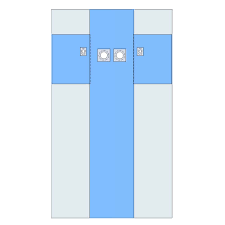
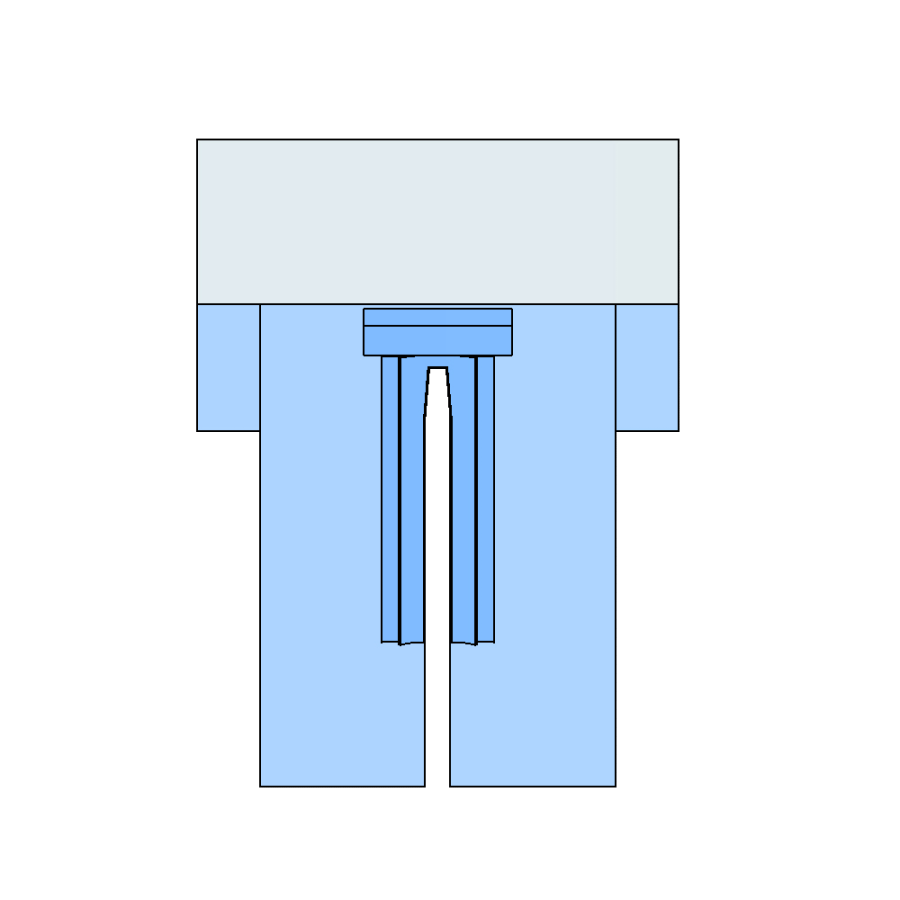
There are two broad ways of covering a cardiac patient. The first builds the field from separate pieces: utility drapes to square off the chest, a sheet under the legs, a split sheet brought up around them, and a large top sheet that forms the anaesthesia screen. The second uses a single large cardiovascular drape with a chest fenestration and a leg opening already in position, which unfolds towards the head and the feet in a set sequence.
| Layout | How it is built | Typical use | Points to check |
|---|---|---|---|
| Component set | Utility drapes, split sheet, leg sheet and top sheet applied one by one | Teams that vary the exposure from case to case | More steps and more joins; each overlap must be secure |
| All-in-one chest and leg drape | One drape with chest fenestration, leg opening, reinforcement and tube holders | Routine CABG with vein harvest | Fenestration positions must suit the patient range and the surgeon’s incisions |
| Chest-only drape | Large sheet with a single sternal or thoracic fenestration | Valve and other procedures without leg harvest | Whether groin access can still be obtained if needed |
| Paediatric cardiac drape | Scaled-down sheet and fenestration, often with clear panels | Congenital cardiac surgery | Weight on the child and visibility for anaesthesia |
Neither approach is better in principle: a one-piece drape shortens draping time and removes joins, while a component set tolerates variation between teams. The general logic of matching a drape to an operation is covered in our guide to choosing the right surgical drape for a procedure.
The leg field and conduit harvest
The leg is the part of cardiac draping with no real equivalent elsewhere. Because the limb is prepared circumferentially, it has to be lifted while an impervious sterile sheet is placed beneath it. The feet, which are difficult to prepare reliably, are usually enclosed in impervious foot covers or stockinette, and the perineum is excluded with an adhesive drape or towel according to local practice.
The design consequences are practical ones:
- The under-leg sheet needs an impervious layer, since it sits in pooled fluid for the whole harvest.
- The leg opening must be long enough for an open harvest along the length of the vein, yet still usable when the harvest is endoscopic and made through short incisions.
- Endoscopic harvesting adds a camera, a light cable and insufflation tubing, each of which needs a route off the field and a sterile camera cover.
Fluid control and reinforcement
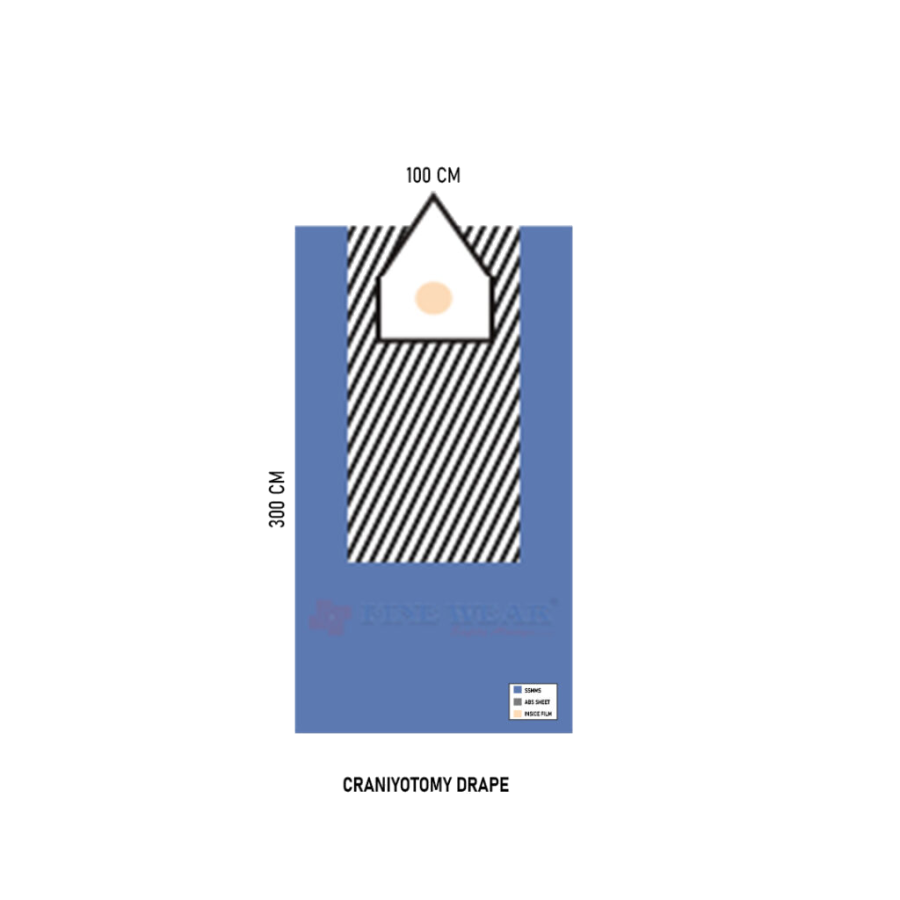
The area around a sternotomy is wet and heavily loaded for the whole case. The sternal retractor spreads the wound, hands and forearms rest beside it, and instruments are parked on the patient’s abdomen and thighs. A cardiovascular drape therefore carries a wide absorbent reinforcement around the chest opening, backed by an impervious film, and this panel is generally larger than on a general surgery drape.
Much of the blood in cardiac surgery is recovered by suction and returned to the patient, so the drape’s role is to keep what escapes from soaking through or running to the floor. Side pouches along the chest catch run-off and also serve as a place to hold suction tips and diathermy pencils. Strike-through is the main risk on a long case, and it is discussed further in our article on fluid management in the operating theatre.
Lines, tubing and organisers
The bypass circuit is the feature that most clearly sets a cardiac field apart. Arterial and venous lines, cardioplegia tubing and suction lines run from the chest to the perfusionist, and a line that is pulled or kinked is a clinical problem, not a housekeeping one. How lines are routed and fixed is for the surgeon and perfusionist to decide. What the drape can offer is a means of fixing them without piercing the barrier.
- Tube holders. Hook-and-loop or perforated tabs bonded to the drape hold tubing and leads in place of penetrating clips.
- Instrument pouches. Open-topped pockets on either side of the chest keep frequently used instruments off the patient.
Specification points for buyers
When cardiovascular drapes are being evaluated or written into a tender, the following questions bring out most of the differences between products:
- What are the overall dimensions, and do they cover the armboards and form an adequate anaesthesia screen on your tables?
- Where are the chest and leg openings, how large are they, and can they be altered?
- How large is the reinforced zone, and to which barrier standard and performance level has it been tested? Cardiac surgery is normally treated as a high-fluid, long-duration application under EN 13795-1 and ANSI/AAMI PB70.
- Is an incise film included in the chest window, or applied separately?
- How many tube holders and pouches are fitted, and where?
- Are the leg sheet, foot covers, table covers and gowns supplied with the drape as a pack, and in what order are they folded?
Shrisay Medical manufactures cardiovascular drapes in Faridabad, made to order in size, fenestration and pack configuration; to discuss a layout for your cardiac theatre, please contact our team.
Frequently asked questions
Why are the legs draped into the field for CABG?
The saphenous vein in the leg is a common conduit for bypass grafts, so one or both legs are prepared and draped to allow it to be harvested during the same operation.
Is an all-in-one cardiovascular drape better than separate sheets?
It is quicker to apply and has fewer joins, but it suits teams with a consistent technique. Where exposure varies between surgeons, a component set can be more flexible.
What barrier level is usually specified for cardiac drapes?
Cardiac surgery is long and fluid-intensive, so the critical area is normally specified at a high performance level under the standard the hospital uses. The exact requirement is set by hospital policy.