Key takeaways
- A drape manages fluid in three ways: repelling it, absorbing it close to the incision, or collecting it in a pouch for drainage.
- Strike-through is driven by fluid volume, contact time and pressure, so long and wet procedures need a higher barrier or an impervious layer.
- Collection pouches suit high-volume irrigation procedures, while absorbent reinforcement suits moderate, localised bleeding.
- Uncontrolled fluid is also a safety issue for staff, causing wet floors, soaked scrubs and exposure to blood.
Fluid is present in almost every operation: blood, irrigation saline, amniotic fluid, urine, skin preparation solutions. In an arthroscopy or a transurethral procedure the irrigation volume alone may run to many litres. Where that fluid goes is not a housekeeping detail. Liquid is the main vehicle by which micro-organisms cross a barrier, and fluid that escapes the field ends up on the patient’s skin, the surgeon’s feet or the theatre floor. Fluid management is therefore both an infection control question and an occupational safety question.
Three ways a drape deals with fluid
Drape materials and designs handle liquid through a combination of three mechanisms.
- Repellence. The base fabric, typically an SMS non-woven or a film laminate, resists wetting so that fluid beads and runs off rather than soaking in.
- Absorption. An absorbent layer around the fenestration takes up fluid at the source and holds it, keeping the working area dry and preventing run-off.
- Collection. A pouch attached to the drape catches fluid as it runs off and holds it or passes it to suction or a drainage port.
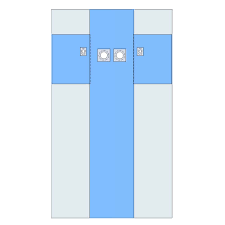
Most procedure drapes use more than one of these. A typical laparotomy drape, for example, has a repellent base sheet with an absorbent reinforcement around the opening, usually backed by an impervious film so that what is absorbed cannot travel through to the patient.
Understanding strike-through
Strike-through is the term for liquid passing through a barrier material from one face to the other. It matters because a wet path through the fabric is also a path for organisms, from the patient’s unprepared skin up into the field, or from the field through a gown to the wearer. Three factors drive it:
- Volume. The more fluid that sits on a material, the greater the challenge.
- Time. A fabric that resists a splash may not resist a pool that sits on it for two hours.
- Pressure. Leaning on a wet drape, or resting instruments and forearms on it, forces liquid into the structure.
This is why barrier standards test resistance to liquid penetration under pressure and not merely surface repellence, and why they set higher requirements for the critical zone near the incision. EN 13795 distinguishes standard and high performance products; AAMI PB70 defines four levels of liquid barrier performance. The right class depends on the procedure, and that judgement belongs to the hospital.
Absorbing and collecting fluid
Absorbent zones and reinforcement
An absorbent reinforcement is a patch of material laminated around the fenestration. Its job is to hold fluid where it is produced. Points to consider when specifying one:
- Extent. The patch should cover the area where fluid actually lands, which differs between a midline incision and a limb.
- Backing. An absorbent layer without an impervious backing can become a wick. Film-backed reinforcement stops absorbed fluid moving through.
- Capacity. An absorbent zone has a limit. Once saturated it sheds fluid like any other wet surface.
- Surface. A slightly textured top layer helps to keep instruments from sliding.
Fluid collection pouches
Where fluid volume exceeds what absorption can handle, a pouch is the appropriate tool. Pouches are generally made of clear polyethylene film so that the contents can be seen, and are either integral to the drape or supplied as a separate adhesive-backed accessory. Features that are commonly offered include a malleable wire or foam rim that holds the mouth open, a drainage port for connection to suction tubing, a filter or mesh screen to catch tissue fragments and small items, and graduations for an approximate reading of volume.
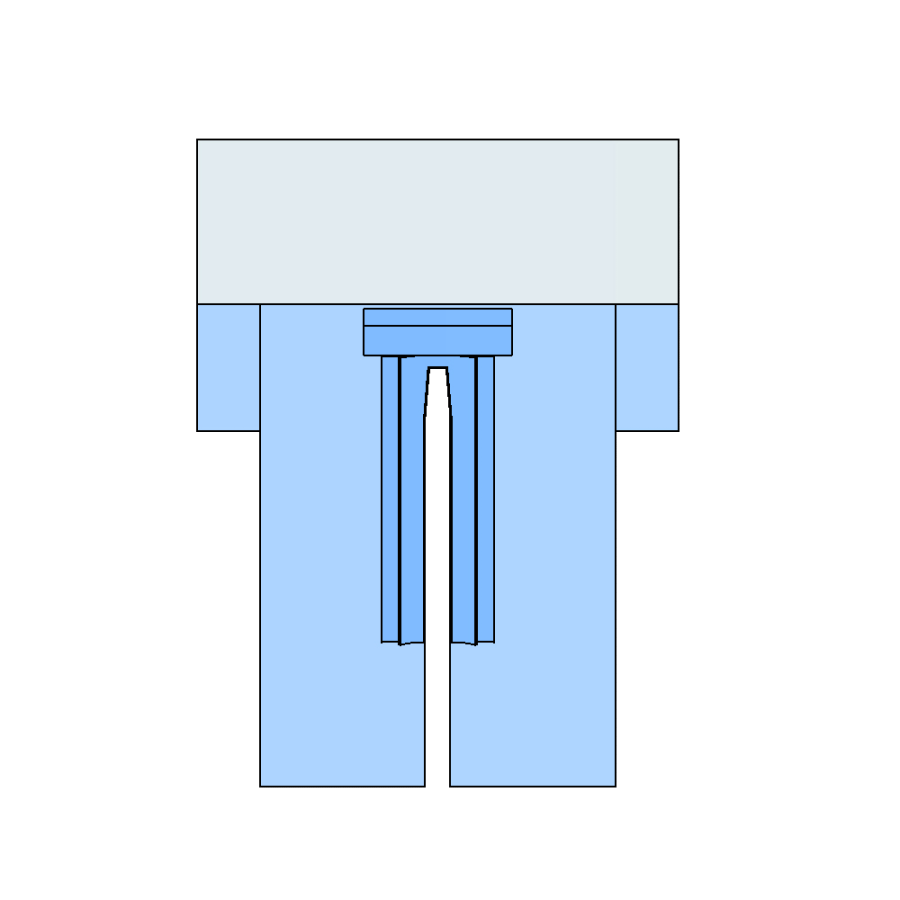
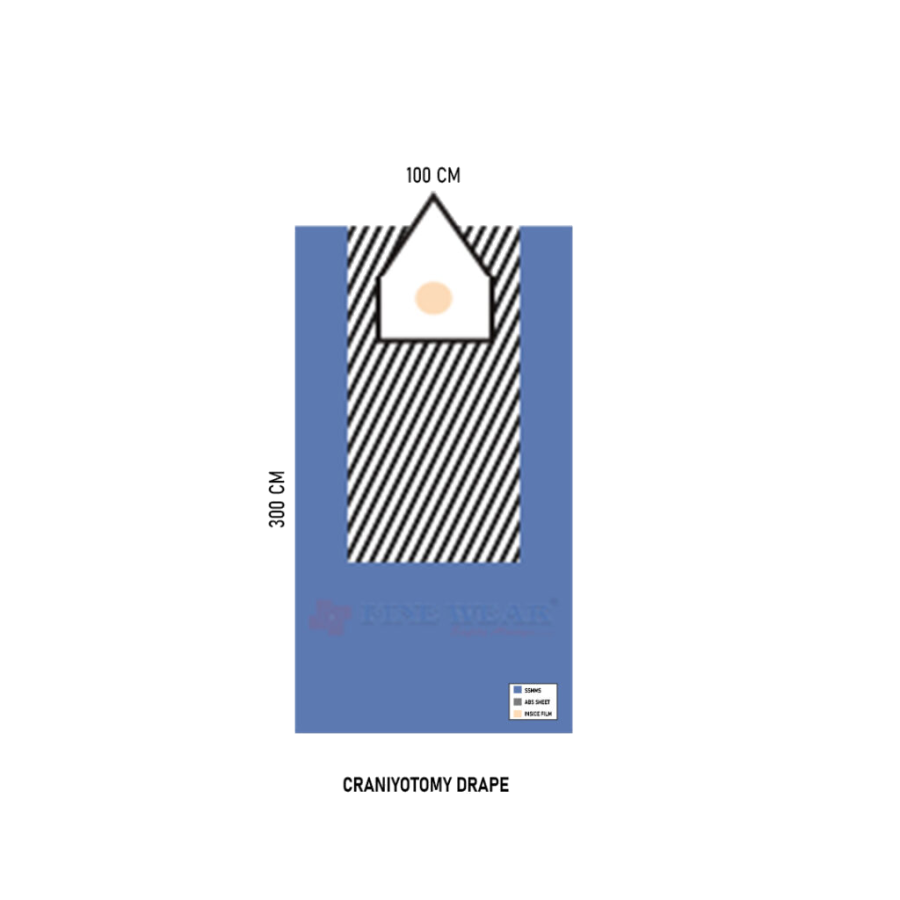
Position is everything. A pouch must sit at the lowest point of the fluid’s path, which depends on patient position and table tilt. Under-buttocks drapes for lithotomy position, arthroscopy drapes with a pouch around the joint, craniotomy drapes with a pouch behind the head and caesarean drapes with a surrounding pouch are all answers to the same question: where will the fluid run?
Matching the design to the procedure
| Fluid profile | Typical procedures | Drape features to consider |
|---|---|---|
| Low volume, short duration | Minor procedures, ophthalmic, small excisions | Repellent base fabric; small absorbent area or none |
| Moderate, localised bleeding | General abdominal, thyroid, breast, many orthopaedic open cases | Film-backed absorbent reinforcement around the fenestration |
| High-volume irrigation | Arthroscopy, cystoscopy, TURP, hysteroscopy | Integral collection pouch with drainage port; impervious critical zone |
| Sudden large release | Caesarean section | Large-capacity pouch surrounding the incision; impervious laminate |
| Prolonged procedures | Cardiac, spinal, major orthopaedic | High-performance barrier in the critical zone; extended reinforcement |
These are general associations, not prescriptions. The surgical team’s experience of a given procedure is the best guide to how much fluid to expect and where.
Practical points during the case
- Check that the pouch mouth is open and correctly oriented before the incision.
- Connect suction to the drainage port early; a full pouch is heavy and can pull the drape away from the skin.
- Watch for pooling on the drape surface and remove it with suction rather than leaving it to stand.
- Do not rest weight on a wet drape.
- If strike-through is seen, follow local protocol, which commonly means covering the area with a fresh sterile impervious drape.
- Keep fluid off the floor; absorbent floor mats are a back-up, not a plan.
What to ask your supplier
When reviewing a drape for a fluid-heavy procedure, ask what the base and reinforcement materials are, whether the reinforcement is film-backed, what barrier class the critical zone is tested to, how large the pouch is and whether it has a port and filter, and whether pouch position can be changed for your table set-up. Shrisay Medical customises fenestrations, reinforcement and pouch configuration across its surgical drape range, and cystoscopy drapes are among its BIS certified products. Samples for trial can be requested through the contact page.
Frequently asked questions
What is the difference between an absorbent zone and a fluid collection pouch?
An absorbent zone holds a limited amount of fluid in the material around the incision. A collection pouch catches run-off and holds or drains much larger volumes, so it is used for irrigation-heavy procedures.
Why does strike-through matter for infection control?
Liquid that passes through a drape or gown can carry micro-organisms with it. A barrier that is wet through can no longer be relied upon to separate sterile from non-sterile surfaces.
Can the position of a pouch on a drape be customised?
Yes, pouch position, size and port arrangement are commonly customised by manufacturers to suit patient position and table set-up. Discuss the requirement and trial a sample before placing a volume order.