Key takeaways
- Only sterile items touch sterile items; anything of doubtful sterility is treated as contaminated.
- A sterile field is created as close as possible to the time of use and is kept under continuous observation.
- Draping proceeds from the incision site outward, and a drape once placed is not moved.
- Speaking up about a break in technique is part of the technique, and local protocol defines the corrective action.
Every member of a theatre team learns the principles of the sterile field early in training, and most could recite them. The difficulty is not knowledge but consistency: long lists, staff changes, urgent cases and unfamiliar equipment all create moments when a principle is bent. A periodic refresher is useful for experienced staff as well as for new starters. What follows is a general restatement of widely taught principles. It does not replace your hospital’s policy, which takes precedence wherever the two differ.
What the sterile field is
The sterile field is the area around the incision that has been prepared for the use of sterile supplies and equipment. It includes the draped patient, draped furniture such as the instrument table and Mayo stand, and the scrubbed team members in sterile gowns and gloves. Its purpose is simple: to keep the number of micro-organisms reaching the wound as low as possible. Its boundary is defined by drapes, which is why drape selection and placement are inseparable from aseptic technique.
The core principles
- Sterile touches only sterile. Scrubbed staff handle sterile items; unscrubbed staff handle non-sterile items. Contact between the two contaminates the sterile item.
- If in doubt, it is contaminated. An item whose sterility cannot be confirmed is treated as non-sterile. This includes packs with damaged, damp or expired packaging.
- Only the top surface of a draped table is sterile. Anything hanging below table level is considered non-sterile and is not brought back up.
- Gowns have limited sterile areas. A gown is generally regarded as sterile at the front from chest to the level of the sterile field, and on the sleeves from above the elbow to the cuff. The back, shoulders, neckline and underarm are not treated as sterile.
- The edges of a sterile wrapper or container are not sterile. Contents are presented without touching the edge.
- Moisture carries organisms. A barrier that has been wetted through can no longer be trusted, which is the reason liquid-resistant materials are specified.
- The field is prepared close to the time of use and watched continuously. An unattended field cannot be assumed sterile.
- Movement respects the field. Scrubbed staff stay close to it and face it; unscrubbed staff keep their distance and do not reach over it.
Setting up: before the patient is draped
A sound sterile field starts with checks that take seconds. The circulating nurse inspects each pack for intact seals, dryness, a valid expiry date and the correct sterilisation indicator before opening it. Packs are opened on a clean, dry, flat surface, with the first flap opened away from the body and the last towards it, or as the manufacturer’s instructions direct. The scrub nurse then arranges the contents without reaching outside the draped surface.
The way a pack is folded and sequenced makes a real difference here. Components that are needed first should be on top, table covers should unfold without the scrub nurse touching the underside, and gowns should be folded so they can be picked up by the inside surface. Well-designed procedure kits and packs follow the order of use, which shortens set-up time and removes several opportunities for contamination.
Draping the patient
Draping is carried out by scrubbed staff after the skin preparation has dried. General points taught in most institutions include the following:
- Carry the folded drape to the patient; do not let it unfold on the way or drop below waist level.
- Place drapes from the incision site outward to the periphery.
- Protect gloved hands by cuffing the drape over them while placing it.
- Once a drape is in position, do not shift it. A drape placed incorrectly is removed by unscrubbed staff or covered, as local protocol directs.
- Press adhesive edges down firmly so that the fenestration stays sealed around the site.
- Secure tubing and cables with the tube holders or tabs provided rather than with perforating clips where possible, since a hole in a drape is a break in the barrier.
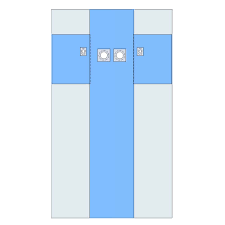
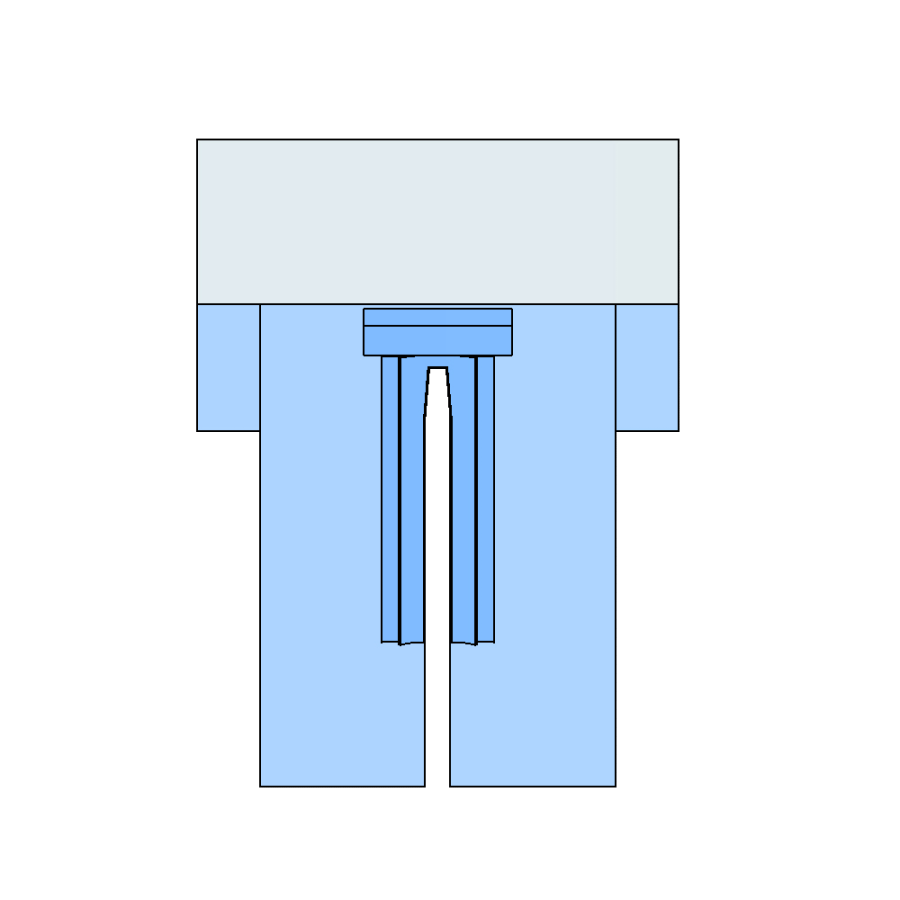
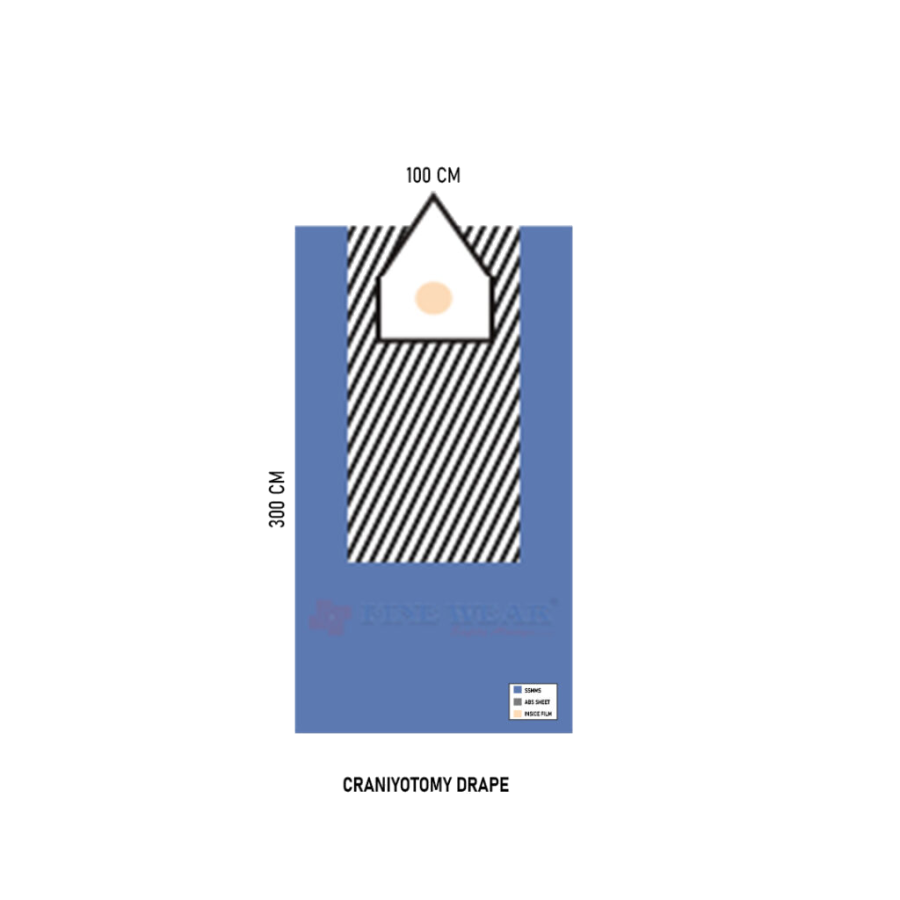
Fenestrated and procedure-specific surgical drapes reduce the number of separate sheets to be placed, which in turn reduces handling. Whatever system is used, the team should rehearse it with unfamiliar products before the first live case.
Maintaining the field during the case
Once the operation is under way, the risks shift from set-up to behaviour. Conversation and movement in the room are kept to what is necessary. Doors stay closed as far as practicable, because traffic disturbs airflow and brings in particles. Scrubbed staff pass each other back to back or front to front. Hands remain above waist level and in sight. Fluids are poured by the circulating nurse without splashing, and the container’s lip is not allowed to touch the receiving bowl.
Drapes are monitored through the case. If fluid has soaked through, if a drape has been perforated, or if it has lifted away from the skin, the scrub team needs to know. So does the surgeon. Additional sterile drapes may be used to cover the affected area, or other corrective action taken, according to hospital protocol.
Responding to a break in technique
Breaks happen in every theatre. What distinguishes a safe team is that they are noticed, named and corrected without blame. A glove that touches a non-sterile surface is changed. An instrument that falls below table level is removed from the field. A gown sleeve that is contaminated is covered or the gown replaced. The person who notices is expected to say so at once, regardless of seniority, and the response should be a correction rather than a discussion.
A sterile conscience means acknowledging one’s own breaks in technique even when nobody else has seen them.
A short checklist for team briefings
- Are pack integrity checks being done every time, including on urgent cases?
- Do drape and table cover sizes suit the tables and positions actually in use?
- Does everyone know the local rule for a wet or perforated drape?
- Have new staff practised with the current drape and gown systems?
Shrisay Medical manufactures drapes, gowns and packs in Faridabad and can adjust sizes, fenestrations and pack sequence to a team’s established way of working. However good the materials, the sterile field is ultimately maintained by the people around it and by the protocol they follow.
Frequently asked questions
Is the whole of a sterile gown considered sterile?
No. As generally taught, the front from chest to the level of the sterile field and the sleeves from above the elbow to the cuff are considered sterile; the back, shoulders, neckline and underarm are not. Follow your hospital’s policy for the exact definition.
Can a surgical drape be repositioned after it has been placed?
The accepted principle is that a drape is not moved once placed, because shifting it can drag non-sterile areas into the field. An incorrectly placed drape is removed or covered according to local protocol.
What should be done if a drape becomes wet through?
A drape that has been soaked through is no longer a reliable barrier. Inform the scrub team and take the corrective action set out in your hospital’s protocol, which commonly involves covering the area with a fresh sterile drape.