Key takeaways
- Orthopaedic draping must stay sealed while the limb is moved through its full range during surgery.
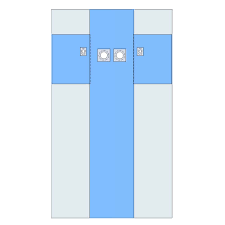
- Most systems combine an impervious under-sheet, a U-drape to isolate the limb root, stockinette for the distal limb and a main extremity or procedure drape.
- Hip drapes differ mainly by patient position; knee drapes rely on an elastic aperture that seals around the thigh.
- Arthroscopy adds continuous irrigation, so a drainable pouch becomes the defining feature.
Draping an abdomen is largely a matter of covering a still patient and leaving a window. Orthopaedic draping is a different problem. The limb has to be lifted, flexed, rotated and sometimes dislocated in the middle of the operation, and the sterile field must move with it without opening. Add saws, reamers, pulsed lavage and bone cement, and it becomes clear why orthopaedics has developed its own family of drapes. This guide describes the components and how they are combined for common procedures.
Why orthopaedic surgery is hard on drapes
- Movement. A drape that seals well with the knee extended has to seal equally well at full flexion. Anything fixed only by its own weight will shift.
- Mechanical stress. Retractors, limb holders, traction and the edges of instruments pull at and abrade the fabric, so tensile and tear strength matter.
- Fluid. Blood, wash and irrigation arrive in volume and often under pressure. Impervious material is expected in the critical zone.
- Implants. Where a prosthesis or fixation device is being placed, teams are particularly strict about lint, particles and any breach of the field.
- The distal limb. A foot or hand is difficult to prepare perfectly and needs to be enclosed rather than merely covered.
The building blocks
Almost every orthopaedic set-up is assembled from the same few parts, used in roughly this order.
- Impervious under-sheet. A plain film-backed sheet passed beneath the raised limb to cover the table and the opposite leg or the torso.
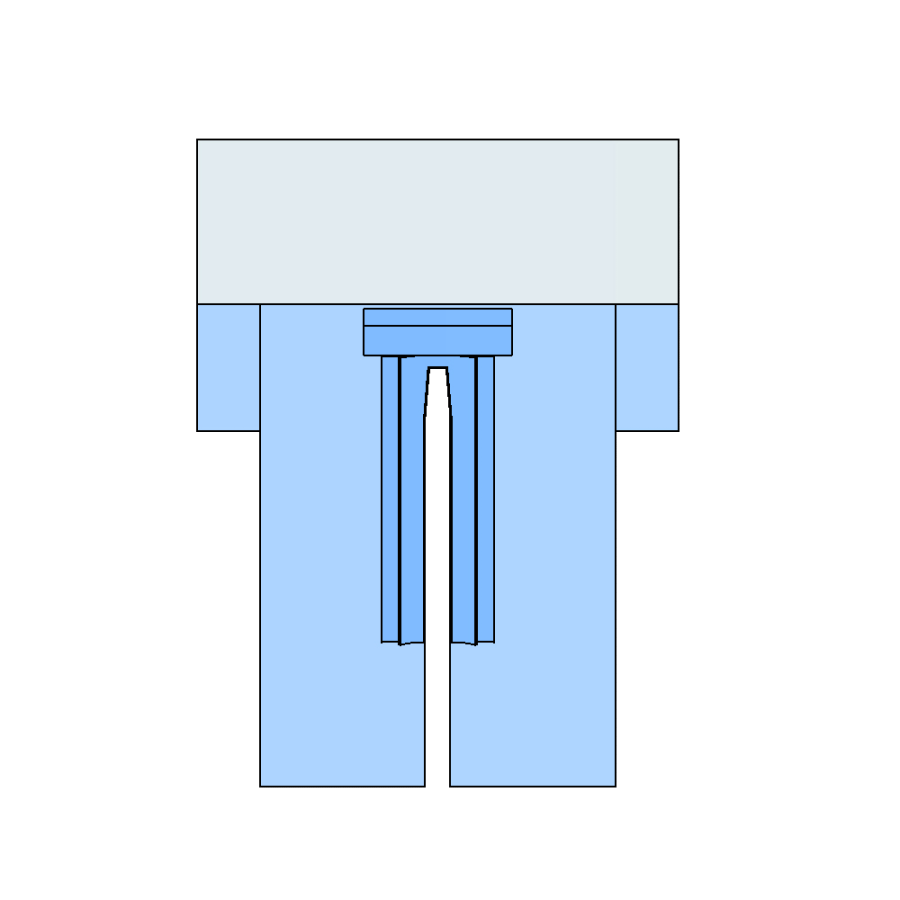
- U-drape (split sheet). A sheet with a U-shaped slit and adhesive along the edges of the split. The base of the U is placed at the root of the limb and the two tails are wrapped around and stuck down. It separates the limb from the perineum, axilla or trunk. Two U-drapes are sometimes applied from opposite directions to complete the seal.
- Stockinette. A rolled tubular cover drawn over the hand or foot and up the limb, in impervious or two-layer form, often secured with adhesive tape or a cohesive wrap.
- Extremity drape. A large sheet with an elasticated, stretch-film aperture through which the limb is passed. The aperture grips the limb, so it travels with it.
- Fluid collection pouch. A film pocket with a drain port, fitted below the joint.
- Accessories. Adhesive tape strips, Mayo stand and back-table covers, and covers for the C-arm or image intensifier.
Hip systems
Hip draping is governed by position. With the patient lateral, as for many total hip replacements, the leg is free. The usual build is an impervious sheet under the leg, one or two U-drapes sealing the groin and buttock, stockinette to above the knee, and then a large hip drape with an aperture or split that is drawn up over the leg to the hip. Many hip drapes add a deep sterile leg pocket on the front, into which the lower leg is placed when the hip is dislocated and the femur is being prepared.
With the patient supine, for anterior approaches, the arrangement is similar but the drape is cut for access from the front. For fracture fixation on a traction table, the leg is held in a boot and cannot pass through an aperture. Here a large transparent vertical drape, sometimes called an isolation drape, hangs like a curtain between the surgeon and the image intensifier, with an adhesive incise area that is stuck onto the lateral thigh. An incise film is frequently used in hip surgery to hold the drape edges close to the incision; whether it is used is a matter for the surgeon and hospital policy.
Knee systems
For knee replacement and other open knee procedures, the patient is supine and the knee is flexed and extended repeatedly. After the under-sheet and a U-drape high on the thigh, usually just below a tourniquet, the foot and lower leg are enclosed in stockinette. The main knee drape is then passed over the foot: its elastic aperture seals around the thigh and the body of the drape unfolds over the patient towards the head and over the end of the table.
Where both knees are operated on in one session, a bilateral drape with two elastic apertures covers both limbs with a single sheet, which saves time and avoids overlapping two separate drapes down the midline. Shrisay Medical’s Bilateral Knee-O-Drape, one of our BIS certified products, is designed for this purpose.
Arthroscopy changes the requirement. The joint is distended with continuously flowing irrigation fluid, and much of it leaves through the portals. An arthroscopy drape therefore pairs the elastic aperture with a large pouch surrounding or hanging below the knee, with an outlet for suction or gravity drainage, so that fluid is collected rather than soaking the patient and the floor.
Shoulder, hand and foot
Shoulder surgery in the beach-chair position needs a drape that wraps the shoulder from front and back while keeping the head, airway and anaesthetic equipment outside the field. A typical shoulder set uses a U-drape applied from below, an arm stockinette, and a shoulder drape with a split or aperture and an integrated pouch for arthroscopic fluid. Hand and foot drapes are smaller extremity drapes with a correspondingly small elastic aperture, designed to lie over an arm table or the end of the operating table.
| Procedure | Usual position | Typical drape components |
|---|---|---|
| Total hip replacement | Lateral or supine | Under-sheet, U-drapes, stockinette, hip drape with leg pocket |
| Hip fracture fixation | Supine on traction table | Vertical isolation drape with incise area, C-arm cover |
| Total knee replacement | Supine | Under-sheet, U-drape, stockinette, knee drape with elastic aperture |
| Knee arthroscopy | Supine, leg holder or post | Arthroscopy drape with elastic aperture and drainable pouch |
| Shoulder surgery | Beach-chair or lateral | U-drape, arm stockinette, shoulder drape with pouch |
| Hand or foot surgery | Supine with arm table | Small extremity drape, tourniquet-side seal |
These are common arrangements, not rules. Surgeons vary in technique and each hospital should follow its own protocol.
What to ask your supplier
Orthopaedic drapes are usually bought as a set, so the questions concern the whole system as much as any one sheet.
- Is the material in the critical zone impervious, and what test evidence supports the barrier claim?
- What limb circumference range does the elastic aperture seal on, and does it stay sealed through full flexion?
- Are the U-drape adhesive strips strong enough to hold on prepared skin and over a stockinette?
- Does the pouch have a drain port compatible with your suction tubing?
- Are the components folded and ordered in the pack in the sequence your team applies them?
- Can the set be adjusted to a surgeon’s preference or a particular table?
Our orthopaedic and other surgical drapes can be supplied individually or assembled with gowns and covers into procedure packs; to discuss a configuration, get in touch with our team.
Frequently asked questions
What is a U-drape used for in orthopaedics?
A U-drape is a split sheet with adhesive edges that wraps around the root of a limb. It isolates the limb from the groin, axilla or trunk before the main drape is applied.
Why do knee and hip drapes have elastic apertures?
The elastic or stretch-film aperture grips the limb so the seal moves with it. A fixed opening would gape as the joint is flexed and rotated during surgery.
How is an arthroscopy drape different from a knee replacement drape?
Arthroscopy uses continuous irrigation, so the drape includes a large pouch with a drain outlet to collect fluid. A knee replacement drape focuses on an impervious, reinforced area around an open incision.