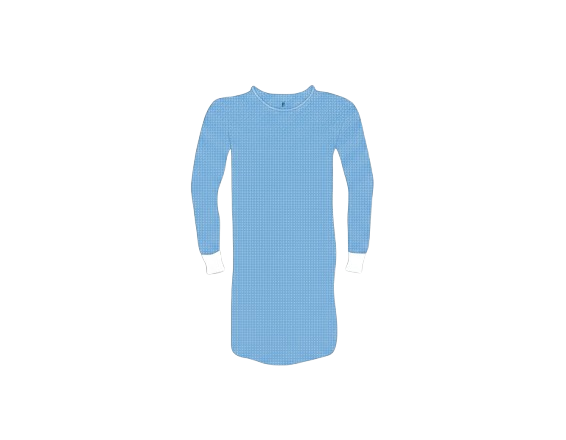
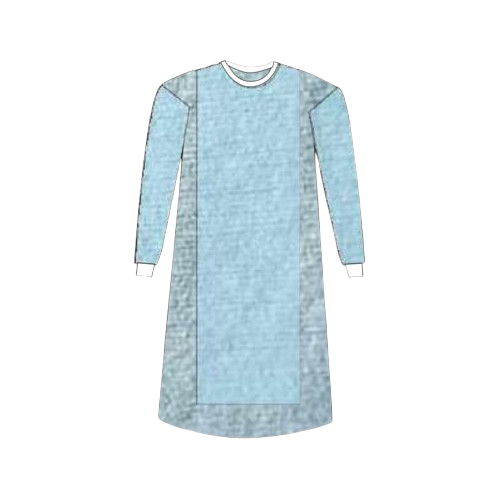
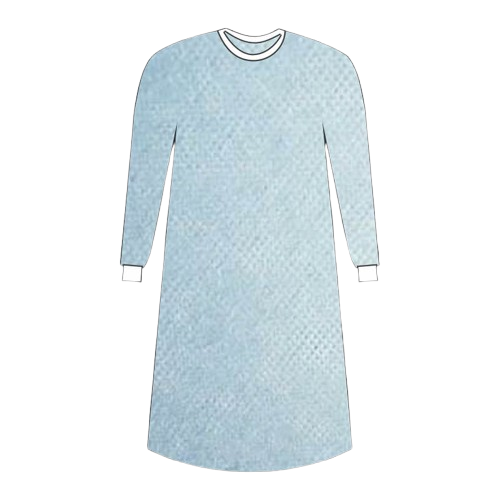
Key takeaways
- Donning protects the sterile outside of the gown from the wearer, while doffing protects the wearer from the contaminated outside.
- In self-gowning the hands stay inside the sleeves until closed gloving is complete, and the glove cuff must fully cover the knitted cuff.
- An unscrubbed assistant touches only the inside of the gown and fastens the neck and inner ties from behind.
- On removal the gown is turned inside out away from the body, gloves come off inside out, and hand hygiene follows; local policy sets the exact order.
A sterile gown is handled twice, and the risk runs in opposite directions each time. When it goes on, the outside is sterile and the wearer is not, so every movement is designed to keep bare skin and scrub attire away from the outer surface. When it comes off, the outside is contaminated with blood and fluid, and the aim is to keep that surface away from the wearer.
What follows is a general outline of commonly taught technique for readers who train staff, write procedures or evaluate gowns. It is not a substitute for supervised practice, and the details that differ between institutions are settled by local policy.
Before the gown is touched
- Scrub suit, cap, mask and any eye protection are already in place and adjusted; none of them can be touched afterwards.
- The gown pack is checked for integrity, expiry date and size, then opened by the circulating nurse onto a clean, dry surface separate from the instrument table, so that drips do not fall on the main sterile field.
- Surgical hand antisepsis is completed according to hospital protocol. After a water-based scrub the hands are held above the elbows and dried with the sterile towel supplied; after an alcohol-based rub they are allowed to dry fully in air.
Self-gowning
- Reach down to the opened pack and lift the folded gown straight up by its inner surface, touching nothing else.
- Step back into clear space, away from the table and from other people.
- Hold the gown at the inside of the neckline and let it unfold downwards under its own weight, with the inside facing you. Do not shake it.
- Locate the armholes and slide both arms into the sleeves together, keeping the hands at shoulder height and away from the body.
- If closed gloving is to follow, stop when the fingertips reach the cuff seam, so that the hands remain inside the sleeves.
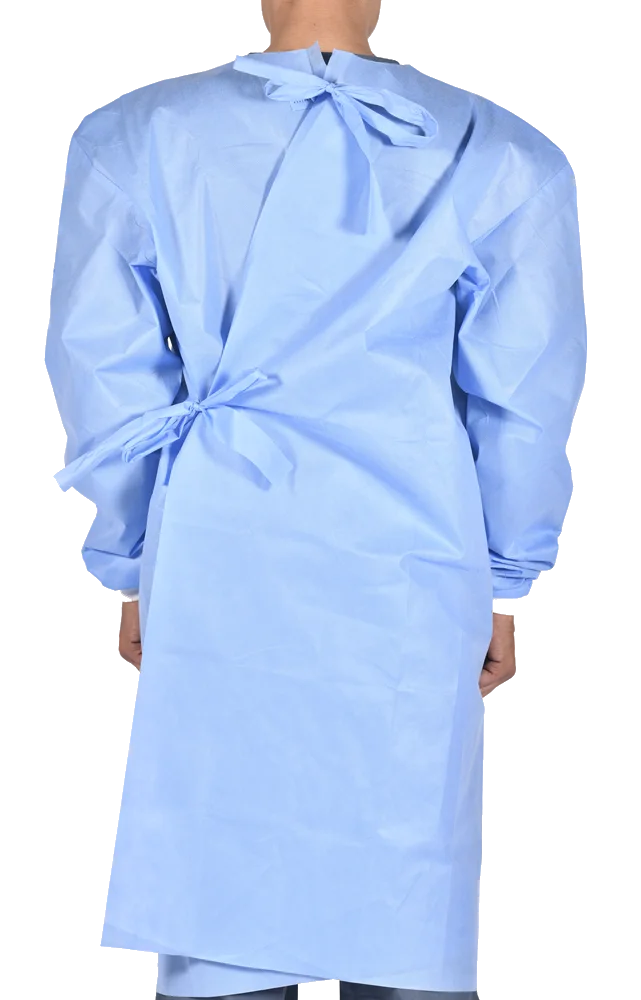
- The circulating nurse, standing behind, reaches inside to draw the gown over the shoulders, touching only its inner surface, then fastens the neck closure and the inner waist ties.
Closed gloving in outline
In closed gloving, bare skin never passes beyond the cuff until the glove is on. The glove is picked up through the fabric of the sleeve and laid on the upturned forearm of the same side, thumb to thumb and fingers pointing towards the elbow. The cuff of the glove is gripped through the sleeve, stretched over the open end of the gown cuff, and the hand is then pushed forward into the glove as sleeve and glove are drawn up together. The second hand is gloved in the same way, using the first gloved hand.
The outcome to look for is a glove cuff that fully covers the knitted cuff of the gown. Knitted cuffs are absorbent and are not a barrier, so any part left exposed is a weakness. Many teams wear two pairs of gloves, and the choice of single or double gloving belongs to hospital policy.
Assisted gowning and gloving
When a scrubbed person gowns a colleague, typically a scrub nurse gowning the surgeon, the technique changes. The scrubbed assistant holds the gown open by the outside of the shoulders, with their own gloved hands protected behind a cuff folded from the gown’s neckline, and presents it with the armholes towards the wearer. The wearer slides their arms in and, this time, pushes the hands right through the cuffs. The circulating nurse fastens the back as before.
Gloving is then done by the open-assisted method: the assistant holds each glove wide by its cuff, thumb towards the wearer, and the wearer pushes the hand in without touching the assistant’s gloves.
Closing the gown
A wraparound gown is completed with a turn. The wearer hands the card holding the outer tie to the circulating nurse, or passes the tie itself to a scrubbed colleague, rotates so that the back panel wraps across, takes the tie back and fastens it at the side. From that point the hands stay in front of the body, above the waist and below the shoulders, and the conventions described in our refresher on the principles of the sterile field apply. The article on the critical zones of a surgical gown explains which parts of the garment carry the barrier claim.
If the gown or a glove is contaminated or damaged at any stage, it is changed. A team member who points this out is doing their job, and a culture in which they can do so without friction matters more than any single step above.
Removing the gown and gloves
At the end of the case the outside of the gown and gloves is treated as contaminated. Two orders of removal are in common use, and both are designed so that bare hands touch only the inside of the gown and the inside of the gloves.
| Stage | Gown first, then gloves | Gown and gloves together |
|---|---|---|
| Release | Outer tie undone by the wearer; neck and inner ties undone by an assistant | Ties undone, or broken by pulling the gown forward where the design allows |
| Gown | Grasped at the front of the shoulders with gloved hands and pulled forward off the arms, turning inside out | Pulled forward and down from the front so that it turns inside out over the arms |
| Gloves | Left on until the gown is rolled and discarded, then removed glove-to-glove and skin-to-skin | Peeled off inside out by the sleeves as the arms are withdrawn |
| Bundle | Gown rolled with the contaminated side inwards, held away from the body | Gown and gloves rolled into one bundle, touching only the inside |
| Finish | Hand hygiene | Hand hygiene |
“Glove-to-glove and skin-to-skin” means that the first glove is pinched on its outside by the other gloved hand and peeled off, and the second is removed by sliding bare fingers inside its cuff. Whichever order is used, removal should be unhurried: the usual errors are pulling the gown over the head, letting the outside brush the scrub suit or forearms, and snapping gloves so that fluid is flicked.
Mask and eye protection are generally removed afterwards, handled by their ties or ear loops, and followed by hand hygiene again. Used gowns and gloves go into the appropriate waste stream; our article on the disposal of used drapes and gowns under India’s biomedical waste rules covers segregation.
Where local policy decides
- The method and duration of surgical hand antisepsis.
- Single or double gloving, and when gloves are changed during a case.
- Whether the gown is removed before the gloves or with them.
- The sequence for removing other protective equipment in high-risk cases.
Shrisay Medical manufactures sterile surgical gowns in Faridabad, made to order in size, fabric and pack configuration; for samples to assess fold and fit, please contact our team.
Frequently asked questions
Should the gown or the gloves come off first after surgery?
Both orders are taught: the gown first with gloves afterwards, or gown and gloves peeled off together. Either is acceptable if bare skin touches only the inside surfaces, and hospital policy decides which is used.
Why are the hands kept inside the sleeves during self-gowning?
Closed gloving relies on bare skin never passing beyond the cuff, so the glove is handled through the sleeve fabric and the outside of the gown and glove is never touched by an ungloved hand.
What happens if the gown touches something non-sterile while it is being put on?
It is treated as contaminated and replaced with a fresh gown. Deciding in favour of a change is the standard response to any doubt about sterility.