Key takeaways
- Hand antisepsis, drying, gowning and gloving form one sequence, and a lapse in any step weakens the barrier at the wrist.
- Scrub and alcohol-based rub are both recognised methods; products and timings follow the manufacturer and hospital policy.
- Closed gloving keeps bare skin away from the outside of gown and glove and is generally preferred for initial gloving.
- The knitted cuff is not a barrier and is treated as contaminated once the hand has passed through, so the glove must cover it completely.
Between the sink and the first incision, a scrubbed team member passes through four steps in a fixed order: hand antisepsis, drying, gowning and gloving. Each step depends on the one before it, and all of them converge on a few centimetres at the wrist where the gown sleeve ends and the glove begins. That junction, the gown–glove interface, is the part of the surgical barrier most exposed to fluid and movement and the part least protected by fabric.
This article outlines the sequence in general terms. Products, contact times and technique are set by the antiseptic manufacturer’s instructions and by hospital policy, and nothing here replaces either.
Hand antisepsis in outline
Surgical hand antisepsis aims to remove transient micro-organisms from the hands and forearms and to reduce the resident flora, so that if a glove is punctured during the case the number of organisms released is as low as possible. Gloves are a second barrier; they are not a substitute for clean hands.
Two approaches are in general use.
- The surgical scrub uses an antimicrobial soap or detergent with running water. Hands and forearms are washed for the time stated by the manufacturer and local policy, with the hands held higher than the elbows so that water runs away from the fingertips.
- The surgical rub uses an alcohol-based hand rub formulated for surgical use, applied to clean, dry hands and forearms and rubbed in until dry, again for the time and in the volume the manufacturer specifies.
International guidance, including that of the World Health Organization, recognises both methods. The choice between them, and the approved products, belong to the hospital’s infection control committee. Whichever is used, the preliminaries are the same: short natural nails, jewellery removed and intact skin.
Drying: the step that is rushed
After a water-based scrub, the hands and forearms are dried with a sterile towel before the gown is touched. Wet skin makes gloving difficult, encourages skin damage over a long list and can dampen the inside of the gown sleeve.
The usual technique is to blot, not rub, working from the fingertips towards the elbow, using one part of the towel for each arm and never returning to the hand once the towel has reached the forearm. The towel is held away from the scrub suit throughout. Many sterile gown packs include towels for this purpose; a wraparound sterile gown supplied with hand towels places them on top of the folded gown so that they are the first thing the scrubbed person lifts.
After an alcohol-based rub no towel is used; the hands are allowed to dry completely before gloving.
Gowning and the sterile areas of the gown
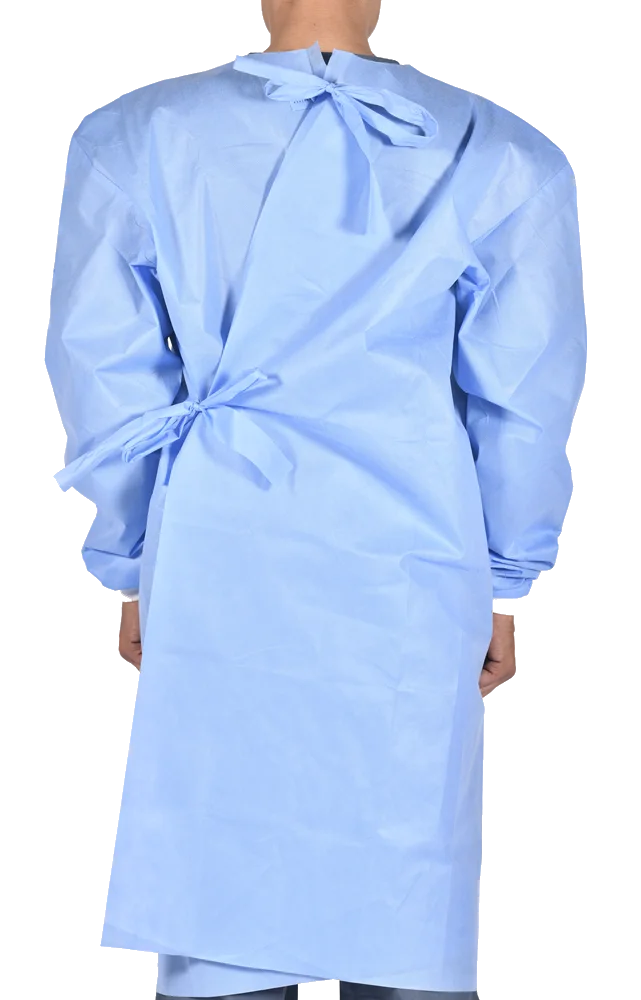
The gown is lifted by its inner surface at the neckline, allowed to unfold away from the body, and the arms are slid into the sleeves. A circulating colleague fastens the neck and inner ties from behind. For closed gloving, the hands stop inside the cuffs and do not emerge.
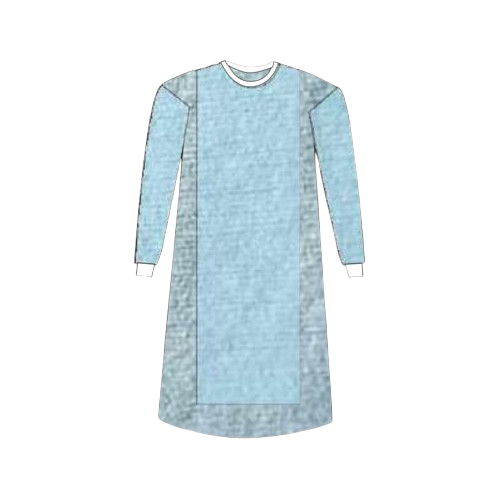
Once worn, only part of the gown is treated as sterile: broadly the front from chest to the level of the sterile field and the sleeves from above the elbow to the cuff. The back, the shoulders, the neckline and the area under the arms are not. Our article on the critical zones of a surgical gown explains how gown construction follows the same map.
Closed and open gloving
Two self-gloving methods are taught, together with assisted gloving, in which an already scrubbed colleague holds the glove open.
| Method | How it works | Typical use |
|---|---|---|
| Closed gloving | The hands remain inside the gown sleeves; the glove is handled through the fabric and drawn over the cuff as the hand advances | Initial gloving after gowning for a surgical procedure |
| Open gloving | Bare hands touch only the folded inner surface of the glove cuff; gloved fingers touch only the outer surface | Procedures that need sterile gloves without a gown; some glove changes, where policy allows |
| Assisted gloving | A scrubbed colleague holds the glove open with the cuff stretched, and the wearer inserts the hand | Gloving the surgeon; glove changes during a case |
| Double gloving | Two pairs are worn, sometimes with a coloured inner glove that shows through a breach | As directed by policy, often for higher-risk or longer procedures |
Closed gloving is generally preferred for the first gloving because bare skin never touches the outside of the gown or the glove. Open gloving demands more care, since the hand has already passed through the cuff and must not touch the glove’s outer surface.
Why the cuff is treated as unsterile
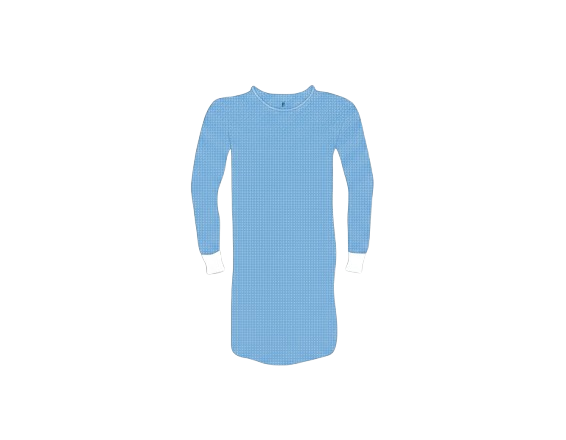
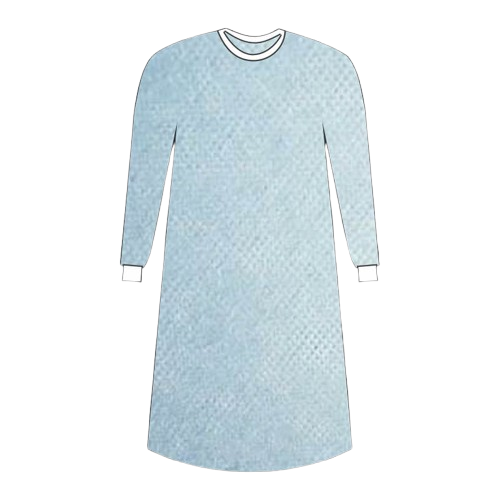
Gown cuffs are normally made of a knitted, stretchable material. It is comfortable and it grips the wrist, but it is absorbent and it is not a liquid barrier. Once a hand has passed through it, the cuff has been in contact with skin that is clean but not sterile, and it will take up perspiration during the case. From that moment the cuff is regarded as contaminated.
Several practical rules follow from this.
- The glove must cover the whole of the knitted cuff and overlap onto the barrier fabric of the sleeve. No cuff should be visible at any point in the procedure.
- Closed gloving cannot be repeated with the same gown after the hands have come through the cuffs. A glove change is therefore done by assisted or open technique, or with a fresh gown, as policy directs.
- Sleeves that ride up when the arms are extended expose the interface. Sleeve length and cuff grip are worth checking when gowns are trialled, as discussed in our gown sizing and fit guide.
Double gloving and fluid at the wrist
Glove perforations are common in surgery and frequently go unnoticed by the wearer. Wearing two pairs means that a breach of the outer glove does not immediately expose the skin, and an indicator system with a coloured underglove makes the breach easier to see. Whether double gloving is required, and for which procedures, is a matter for hospital policy and the individual surgeon.
In fluid-heavy work the wrist is also where liquid can run down the glove and reach the sleeve. A glove with a long cuff and a sleeve made of barrier material up to the knitted cuff give the widest overlap.
What to check on the gown
- the knitted cuff is firmly attached, with no gaps at the seam;
- the sleeve is long enough for the tallest users in the intended size;
- the fold presents the inner neckline first, so the gown can be lifted without touching the outside;
- towels, where included, sit above the gown in the pack.
Shrisay Medical manufactures sterile surgical gowns in Faridabad, made to order in size and fabric; to discuss sleeve, cuff and pack configuration for your theatre, please see our surgical gowns range.
Frequently asked questions
Why can closed gloving not be used to change a glove mid-case?
Closed gloving relies on the hand staying inside a sterile sleeve. Once the hand has passed through the cuff, the cuff is regarded as contaminated, so a glove change is done by assisted or open technique or with a new gown, as policy directs.
Is a sterile towel needed after an alcohol-based surgical rub?
No. The rub is applied to clean, dry hands and allowed to dry fully on the skin. Sterile towels are used after a water-based scrub.
Does double gloving replace hand antisepsis?
No. Gloves can be perforated without the wearer noticing, which is why hand antisepsis is carried out before every case regardless of how many pairs are worn.