Key takeaways
- Size labels such as M, L and XL mean different things from one manufacturer to another, so compare measurements, not letters.
- Length, sleeve length, chest width and back overlap are the four dimensions that most affect protection and comfort.
- A poorly fitting gown is a safety issue: short sleeves expose wrists, and an open back exposes the scrub suit.
- A short fit trial with real theatre staff and a count of who wears what size prevents most sizing problems.
Barrier level usually gets most of the attention in a gown specification, and size gets a single line: “Large”. Yet a gown that does not fit cannot protect as intended, whatever its test report says. A sleeve that rides up exposes the wrist above the glove. A back panel that will not close leaves the scrub suit uncovered. A hem that is too long becomes a trip hazard and drags below the sterile field. Sizing deserves the same care as fabric selection, and it is entirely within a procurement team’s control.
Why the letter on the label is not enough
There is no universal size chart for surgical gowns. A “Large” from one manufacturer may be longer, narrower or shorter in the sleeve than a “Large” from another, and export markets often expect different proportions from domestic ones. Some suppliers label by letter, some by length, and some combine the two, as in “XL extra long”.
The consequence is simple: never compare quotations on size labels alone. Ask each supplier for a measurement chart showing finished garment dimensions for every size offered, along with the manufacturing tolerance. Then compare like with like.
The measurements that matter
| Measurement | How it is usually taken | Why it matters | If it is wrong |
|---|---|---|---|
| Length | Shoulder or centre back neck to hem | Sets how far below the knee the gown reaches | Too short exposes the legs; too long catches the feet |
| Sleeve length | Centre back neck, or shoulder point, to end of cuff | Keeps the cuff under the glove when arms are extended | Wrist exposure, or bunching fabric at the forearm |
| Chest width | Across the front, underarm to underarm | Allows free reach across the table | Restricted movement, strain on seams |
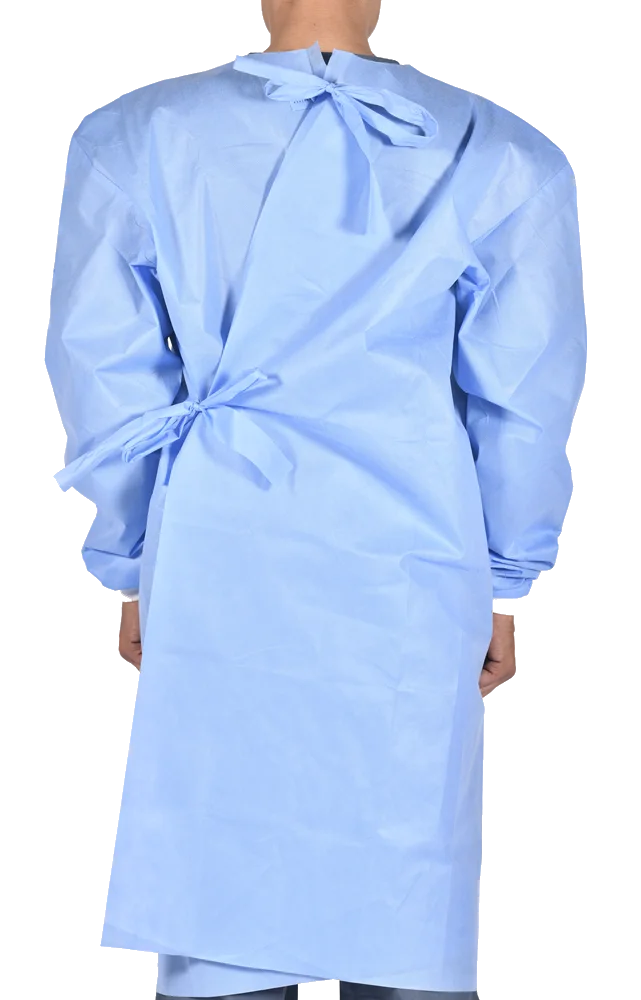
| Sweep and back overlap | Total width at the hem, laid flat and opened | Determines whether the back closes fully | Open back and exposed scrub suit |
| Cuff length and stretch | Length of the knitted cuff and its relaxed width | Seals under the glove without constricting | Gloves roll down, or the cuff digs in |
| Neck opening | Circumference when fastened | Comfort and coverage at the collar | Gaping neckline or pressure at the throat |
Measurement points differ between suppliers, particularly for sleeves. A sleeve measured from the centre back of the neck gives a much larger figure than one measured from the shoulder seam, with no difference in the garment. Confirm the method before comparing numbers.
How poor fit undermines protection
Fit problems tend to show up in predictable ways in theatre:
- Gown too small: the back does not overlap, sleeve seams are stretched at the elbow, and the cuff pulls out of the glove when the wearer reaches forward. Stretching also puts load on welded seams.
- Gown too large: excess fabric at the forearm gets in the way of instruments and can brush non-sterile surfaces; sleeves are pushed up and bunch at the wrist; the hem trails.
- Reinforcement in the wrong place: on a reinforced gown that is too long or too short for the wearer, the panel may sit above or below the area it is meant to protect.
- Wrong proportions: a tall, slim wearer may need length without width, which is why some ranges include “long” variants.
Staff adapt to poor fit by folding sleeves, tucking fabric or tying gowns loosely. Each of these workarounds compromises the gown’s design and, potentially, aseptic practice.
Running a fit trial
A fit trial need not be elaborate. An hour in a quiet theatre with sample gowns in each size will tell you most of what you need to know.
- Choose a representative group. Include the shortest and tallest members of the team, and both slim and broad builds.
- Don the gown properly. Use the normal assisted technique with gloves, over the scrub suit usually worn.
- Check the back. With the gown tied, the panels should overlap completely when the wearer stands and when they bend forward.
- Check the reach. Ask the wearer to extend both arms forward and overhead. The cuff should stay under the glove.
- Check the length. The hem should fall below the knee and clear the floor comfortably, including when stepping onto a footstool.
- Check seated work. For specialities where the surgeon sits, such as ophthalmology or hand surgery, repeat the checks seated.
- Record preferences. Note which size each person would choose. This record becomes your size-mix data.
Planning the size mix
Hospitals often order one size for everyone because it simplifies storage. The result is that a part of the team always works in a gown that does not fit. A better approach uses the fit-trial record, or a short survey, to estimate the proportion of staff in each size and to order accordingly.
A few practical points help:
- Review the mix when teams change. A new surgical unit or a shift in the staff profile can alter demand noticeably.
- Keep a small stock of the largest and smallest sizes, even if use is low, so no one has to improvise.
- Make sizes easy to identify. Clear size marking on the outer pack, and ideally colour-coded labels or neck binding, reduces picking errors.
- Align packs with people. If gowns are included in procedure packs, decide which sizes go inside and keep additional single-packed gowns for others.
Details beyond size that affect fit
Two gowns with identical measurements can still feel different. Sleeve design is one reason: a raglan sleeve, set in diagonally from the neck, generally allows freer shoulder movement than a set-in sleeve. The neck closure is another; a hook-and-loop fastening adjusts to different neck sizes more readily than fixed ties. The length and position of the waist ties affect how securely the wrap closes on a larger wearer. The softness and drape of the fabric also change how a given cut sits on the body.
What to include in your size specification
When you issue an enquiry, state the sizes required, ask for the finished measurement chart with tolerances and the measuring method, request samples in each size, and say how sizes should be marked on the pack. If your staff profile does not suit a supplier’s standard chart, ask whether dimensions can be adjusted.
Customised sizing is a central part of what Shrisay Medical offers from its Faridabad facility, across both standard and reinforced surgical gowns; to request a measurement chart or samples for a fit trial, please get in touch.
Frequently asked questions
Are surgical gown sizes standardised?
No. Size labels vary between manufacturers and markets, so buyers should compare finished garment measurements rather than size letters.
What is the most common sizing problem in theatre?
Sleeves that are too short, which pull the cuff out from under the glove, and back panels that do not overlap fully. Both are usually a sign that the gown is too small for the wearer.
Can gown dimensions be customised?
Many manufacturers, including Shrisay Medical, can adjust dimensions to a buyer’s requirement. Confirm the measurement chart and approve samples before placing a bulk order.