Key takeaways
- A paediatric drape is a full-sized sheet with a small, correctly placed opening, not a miniature adult drape.
- Drapes do not warm a child, but limiting exposure and keeping fluid off the skin reduces heat loss.
- Adhesive should be used sparingly on immature skin, which can be stripped when it is removed.
- Light materials, supported drapes and clear panels protect breathing and keep the child visible to anaesthesia.
Children are operated on in the same theatres as adults, on the same tables and frequently with the same stock of drapes. For an older child or adolescent this causes little difficulty. For an infant or a newborn it does. An adult laparotomy drape has a fenestration that may be longer than the baby’s entire trunk, weighs a noticeable fraction of what the patient does, and buries a very small person under layers of opaque material.
Paediatric draping is a matter of adapting to four things: size, temperature, skin and visibility. The points below are general observations for those who select and purchase drapes. Clinical decisions, especially for neonates, rest with the paediatric surgical and anaesthesia teams and with unit protocol.
Scaling the fenestration and the sheet
The purpose of a fenestration is to expose the operative site and nothing more. When the opening is too large for the patient, unprepared skin is left uncovered, the adhesive border lands on the wrong surfaces, and the reinforced zone ends up over the table instead of around the wound.
The paediatric range is also very wide. A premature newborn, a toddler and a twelve-year-old differ far more from one another than adults do, so one “paediatric size” cannot serve all of them. Units generally manage this in one of three ways:
- stocking fenestrated drapes in two or three scaled sizes for their most common procedures;
- using small-aperture drapes intended for minor procedures, which happen to suit infants;
- squaring off with separate adhesive utility drapes, which frames any site on any size of patient.
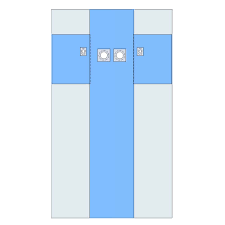
Sheet size needs thought in the other direction. The drape still has to cover an adult-sized operating table to below table level and form a screen at the head. A paediatric drape is therefore not small overall; it is a full-sized sheet with a small, correctly placed opening.
Heat loss
Infants and small children lose heat faster than adults. They have a large body surface area in relation to their mass, less insulating fat, and in the youngest a limited ability to generate heat. Anaesthesia reduces the body’s normal responses to cold. An exposed, wet baby in an air-conditioned theatre can cool quickly, and maintaining temperature is a central concern of paediatric anaesthesia.
Warming itself is achieved by clinical measures chosen by the team, such as a warmed theatre, forced-air or mattress warming and warmed fluids. Drapes are not warming devices, but they affect the outcome in several ways:
- Exposure. A correctly sized opening leaves less skin uncovered.
- Wetness. A child lying on or under wet material loses heat by evaporation and conduction. An impervious layer that keeps irrigation and preparation fluid away from the skin helps, as does a pouch or absorbent zone that takes fluid away from the body.
- Air movement. An impervious sheet reduces air currents over the patient and helps retain warmed air beneath it.
Adhesive on fragile skin
Adhesive edges and incise films are valuable because they fix the drape and seal the site. On a child’s skin, and above all on that of a premature or newborn baby, the same adhesive can do harm. The outer layer of very immature skin is thin and weakly attached, and removing a firmly bonded adhesive can strip it, leaving a raw area that is painful and open to infection.
Practical consequences for drape selection include:
- Using the smallest area of adhesive that will hold the drape, and questioning whether a full incise film is needed.
- Asking the supplier what type of adhesive is used and whether a lower-tack option is available.
- Considering non-adhesive draping for the most fragile patients, where the team prefers it.
Skin preparation solution deserves a mention here, because drapes can hide a problem. Fluid that pools beneath a small patient and is then covered stays in contact with the skin for the whole operation, and chemical injury from pooled antiseptic is a recognised hazard in neonates. Pooling should be dealt with before the drapes go on. The general questions around adhesives are discussed in our article on fenestrated drapes and adhesive types.
The weight of the drapes
On an adult, the weight of a drape and the instruments resting on it is trivial. On an infant it is not. A small child’s chest wall is soft and compliant, and breathing depends heavily on the movement of the diaphragm and abdomen. Layers of heavy drape, a hand or forearm resting on the chest, or a tray of instruments placed over the abdomen can restrict that movement and can also press on lines and tubes.
For this reason paediatric draping favours lighter materials away from the reinforced zone, the minimum number of layers, and support for the drapes on a frame or on bars so that they do not rest directly on the patient. The convenient adult habit of using the patient as a shelf for instruments is discouraged. A covered mayo stand positioned over the child takes that load instead.
Keeping the child visible
A small patient disappears under an opaque drape. The anaesthetist can no longer see the colour of the skin, the movement of the chest, the position of the limbs or whether the tube and lines are still where they were placed.
Transparent drapes address this directly. A clear polyethylene sheet, or a drape with clear panels at the head and sides, allows the whole child to be observed while the sterile field is maintained.
Paediatric requirements at a glance
| Concern | Why it matters in children | Drape feature that helps |
|---|---|---|
| Size | An adult opening exposes too much of a small patient | Scaled fenestrations, or squaring off with separate sheets |
| Heat loss | High surface area relative to body mass; anaesthesia blunts responses to cold | Minimal exposure, impervious layer, fluid kept off the skin |
| Fragile skin | Adhesive removal can strip immature skin | Limited adhesive area, gentler adhesive, non-adhesive options |
| Weight | Soft chest wall and abdominal breathing are easily restricted | Light materials, few layers, drapes supported off the patient |
| Visibility | Tubes, lines and chest movement need continuous observation | Clear sheets or clear panels |
Specifying paediatric drapes
Paediatric items are low-volume products, and standard catalogues rarely fit a unit’s needs exactly, so made-to-order sizing is common. A useful specification states the patient weight or age bands to be covered, the fenestration dimensions for each, the overall sheet size, which areas are to be clear and which absorbent, the adhesive type and extent, and the barrier standard and performance level required. Where volumes justify it, the drape can be combined with gowns and table covers in a custom procedure pack.
Shrisay Medical manufactures surgical drapes in Faridabad with sheet sizes and fenestrations made to order, including scaled-down configurations; to discuss paediatric requirements, please contact our team.
Frequently asked questions
Can adult drapes be used for children?
For older children they often can. For infants and neonates, adult fenestrations are usually too large and the drapes too heavy, so scaled drapes or separate adhesive sheets are preferred.
Why are clear drapes common in paediatric surgery?
They let the anaesthesia team see the child’s colour, chest movement, tubes and lines throughout the operation while the sterile field is maintained.
Is adhesive safe on a newborn’s skin?
It can damage very immature skin on removal. The extent and type of adhesive, or whether to use it at all, is decided by the clinical team according to unit skin-care guidance.