Key takeaways
- Anaesthesia impairs the body’s defences against cold, so patients lose heat steadily in a cool theatre unless steps are taken.
- Limiting the area and duration of skin exposure before and during draping is within the theatre team’s direct control.
- Wet drapes and linen increase heat loss by conduction and evaporation, which is why impervious layers and fluid collection matter.
- Drapes provide passive insulation only and work alongside, not instead of, active warming under hospital protocol.
Inadvertent perioperative hypothermia is the unplanned fall in a patient’s core temperature around the time of surgery. It is common, it is largely preventable, and published guidance associates it with a range of unwelcome outcomes, among them surgical site infection, increased bleeding, cardiac complications, slower recovery from anaesthesia and the plain discomfort of waking up cold and shivering. Temperature management is led by the anaesthetic team under hospital protocol. Draping is not a treatment for hypothermia, but the way a patient is exposed, covered and kept dry has a real effect on how much heat is lost.
Why patients cool under anaesthesia
An awake person defends core temperature within a narrow range by constricting blood vessels in the skin, by shivering and by behaviour such as reaching for a blanket. Anaesthesia interferes with all three.
- Redistribution. General anaesthetic agents dilate peripheral blood vessels, and warm blood from the core mixes with the cooler tissues of the limbs. Core temperature falls in the first part of the anaesthetic largely for this reason, even before much heat has left the body.
- Impaired regulation. The thresholds at which the body responds to cold are altered, so vasoconstriction and shivering are delayed. Regional techniques such as spinal and epidural anaesthesia block these responses in the lower body and also reduce the patient’s awareness of being cold.
- Continuing loss. Throughout the procedure heat leaves the patient for a cool theatre, and little is generated to replace it.
Certain patients are more vulnerable: the very young and the old, those with a low body weight, and those having long or major operations. Risk assessment before surgery is part of most guidelines.
How heat is lost in theatre
Four physical routes account for the loss, and each has a counterpart in how the patient is prepared and covered.
| Route | Typical source in theatre | What reduces it |
|---|---|---|
| Radiation | Exposed skin facing cooler walls, ceiling and equipment | Covering every area not needed for access |
| Convection | Ventilation air moving across uncovered skin | Drapes and blankets that trap a still layer of air |
| Evaporation | Skin antiseptic drying; wet drapes and linen; open body cavities | Minimal prep volume, impervious drapes, fluid collection |
| Conduction | Contact with a cold table, wet sheets or cool fluids | Dry underlays, warmed mattresses, warmed fluids as ordered |
Cool intravenous and irrigation fluids add to the burden from the inside. Their warming is a clinical decision and falls outside the scope of draping.
Exposure: the part the theatre team controls
A great deal of heat is lost in the period between induction and the start of surgery, when the patient may lie uncovered for positioning, catheterisation, skin preparation and marking. Simple discipline shortens that period.
- Keep the patient covered until each task is about to begin, and re-cover the area afterwards.
- Uncover only the region being prepared, not the whole body.
- Have drapes and equipment ready so that the gap between prep and drape is no longer than the antiseptic’s drying time requires.
- Cover the head and limbs where they are not part of the operative field, as local practice allows.
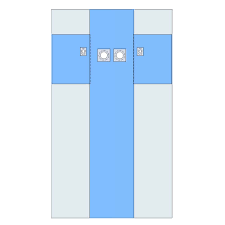
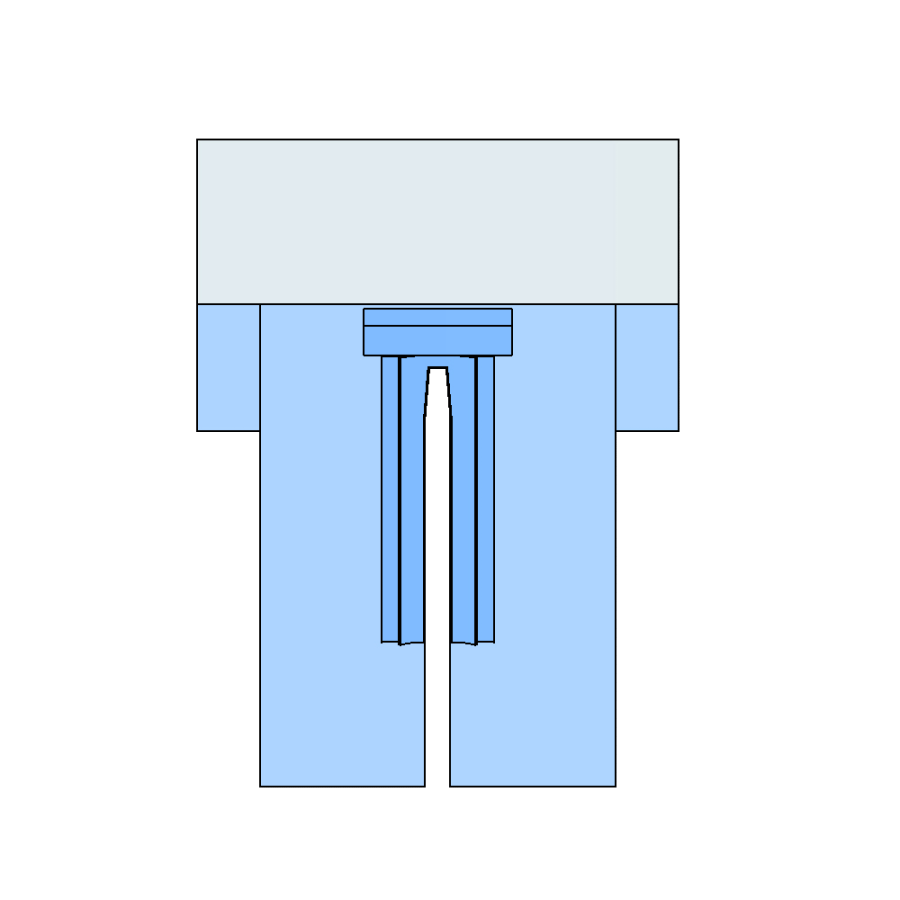
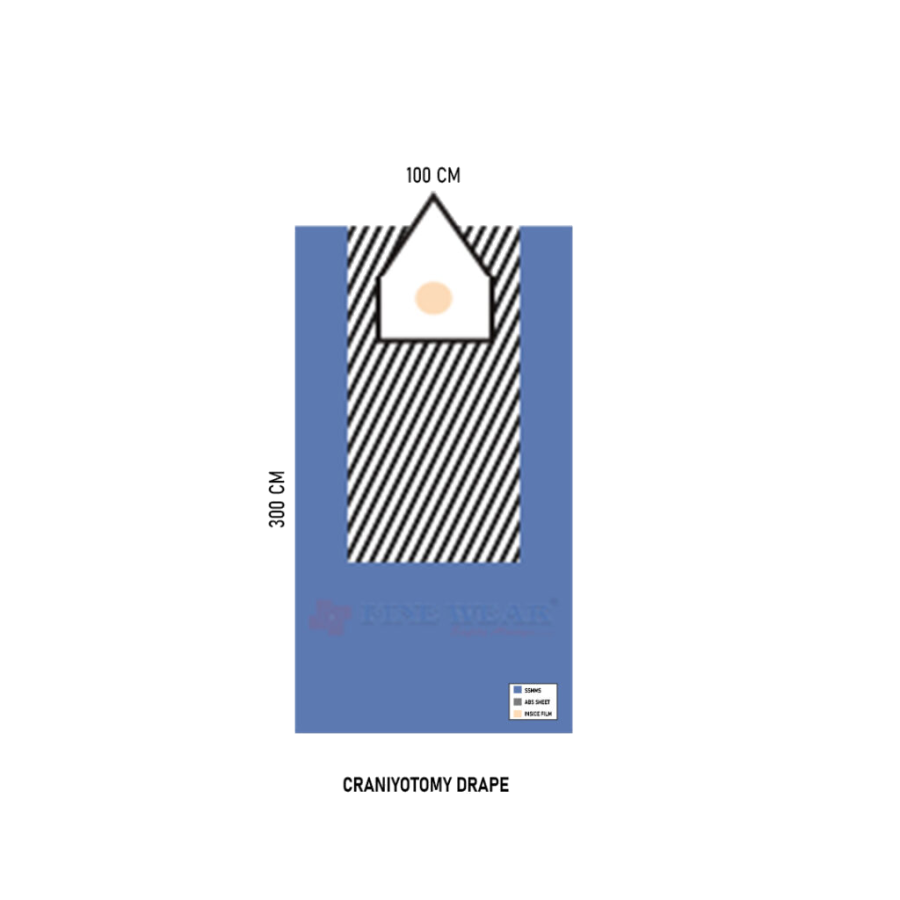
Once applied, surgical drapes act as passive insulation. A single layer of drape material over the skin holds a thin layer of still air against the body, which reduces radiant and convective loss from the area it covers. The effect is useful but limited. Passive covering slows heat loss; it does not add heat, and for many patients it will not be enough by itself.
Wet drapes and wet patients
Water conducts heat far more readily than air, and evaporation draws heat from whatever surface the liquid is on. A patient lying on sheets soaked with antiseptic, irrigation fluid or blood therefore loses heat by two routes at once, for as long as the operation lasts. Procedures that use large volumes of irrigation — arthroscopy, endoscopic urology and some abdominal surgery — carry the greatest risk.
This is where drape construction matters most.
- An impervious layer stops fluid passing through to the patient’s skin and to the linen beneath.
- An absorbent zone around the incision takes up fluid at the site before it can run under the patient.
- A collection pouch with a drainage port removes irrigation run-off from the field altogether.
- Adhesive edges applied to dry skin prevent fluid tracking beneath the drape.
These features are described in more detail in our guides to fluid management in the operating theatre and the layers inside a surgical drape. If drapes or underlying sheets do become soaked, the surgical and anaesthetic teams decide whether and when they can be changed. At the end of the case, wet linen is removed and the patient is dried and covered before transfer.
Drapes alongside active warming
Active warming means delivering heat to the patient. The common methods are forced-air warming blankets, conductive or resistive warming mattresses and blankets, and the warming of intravenous and irrigation fluids. Which methods are used, when they start and for which patients are set out in the hospital’s protocol. Guidelines also describe warming patients before induction, to reduce the early redistribution fall.
Draping has to work with these devices, and a few practical points arise.
- Placement order. Warming blankets are positioned and secured before the surgical drapes go on, since they cannot be adjusted afterwards without disturbing the field.
- Coverage. The drape layout should leave the warming blanket over as much non-operative body surface as the procedure allows. Upper-body, lower-body and underbody blankets exist for this reason.
- Separation of air flows. The warming device’s instructions for use state how it should be covered and how its air is kept away from the operative site. Adhesive drape edges between the blanket and the incision help to keep the two apart.
- Access for monitoring. Temperature probes and their leads should be routed so they remain accessible to the anaesthetist once the patient is draped.
Ambient theatre temperature is a further lever, usually a compromise between the patient’s needs and the comfort of a gowned team working under lights.
A note on targets
National and international guidelines define normothermia, set out how and how often temperature should be measured, and state the thresholds at which active warming should begin. Those definitions are not repeated here, because the current edition of the guideline adopted by the hospital, together with local policy, is the correct reference. What the theatre nurse and the purchaser can influence is narrower but still worth attention: how long the patient is exposed, how much of the body is covered, and whether the drapes keep the patient dry. Procedure-specific drapes with integral pouches, such as a knee arthroscopy drape with fluid pouch, are designed with that last point in mind.
Shrisay Medical manufactures impervious and fluid-collecting surgical drapes in Faridabad, made to order in size and configuration; to discuss drapes for high-irrigation procedures, please contact our team.
Frequently asked questions
Do surgical drapes keep a patient warm?
They help by covering skin and trapping a layer of still air, which slows heat loss. They do not add heat, so many patients also need active warming as set out in hospital protocol.
Why do wet drapes make a patient colder?
Liquid conducts heat away from the skin much more readily than air, and its evaporation removes further heat. Keeping the patient and the underlying linen dry reduces both effects.
What temperature counts as normothermia?
Clinical guidelines define normothermia and the thresholds for warming. Refer to the current guideline your hospital follows and to local policy.