Key takeaways
- ENT draping is shaped by the shared airway: the surgeon is at the head and the breathing circuit runs under the drapes.
- A split sheet applied from the chest, with adhesive tails around the neck and head, covers the body in one piece.
- Ear surgery uses a small-aperture adhesive drape, often clear and fitted with a pouch for irrigation.
- Head-and-neck surgery carries a raised fire risk, so prep drying time and gas dispersal under drapes matter.
Ear, nose, throat and head-and-neck surgery covers a wide span, from a ten-minute procedure on a child’s ear to a neck dissection lasting most of a day. What these operations have in common is the territory. The surgeon works within centimetres of the airway, the field is surrounded by hair, eyes and mouth, and the head has to be isolated from a body that takes no part in the operation. The drapes used are correspondingly specific: split sheets that pass around the head or neck, head wraps, and small fenestrated drapes for the ear.
As with all draping, the method is chosen by the surgical team in line with hospital policy.
Sharing the airway
In most surgery the anaesthetist sits at the patient’s head with unobstructed access to the airway. In ENT work the surgeon takes that position, the anaesthesia machine moves to the side or the foot, and the breathing circuit runs beneath the drapes to a tube that is itself close to, or within, the operative field.
This arrangement shapes the draping in three ways:
- The tube and circuit connections must be secure before draping, because they will be hard to reach afterwards.
- The drapes should allow the anaesthetist to see or reach the circuit from the side without contaminating the field, which is one reason transparent drapes are used in some head-and-neck procedures.
- Gases can collect under the drapes around the head, which has a direct bearing on fire risk, discussed below.
Split sheets around the head and neck
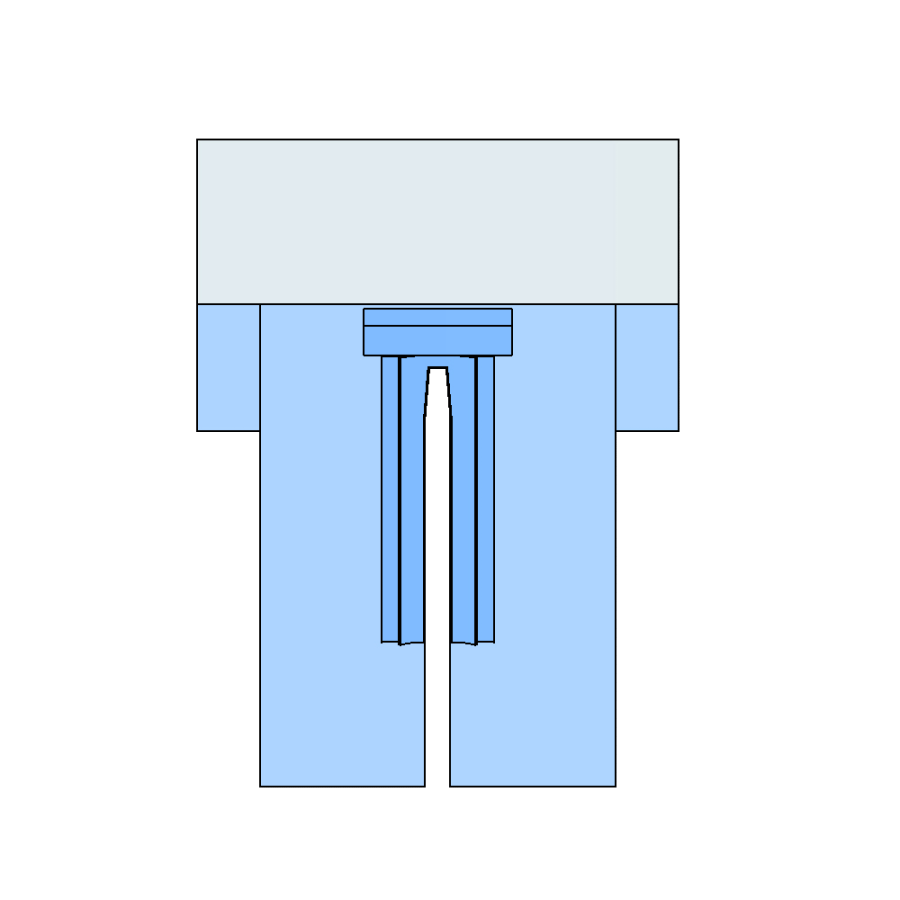
A split sheet, also called a U-drape, is a large sheet with a slit cut in from one edge, leaving two tails. The edges of the slit carry adhesive. The closed end of the slit is placed against the patient and the tails are brought round and stuck down, so that a part of the body projects through the sheet while everything else is covered.
For head-and-neck work an ENT split drape is typically applied from below: the base of the U lies across the upper chest, and the tails pass up either side of the neck and head to meet or overlap above. This covers the body and the table in one piece and leaves the face and neck exposed to whatever extent the operation requires.
The adhesive along the split is what makes the system work. It seals the drape to the skin at the shoulders and neck, where a loose sheet would gape as the head is turned.
The head wrap
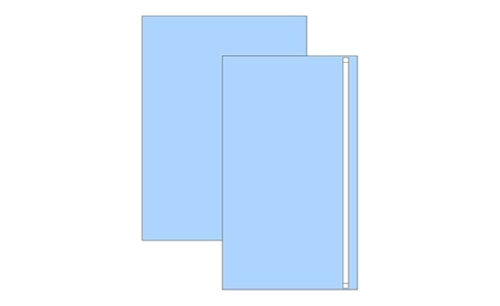
Hair cannot be prepared like skin and is usually excluded from the field with a head wrap, sometimes called a turban drape. In the common method, two layers are placed under the patient’s head together: a lower sheet that stays flat to cover the head of the table, and an upper sheet or towel that is brought up over the forehead, wrapped around the hair and secured.
The wrap must hold when the head is turned from side to side, as it is for many ear and neck procedures, and it should not put pressure on the eyes or the ears.
Thyroid and neck surgery
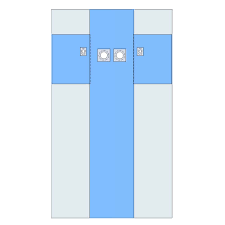
For thyroid and parathyroid surgery the patient lies supine with the neck extended over a support. The field runs from the chin to the upper chest and out to the sides of the neck. It can be draped with four adhesive sheets squared off around the neck, with a split sheet from below and a head sheet above, or with a single drape that has a transverse fenestration and adhesive surround.
Larger procedures change the requirement. A neck dissection may extend from the ear to the clavicle, and reconstructive surgery often needs a second field at the chest, forearm or leg for a flap. Component draping with split sheets and adhesive utility drapes adapts to these more easily than a fixed fenestration.
Ear surgery and small apertures
Ear operations are done through a small opening with the head turned to the side, usually under a microscope. The drape is correspondingly compact: a sheet with a small round or oval aperture, an adhesive surround that seals against the skin around the ear, and often a clear film construction so that the surrounding anatomy stays visible.
Two features deserve attention. First, drilling the mastoid uses continuous irrigation, and a small collection pouch below the aperture keeps the fluid out of the patient’s hair and off the surgeon’s lap. Second, where the surgical team wishes to observe the face during the operation, as is sometimes the case when the facial nerve is at risk, a transparent drape makes that possible. Whether it is needed is a clinical decision. The microscope itself requires a sterile microscope drape.
| Procedure group | Typical draping | Features to look for |
|---|---|---|
| Ear (tympanoplasty, mastoid surgery) | Head wrap and small-aperture adhesive drape | Clear film, secure adhesive around the ear, irrigation pouch |
| Nose and sinus | Head wrap with split sheet or body sheet, face exposed | Routing for camera, light and suction lines; absorbent area below the face |
| Thyroid and parathyroid | Split sheet from below with head sheet, or transverse fenestrated drape | Adhesive seal at the neck; reinforcement over the chest |
| Neck dissection and reconstruction | Component draping with split sheets and utility drapes | Flexibility for wide exposure and a second operative site |
Fire risk in head-and-neck draping
Head-and-neck surgery is widely recognised as carrying a higher risk of surgical fire than most other fields. The three ingredients are close together: an ignition source such as diathermy or a laser, fuel in the form of drapes, swabs, hair and alcohol-based skin preparation, and an oxidiser where oxygen or nitrous oxide accumulates under the drapes or leaks around the airway.
Drapes do not remove this risk, and no single-use non-woven should be assumed to be non-flammable in an oxygen-enriched atmosphere. Draping practice can help, however: allowing preparation solutions to dry completely before draping, avoiding pooling in the hair, and arranging the sheets so that gases can disperse instead of being trapped around the face. The subject is treated in full in our article on surgical fire safety, drapes and alcohol-based preps.
Packs and specification
ENT lists tend to consist of many short cases, which makes pre-assembled sets attractive. An ENT pack commonly brings together the split drape, head wrap components, a table cover, a mayo stand cover, gowns and towels. When specifying drapes or packs for this speciality, the points to settle are:
- the length and width of the split and the width of its adhesive;
- overall sheet size, including enough length to cover the table to the feet;
- aperture size and shape for ear drapes, and whether a pouch is required;
- the barrier standard and level the critical areas are tested to.
Shrisay Medical manufactures ENT split drapes and ENT packs in Faridabad, made to order in size and configuration; please contact us to discuss your requirements.
Frequently asked questions
What is a split sheet or U-drape in ENT surgery?
It is a large sheet with an adhesive-edged slit cut in from one side. The slit is placed around the neck or head so that the operative area projects through while the body and table are covered.
Why are clear drapes sometimes used for ear and neck procedures?
A transparent drape lets the team see the surrounding anatomy, the airway connections or the face during the operation. Whether this is required is decided by the surgical and anaesthesia teams.
Do surgical drapes prevent fires in head-and-neck surgery?
No. Drapes can burn in an oxygen-enriched atmosphere. Risk is reduced by good practice, including letting alcohol-based preps dry and preventing oxygen from collecting under the drapes.