Key takeaways
- A patient gown provides clean single-use clothing and clinical access; it is not a barrier garment and should not be used as staff protection.
- The opening style decides which part of the body can be reached and how much of the patient is uncovered.
- Opacity, overlap, length and working ties determine whether patients feel adequately covered, and are best judged on a wearer.
- Sizes should be compared by flat dimensions, with bariatric and paediatric options where the patient mix requires them.
Most hospital garments are designed around the person doing the work. The patient gown is the exception: it is worn by someone who is unwell or anxious, often cold, frequently lying down, and who did not choose it. It still has a clinical job to do, because staff need to reach the chest, abdomen, back or limbs quickly and without undressing the patient completely.
A good patient gown reconciles those two demands. A poor one fails the patient, who feels exposed, or the clinician, who has to work around it.
What a patient gown is for, and what it is not
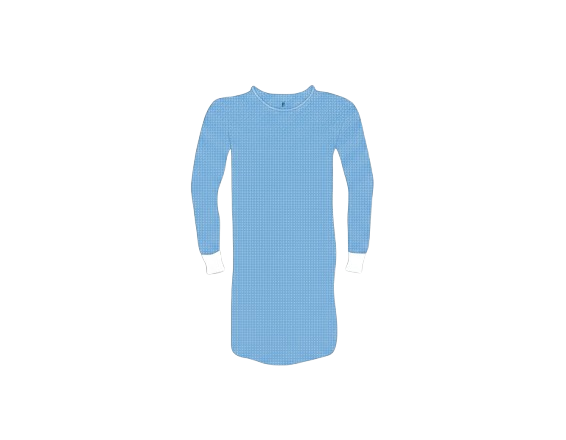
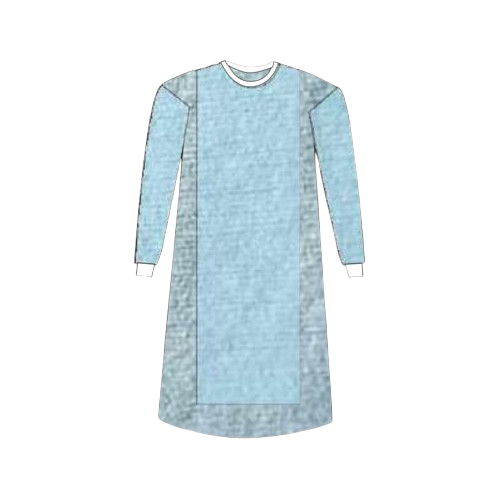
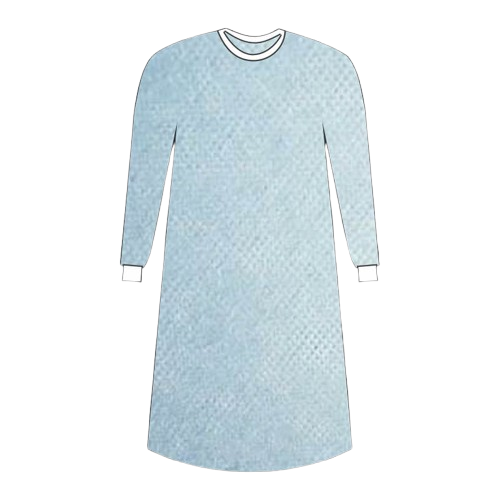
A patient gown provides clean, single-use clothing for examination, imaging, minor procedures and the period before and after surgery. It replaces the patient’s own clothes, which may be soiled, restrictive or unsuitable for the investigation, and it removes a laundering step where turnover is high.
It is not a barrier garment. A patient gown is not designed or tested to protect against fluid penetration in the way a surgical or isolation gown is, and it should not be used by staff as protective clothing. Nor is it part of the sterile field: in theatre the patient is covered by sterile drapes, and the gown is usually removed or folded clear of the operative site before skin preparation, as local practice dictates. The distinction between gown types is set out in our article on surgical gowns and isolation gowns.
Opening styles and clinical access
Where the gown opens determines what the clinician can reach and how much of the patient is uncovered in the process.
| Opening style | Access it gives | Points to consider |
|---|---|---|
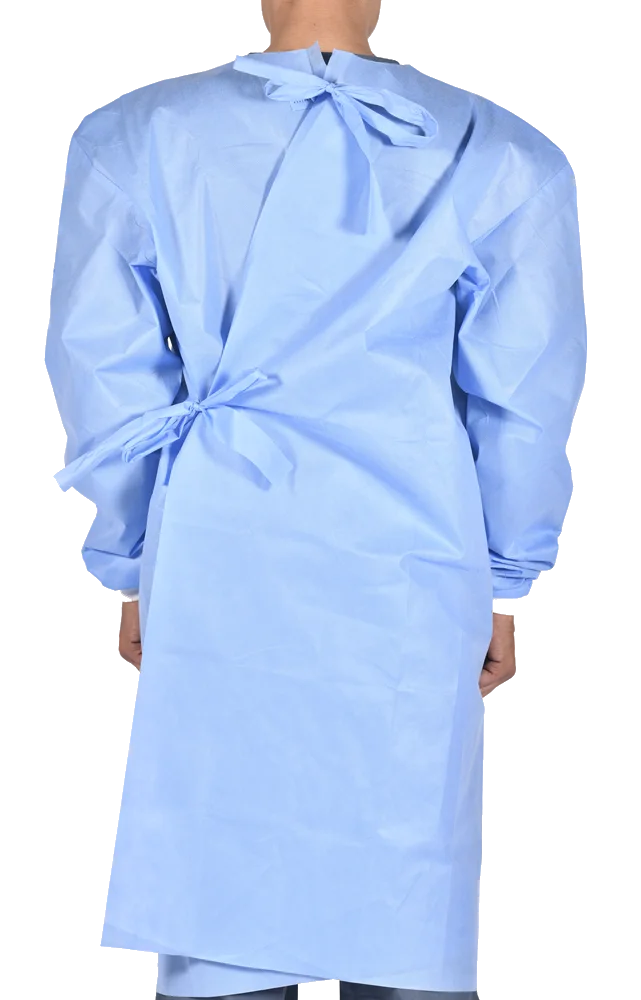
| Back opening with neck and waist ties | Back, spine and, by lifting the hem, abdomen and lower body | The familiar style; needs generous overlap or it gapes when the patient walks |
| Front opening, wrap style | Chest, breasts and abdomen | Suits cardiac and breast examination and feeding mothers; ties at the side |
| Shoulder opening with snaps or ties | Upper chest and arms; sleeve can be opened around a line | Useful where infusion lines are in place; fasteners add cost |
| Full wraparound with overlap | General examination | Best coverage for walking patients; uses more fabric |
| Procedure-specific garments | A single area, such as the perineum or a limb | For example shorts with a rear opening for colonoscopy |
For lower gastrointestinal endoscopy, purpose-made disposable colonoscopy shorts give access through a rear opening while leaving the patient otherwise covered, which many patients find more acceptable than a gown alone.
Opacity, coverage and dignity
Patients judge a gown on whether they can walk down a corridor in it. Several features decide that.
- Opacity. Thin, pale non-woven can be translucent, particularly under bright lights or when stretched across the body. Darker colours and heavier fabrics are more opaque. The practical test is to put a sample on a person and look at it under the lighting of the department where it will be used.
- Overlap at the opening. A back-opening gown whose edges only just meet will part as soon as the patient sits or walks. The overlap should hold on the largest patient the size is intended for.
- Length. A gown that reaches below the knee on a person of average height is generally acceptable; shorter gowns leave seated patients uncovered.
- Sleeves. Short sleeves keep the forearm free for cannulation and blood pressure measurement. Sleeveless designs are cheaper but cover less.
- Ties that work. A neck tie the patient cannot reach, or one that has torn off, undoes all of the above. Ties should be long enough to fasten and strong enough to survive a pull.
Cultural expectations of modesty vary, and some patients will want more coverage than a standard gown gives. Stocking a wraparound style, or allowing a second gown worn back to front as a robe, is a simple accommodation that hospitals can decide on locally.
Material choices
Disposable patient gowns are almost always made from polypropylene non-woven, in one of two forms.
- Spunbond polypropylene is light, breathable and economical. Softness varies considerably with the grade, so it is worth handling a sample against the skin of the neck and inner arm.
- SMS polypropylene has a meltblown layer between two spunbond layers. It is more opaque and resists light splashes better, at a somewhat higher cost.
Fabric weight, stated in grams per square metre, affects opacity, strength and warmth, but it does not on its own describe softness or quality; our article on what GSM means in medical non-wovens explains the limits of the figure. Three further points apply to patient gowns in particular:
- The fabric is in prolonged contact with skin, sometimes fragile skin, so a smooth surface and soft seam edges matter more than they do in an over-garment.
- Non-woven polypropylene gives little warmth. Patients waiting in air-conditioned areas need a blanket, and the gown should not be expected to do that job.
- For magnetic resonance imaging, garments should be free of metal fasteners and metallic fibres. The imaging department’s own safety rules decide what is permitted.
Sizes
A single “free size” is common and adequate for many adults, but it fails at both ends of the range. A sensible range for a general hospital includes a standard adult size, an extra-large or bariatric size with a wider body and longer ties, and paediatric sizes where children are treated. An oversized gown on a child is a trip hazard and offers little dignity; an undersized gown on a large adult does not close.
When comparing offers, ask for the flat dimensions, namely length, chest width and sleeve length, not just the size label, since labels are not standardised between manufacturers.
Where disposable patient gowns are used
- Imaging — radiography, ultrasound, CT and MRI, where clothing with fasteners has to come off and turnover is rapid.
- Day-care and endoscopy units — short stays with many patients each day and little time for linen handling.
- Pre-operative areas — a clean garment for transfer to theatre.
- Outpatient examination and health checks — one gown per patient, discarded afterwards.
A gown is used for one patient and one episode, then discarded. If it is soiled with blood or body fluids it is handled as contaminated waste in line with the Bio-Medical Waste Management Rules 2016 and hospital policy.
Writing the specification
A workable purchase description states the opening style, sleeve type, flat dimensions for each size, fabric type and weight, colour, the number and position of ties, and the packing unit. It is worth adding that samples will be assessed for opacity and softness on a wearer. Those two properties are hard to capture in numbers and easy to judge in person.
Shrisay Medical manufactures the disposable patient gown in Faridabad, made to order in size, fabric and pack configuration for hospitals, distributors and export buyers.
Frequently asked questions
Can a disposable patient gown be used as an isolation gown by staff?
No. A patient gown is not designed or tested as a fluid barrier. Staff protection requires a gown made and labelled for that purpose.
Which fabric is better for patient gowns, spunbond or SMS?
Spunbond polypropylene is lighter and more economical, while SMS is more opaque and resists light splashes better. The choice depends on budget and how much coverage and opacity are wanted.
Are disposable patient gowns suitable for MRI?
They can be, provided the garment has no metal fasteners or metallic fibres. The imaging department’s safety rules decide what may be worn in the scanner room.