Key takeaways
- Adhesive is used at fenestration edges, on utility drapes, across incise films and to fix pouches, and only some of these contact skin.
- Acrylic adhesives generally age well and are common in skin contact, while synthetic-rubber hot-melts offer strong initial grab for construction bonds.
- The release liner and its finger-lift tab determine how easily the drape can be applied with gloved hands.
- Dry skin, firm pressure and slow, low removal improve adhesion and reduce the risk of skin injury.
The adhesive on a surgical drape is a few centimetres wide and accounts for a very small part of the product’s cost. It is also the component most likely to draw a complaint. A strip that lifts halfway through a case lets the drape migrate and fluid track beneath it; a liner that will not peel with gloved hands wastes time and risks contamination; an adhesive that grips too hard can injure skin when the drape comes off.
Where adhesive appears on a drape
The adhesives in question are pressure-sensitive: permanently tacky materials that bond under light pressure without heat, water or solvent. They are used in several places.
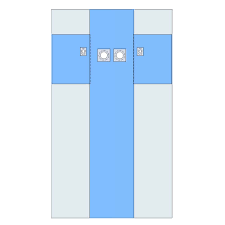
- Fenestration edges. A border of adhesive around the opening fixes the drape to the skin and seals the edge. The options are discussed in our article on fenestrated drapes and aperture types.
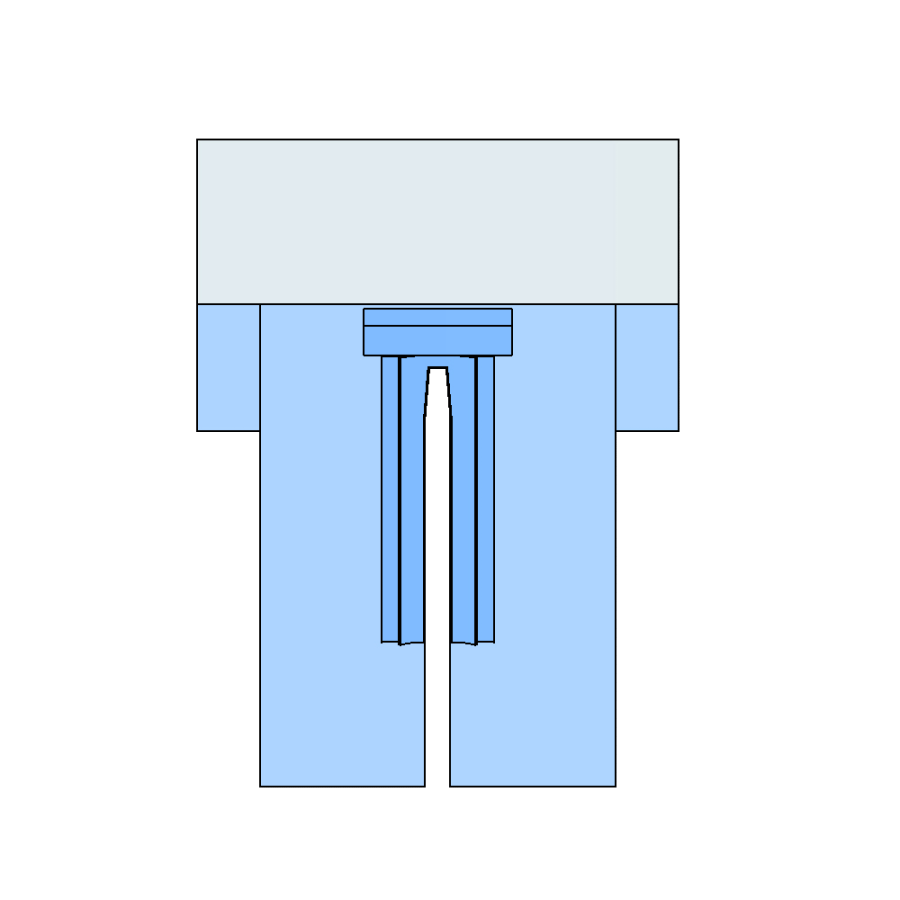
- Utility and side drapes. An adhesive strip along one edge lets the team square off a site with separate sheets, as with an adhesive utility drape.
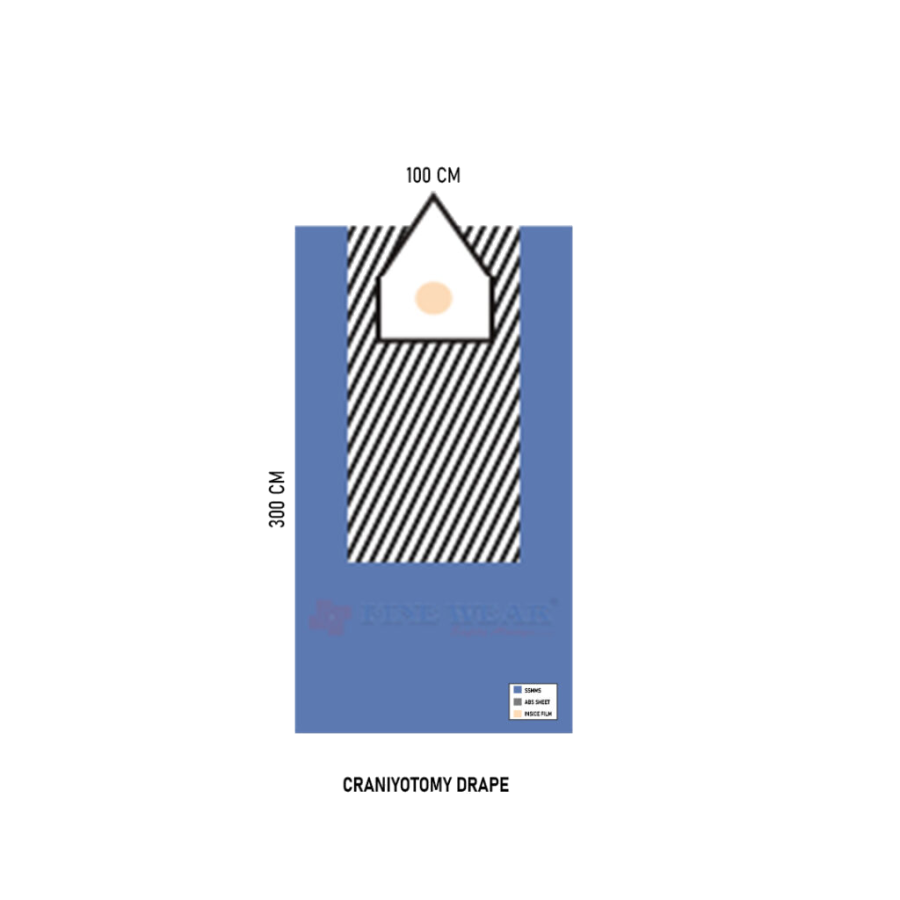
- Incise film. A thin transparent film coated with adhesive over its whole surface covers the skin at the incision site; see our article on incise drapes and adhesive films.
- Pouches and accessories. Instrument pouches, fluid collection pouches and tube holders are often fixed to the drape, or to another drape, with adhesive strips.
Not all of these touch the patient. Adhesive that bonds one drape to another needs only to hold on fabric or film. Adhesive that contacts skin has further requirements, described below.
How a drape tape is built
The adhesive is seldom coated directly onto the drape fabric. More often a double-sided tape is used: a thin carrier with adhesive on both faces. One face is bonded permanently to the drape during manufacture; the other, protected by a release liner, is exposed at the point of use. This allows the two faces to carry different adhesives, each suited to its surface.
A wider strip gives more holding area; a strip set too far back from the edge leaves a flap under which fluid can collect.
Acrylic and synthetic-rubber adhesives
Two families of pressure-sensitive adhesive account for most drape applications. Natural rubber latex adhesives are generally avoided in medical products because of latex allergy.
| Characteristic | Acrylic | Synthetic-rubber hot-melt |
|---|---|---|
| Composition | Acrylic polymer; inherently tacky | Synthetic rubber blended with tackifying resins and oils |
| Initial grab | Moderate; builds over time | High from first contact |
| Bond to low-energy surfaces such as polyethylene and polypropylene | Depends on grade | Generally good |
| Resistance to heat, light and ageing | Generally good | More limited; can soften or discolour |
| Clarity | Clear, colourless | Often pale yellow to amber |
| Typical use on drapes | Skin-contact strips; incise films | Construction bonds; drape-to-drape strips; some skin-contact tapes |
These are tendencies across broad families, each of which contains many formulations. Silicone-based adhesives, known for gentle release, are used in some skin-contact products but are less common on drapes. A buyer does not usually need to specify the chemistry; it is more useful to specify performance and to ask what the adhesive is and what biological evaluation supports its use on skin.
Release liners and finger-lift tabs
The release liner is a strip of paper or film with a non-stick coating, usually silicone, which protects the adhesive until use. It is discarded within seconds, yet it shapes the user’s experience of the drape.
- Release force. The liner should come away smoothly. Too tight and it tears or drags the drape; too loose and it falls off in the pack, leaving adhesive to stick to the folded drape.
- Finger-lift tab. An adhesive-free margin, an overhanging liner edge or a folded end gives gloved fingers something to grasp. Without it, staff pick at the edge and may puncture a glove.
- Split liners. On longer strips the liner may be divided so that the drape can be positioned first and the adhesive exposed in stages.
- Visibility. A coloured or printed liner is easy to see, which makes it less likely that a piece will be left in place or lost in the field.
Liners removed during draping are loose items; the team should account for them as local practice requires.
Adhesion on prepared skin
Skin is a difficult surface: uneven, flexible, warm, and variably moist and oily. In theatre it has also just been treated with an antiseptic. For the adhesive to hold, the following conditions help.
- The skin must be dry. Adhesive does not bond to a wet surface, and with alcohol-based preparations full drying is also a fire-safety requirement, as explained in our article on surgical fire safety.
- Pooled prep solution, blood or irrigation fluid at the edge of the site should be dealt with before the drape is applied.
- Firm, even pressure along the whole strip after placement improves contact; pressure-sensitive adhesives need pressure to wet the surface.
- The strip should be laid without tension. A drape stretched as it is stuck down will pull at the skin and tend to lift.
- Hair, skin folds and contoured anatomy all reduce the area of contact.
Skin injury on removal
An adhesive strong enough to hold through a long, wet procedure can damage skin when it is removed. Medical adhesive-related skin injury includes stripping of the surface layer, tears, blistering from tension, and irritant or allergic reactions. Those most at risk include neonates, elderly patients, and patients whose skin is fragile, swollen or affected by long-term medication.
General good practice at removal is to peel slowly, keeping the drape low and close to the skin surface instead of pulling it upwards, while supporting the skin beside the peel line with the other hand. Any known sensitivity to adhesives should be recorded before surgery, and the choice of product for at-risk patients rests with the clinical team.
From the manufacturer’s side, materials that contact skin fall within the biological evaluation of the device under the ISO 10993 series, which addresses matters such as irritation and sensitisation.
Storage temperature and ageing
Pressure-sensitive adhesives are soft materials and they respond to their surroundings.
- Heat. In a hot store or vehicle the adhesive softens and can creep beyond the edge of the liner, sticking the folds of the drape together. Prolonged heat also accelerates ageing.
- Cold. A cold adhesive is stiffer and less tacky. Stock brought from a cold store should be allowed to reach room temperature before use.
- Time. Tack and release force can change over the shelf life, which is one reason to rotate stock and respect the expiry date.
The storage conditions printed on the label should be followed.
Shrisay Medical manufactures adhesive and non-adhesive drapes in Faridabad, with the position and width of adhesive strips adapted to the procedure; the range is shown on our surgical drapes page.
Frequently asked questions
Why does a drape adhesive sometimes fail to stick?
The commonest causes are skin that is not fully dry after preparation, fluid at the edge of the site, too little pressure on application, or stock that has been stored too hot or too cold.
Do drape adhesives contain latex?
Natural rubber latex adhesives are generally avoided in medical products. Buyers should still confirm the latex status of a specific product from its labelling or the manufacturer.
How should an adhesive drape be removed?
Slowly, peeling low and close to the skin while supporting the skin beside the peel line. Hospital protocol and the needs of the individual patient take precedence.