Key takeaways
- Spunlace is made by entangling fibres with high-pressure water jets, without binders or melting, which gives it a soft, cloth-like drape.
- Polyester supplies strength while wood pulp supplies bulk, feel and absorbency.
- A spunlace gown fabric relies on a repellent finish for its barrier, and higher levels normally need film reinforcement.
- Untreated spunlace is absorbent and is used for hand towels and the absorbent face of drape reinforcements.
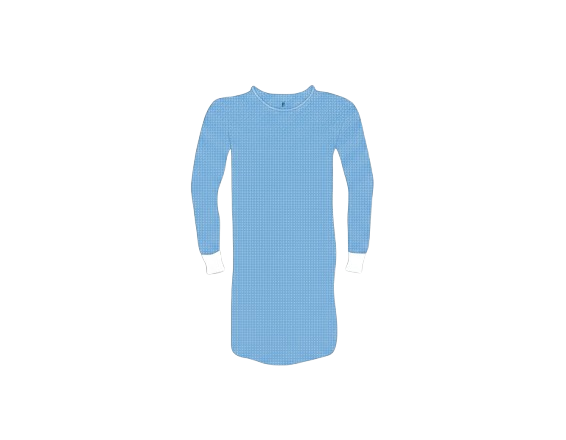
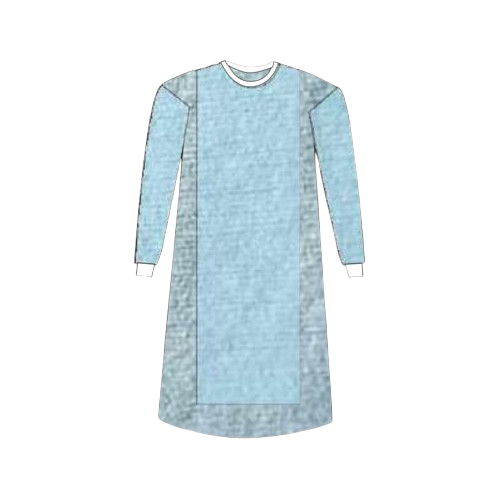
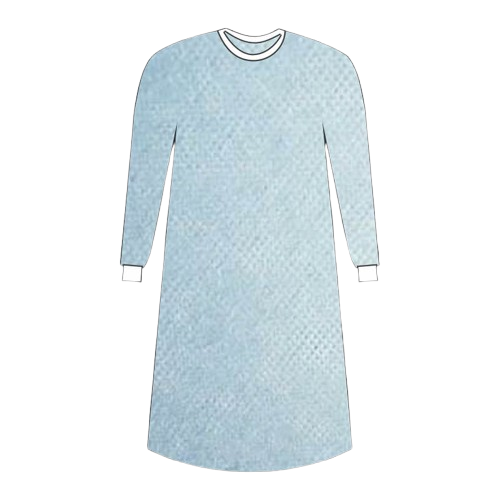
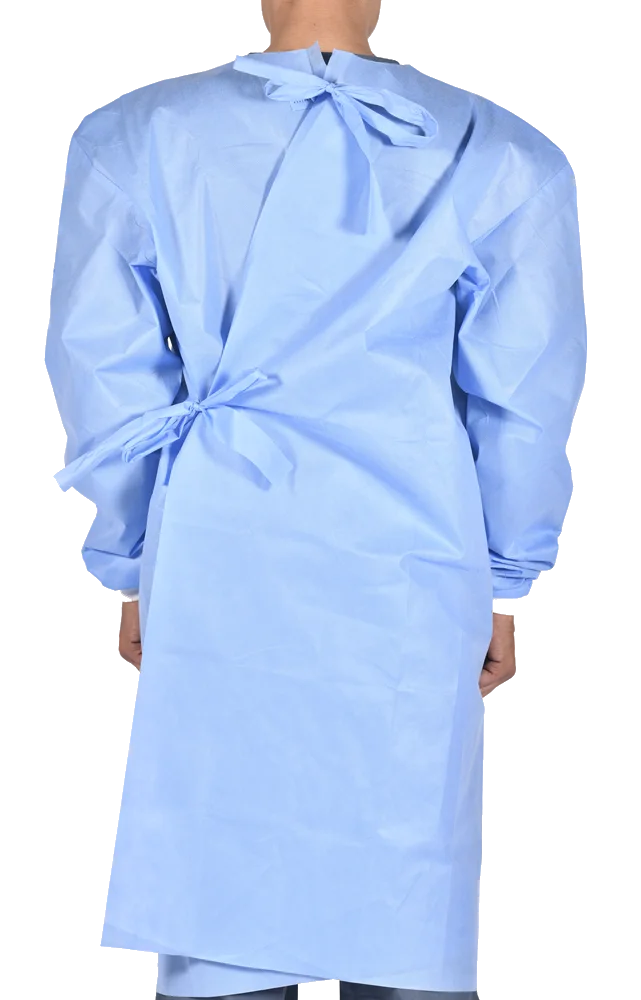
Surgeons who trained in woven cotton gowns often describe polypropylene gowns as feeling like paper or plastic. The fabric they tend to prefer, when given the choice, is spunlace: a soft, quiet, textile-like non-woven that hangs and moves much as cloth does. In single-use surgical products the usual grade is a blend of wood pulp and polyester, and it has kept a place in gowns, drapes and towels alongside the far more common SMS.
Spunlace is not simply a more comfortable version of the same thing. It is made differently, it gets its barrier in a different way, and its strengths and limits follow from both.
How hydroentanglement works
Spunlace takes its name from the way the fibres are joined. A loose web of fibres is carried on a perforated belt or drum beneath rows of very fine, high-pressure water jets. The jets drive fibres from the surface down into the web and around one another; water rebounding from the support adds to the tangling. After several passes, often from both sides, the fibres are knotted together well enough to form a coherent fabric. The fabric is then dried.
No adhesive binder is needed and nothing is melted. This is the important difference from thermally bonded polypropylene fabrics, described in our article on SMS and related non-wovens, in which fibres are fused at fixed points. Because the fibres in spunlace are held by friction and entanglement, they can still shift slightly against one another, and that freedom is the source of the fabric’s softness and drape.
Why wood pulp and polyester
The two components do different jobs. Polyester fibres are long, strong and stable when wet; they form the framework that gives the fabric its tensile and tear strength. Wood pulp fibres are short cellulose fibres; they fill the spaces in that framework, adding bulk, opacity, a cotton-like feel and the ability to absorb.
In manufacture, a layer of pulp is laid over a web of polyester and the water jets drive the pulp into it, locking the two together. The finished fabric typically has a slightly different character on each face, one richer in pulp than the other.
Other spunlace blends exist. Viscose and polyester blends are widely used for wipes and swabs, for example. For gowns and drapes, wood pulp with polyester has become the established choice because it combines a cloth-like hand with adequate strength at a moderate cost.
Barrier depends on the finish
Untreated, a wood pulp and polyester spunlace is absorbent. Cellulose takes up water readily, so fluid landing on the fabric soaks in and can pass through. That makes untreated spunlace unsuitable as a protective layer, however pleasant it feels.
For gown and drape fabric, the material is therefore given a repellent finish during production. The treatment coats the fibres so that water, blood and, depending on the chemistry, alcohol bead on the surface and do not wet it. The barrier of a spunlace gown fabric thus rests on two things: the density of the fibre structure and the quality and evenness of the finish.
This has practical consequences:
- Resistance to liquid under pressure is generally more modest than that of a multi-layer SMS fabric with a substantial meltblown content.
- For higher barrier levels, a spunlace gown is normally reinforced in the critical zones with a film or laminate, in the same way as other reinforced gowns.
- The barrier claim should be supported by tests on the finished, sterilised product, since the finish is what is being relied on.
- Requirements on fluorine-based repellents are tightening in some markets, so buyers supplying regulated destinations should ask what chemistry is used.
Untreated spunlace: towels and absorbent reinforcements
The absorbency that has to be suppressed in a gown fabric is exactly what is wanted elsewhere. Untreated spunlace is soft on skin, takes up water quickly and stays reasonably strong when wet. It is the usual material for the absorbent hand towels packed with sterile gowns for drying the hands and forearms after scrubbing.
It is also used as the absorbent top layer of the reinforcement around a drape fenestration, bonded over an impervious film. Here the spunlace holds fluid at the site while the film beneath provides the barrier, so no repellent finish is required.
Spunlace and SMS compared
| Property | Wood pulp/polyester spunlace | Polypropylene SMS |
|---|---|---|
| How fibres are held | Entangled by water jets | Thermally fused at bond points |
| Source of liquid barrier | Repellent finish on a dense web | Fine-pored meltblown layers, often with a finish |
| Barrier under pressure | Generally moderate; reinforced for higher levels | Moderate to high, depending on construction |
| Feel and drape | Soft, quiet, cloth-like | Smoother and crisper; improves with softer grades |
| Air permeability | Generally good | Good; falls as barrier layers are added |
| Lint | Needs control; contains short pulp fibres | Low; continuous filaments on the surface |
| Cost direction | Usually higher for a comparable product | Usually lower |
These are general tendencies. Individual grades of either fabric vary widely, and a comparison for purchasing should be made on test data and wear trials for the specific products on offer.
Comfort
Comfort is the main argument for spunlace. The fabric is supple, does not rustle, and feels less clammy against the forearms over a long case. Wearer preference is subjective, though, and softer SMS grades have narrowed the gap; the trade-offs are discussed in our article on breathability versus barrier.
Lint
Wood pulp fibres are short, and short fibres are more easily released than continuous filaments. A well-made spunlace, thoroughly entangled and properly finished, keeps this under control, but linting should be tested and not assumed. The reasons it matters are set out in our article on lint and particles in the theatre.
Sterilisation and storage
Spunlace gowns and drapes are commonly sterilised with ethylene oxide, as SMS products are. Cellulose and polyester are also generally regarded as more tolerant of irradiation than unstabilised polypropylene, which gives the manufacturer some flexibility, but the choice of method belongs to the validated process for each product and should be read from the label.
Because the fabric contains cellulose, it should be stored dry. Damp storage can affect both the fabric and the packaging, and the usual conditions for sterile goods apply: clean, dry, away from direct sunlight and off the floor.
Deciding when spunlace is worth specifying
Spunlace is worth considering where wearer comfort carries real weight, such as long procedures or teams that have rejected crisper fabrics, and where the required barrier level can be met by the fabric or by reinforcement. SMS remains the practical default where cost, high liquid resistance without reinforcement, or low lint are the priorities. Many hospitals keep both, assigning them to different procedures under their own policy.
Shrisay Medical makes its products to order in Faridabad, including the choice of fabric for each item; the current range is shown on our surgical gowns page.
Frequently asked questions
Is spunlace more protective than SMS?
Not generally. Spunlace is chosen mainly for comfort and drape. Its liquid barrier depends on a repellent finish and is usually reinforced with film for higher barrier levels.
Why are the hand towels in gown packs made of spunlace?
Untreated wood pulp and polyester spunlace absorbs water quickly, is soft on skin and stays reasonably strong when wet, which suits drying the hands after scrubbing.
Does spunlace shed more lint than SMS?
It can, because wood pulp fibres are short. Good entanglement and finishing keep linting low, but it should be confirmed by testing for the specific fabric.