Key takeaways
- In endoscopic urology the drape’s main job is to capture and direct irrigation fluid, not just to cover the patient.
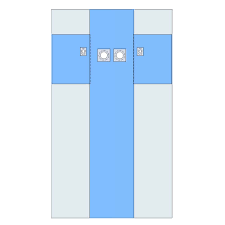
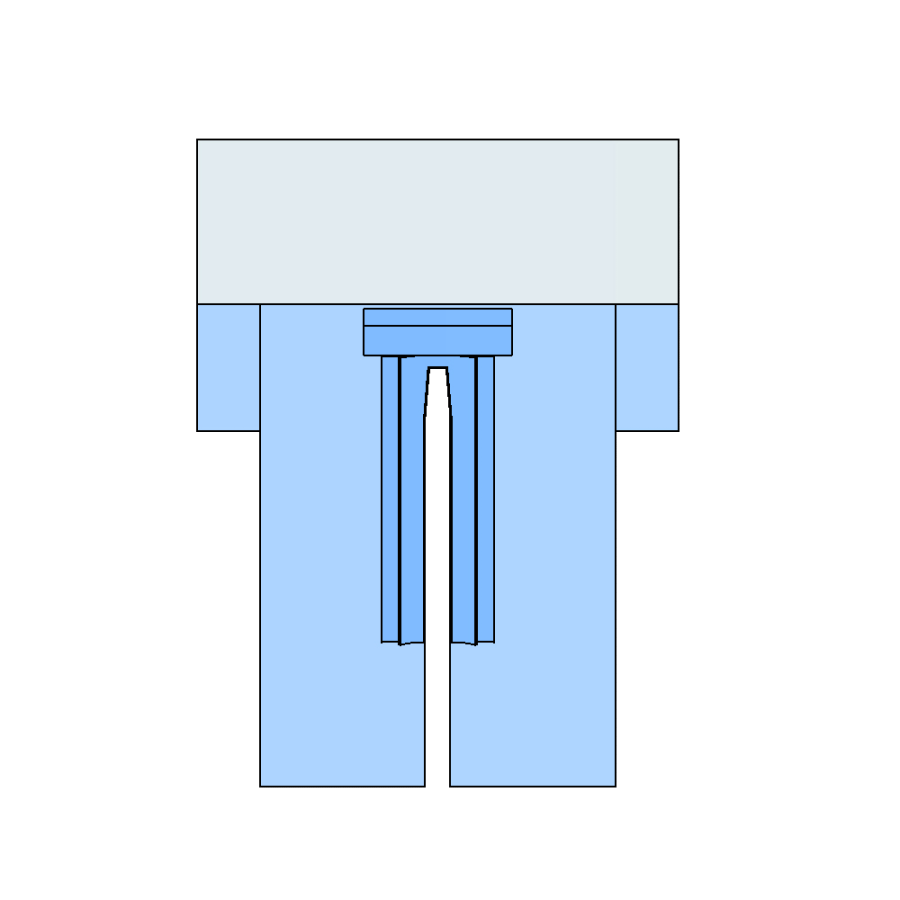
- A lithotomy set combines leggings, an under-buttock section and an abdominal sheet, either as separate pieces or one drape.
- TUR drapes add a filtered pouch to retain tissue chips and a drain port to carry fluid away.
- Cystoscopy needs far less, and over-specifying the drape for short diagnostic work adds cost and waste.
In transurethral surgery, litres of irrigation fluid pass through the bladder and out again in the course of a single case. Some returns through the resectoscope, but a good deal escapes around the instrument each time it is withdrawn or the bladder is emptied. In this setting the drape is less a cover than a piece of plumbing. Its success is judged by where the fluid ends up: in a collection system, or on the surgeon’s lap and the theatre floor.
The lithotomy position and what it asks of a drape
The patient lies supine with the hips and knees flexed and the legs supported in stirrups or leg holders, and the buttocks at the very end of the table. The surgeon sits or stands between the legs. This geometry creates three draping tasks. Each raised leg has to be enclosed, including the stirrup. The area beneath the buttocks, where fluid falls, needs an impervious surface that directs it downwards. And the abdomen and chest must be covered up to the anaesthetic screen, sometimes with access left for a suprapubic puncture.
Components of a lithotomy drape set
- Leggings. Long, bag-shaped covers drawn over each leg and its stirrup, usually with a folded cuff that protects the gloved hands during application.
- Under-buttock drape. An impervious sheet tucked beneath the buttocks, often with a pouch hanging over the table end.
- Abdominal sheet. A plain or fenestrated sheet covering the trunk, with an adhesive edge fixed above the pubis.
- Perineal fenestration. An opening, sometimes with an adhesive surround, that exposes the genital area and seals the drape to the skin around it.
These may be supplied as separate pieces or as a one-piece lithotomy drape in which the leggings and body sheet are joined. The one-piece form is faster to apply and has no gaps at the groin; separate pieces adapt more easily to unusual patient sizes and leg positions. The same basic layout serves gynaecological and colorectal procedures, with the fenestration and pouch adapted to suit.
TUR drapes: built around fluid
A drape for transurethral resection of the prostate or of bladder tumours takes the lithotomy layout and adds the features needed to deal with continuous flow.
- Collection pouch. A large funnel-shaped film pouch below the perineal opening receives everything that leaves the urethra.
- Filter screen. A mesh panel inside the pouch holds back resected tissue chips and clots while letting fluid pass. This keeps the outlet from blocking and makes it easier to retrieve tissue that has escaped the evacuator.
- Drain port and hose. An outlet at the base of the pouch connects to tubing that leads to a floor drain, a bucket or a closed collection system.
- Mouldable pouch rim. A stiffened edge lets the surgeon shape the mouth of the pouch and bring it close to the instrument.
- Finger cot. Many TUR drapes include a soft sheath beneath the perineal opening through which a finger can be passed into the rectum to lift the prostate, without leaving the sterile field or breaching the drape.
- Suprapubic fenestration. A second, smaller opening over the lower abdomen, usually covered by an adhesive film or a flap until needed, for a suprapubic catheter or trocar.
- Impervious construction. The critical area is film-laminated, as absorbent material alone would be overwhelmed.
Why fluid management matters
Controlling irrigation fluid serves several purposes at once.
- Maintaining the barrier. A drape soaked through to the patient’s skin is no longer a barrier, however good the fabric was when dry.
- Patient warmth and skin. A patient lying in pooled fluid loses heat and is exposed to prolonged skin wetness. Keeping fluid moving into a pouch helps limit both, alongside the warming measures the theatre team applies.
- Staff safety. Wet floors cause slips, and urology theatres contain electrosurgical generators, foot pedals, light sources and video equipment at floor level.
- Visibility of what is being lost. During resection, the anaesthetic and surgical teams watch irrigation volumes because fluid can be absorbed by the patient. How this is monitored is a matter of clinical protocol, but a drape that channels outflow into a single collection point makes any accounting of fluid in and fluid out more practical than one that lets it disperse.
Cystoscopy and ureteroscopy: lighter requirements
Diagnostic cystoscopy is short, often performed under local anaesthesia, and uses a modest volume of fluid. A full TUR drape is unnecessary. A typical cystoscopy drape is a single sheet with a small perineal fenestration, with or without leggings, and sometimes a simple pouch or an absorbent area. For flexible cystoscopy in an outpatient setting, a compact fenestrated drape may be all that local practice requires. Shrisay Medical’s cystoscopy drapes are among our BIS certified products.
Ureteroscopy and laser lithotripsy sit between the two. Procedures are longer, irrigation may be pressurised, and guidewires, laser fibres and baskets need somewhere to rest, so a pouch with drainage and a clear working surface over the leggings are both useful. Percutaneous renal surgery is performed in a different position altogether and uses its own drape with a flank aperture and pouch.
| Procedure | Fluid volume | Typical drape |
|---|---|---|
| Flexible or diagnostic cystoscopy | Low | Small fenestrated sheet; leggings optional |
| Rigid cystoscopy with minor intervention | Low to moderate | Lithotomy drape with perineal fenestration and simple pouch |
| Ureteroscopy and lithotripsy | Moderate | Lithotomy drape with drainable pouch |
| TURP and TURBT | High, continuous | TUR drape with filtered pouch, drain hose, finger cot and suprapubic access |
What to ask your supplier
Urology drapes are best judged in use. Before placing a regular order, ask for samples and check the following during real cases:
- Do the leggings fit over your stirrups or leg holders, and are they long enough?
- Does the pouch stay open and close to the instrument, and does the filter clear without blocking?
- Does the drain outlet match your tubing or collection system?
- Is the finger cot positioned correctly for your surgeons, and is a suprapubic opening needed?
- Is the drape folded so that one nurse can apply it without contaminating the cuffs?
- What barrier evidence is available for the laminated area?
Our urology and lithotomy drapes can be adjusted in legging size, pouch design and fenestration, and details of our registrations are on the quality and certifications page. To request samples, use the contact form.
Frequently asked questions
What is a TUR drape?
It is a lithotomy drape designed for transurethral resection, with a large collection pouch, a mesh filter to catch tissue chips, a drain port and usually a finger cot and suprapubic opening.
Is a TUR drape needed for cystoscopy?
Usually not. Diagnostic cystoscopy uses little fluid, and a simpler fenestrated cystoscopy drape, with or without leggings, is generally sufficient under local protocol.
What is the finger cot on a urology drape for?
It is a soft sheath built into the drape that allows a finger to be placed in the rectum to elevate the prostate during resection without contaminating the sterile field.