Key takeaways
- A laparotomy drape is built for one long incision and heavy fluid; a laparoscopy drape is built for scattered ports and many cables.
- Laparoscopic fenestrations are generally wider so that port sites across the abdomen fall inside the prepared field.
- Tube and cord holders, instrument pockets and a camera cover become important in laparoscopy.
- Because a laparoscopic case may be converted to open, the drape should allow for an incision without re-draping.
An open abdominal operation and a laparoscopic one may treat the same organ in the same patient on the same table, yet they place different demands on the drape. In open surgery the surgeon’s hands, retractors and packs work through a single long wound, and blood and wash flow freely. In laparoscopy, the wound is replaced by several small ports spread across the abdomen, the fluid stays mostly inside, and the field fills instead with cables and tubing. A drape designed for one does an indifferent job for the other.
The laparotomy drape: one large opening, heavy fluid
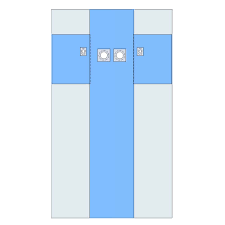
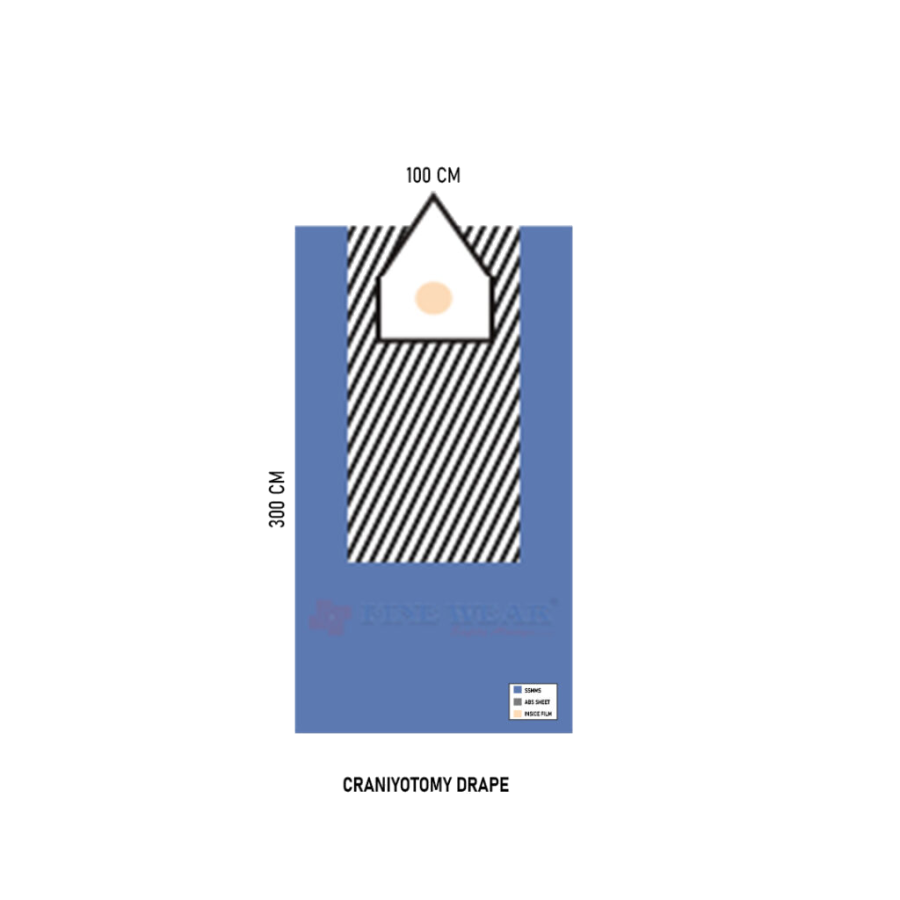
A laparotomy drape is a large one-piece sheet, often T-shaped so that it extends over the arm boards, with a rectangular fenestration positioned for a midline or transverse incision. Its character comes from what happens around that opening.
- Reinforcement. A wide absorbent and impervious panel surrounds the fenestration, because this area will be wet for the whole case and carries the weight of instruments and forearms.
- Adhesive fixation. The edge of the aperture is stuck to the skin, or an incise film bridges it, so that the drape cannot ride away from the wound as retractors are placed.
- Strength. Self-retaining retractors and their table-mounted frames press and drag on the drape. Tear and burst resistance matter here.
- Fluid handling. Absorbent surfaces hold moderate spills. For procedures with large-volume lavage, side pouches or a trough can be added.
- Line holders. Usually a pair, for suction and diathermy.
The laparoscopy drape: several ports, many cables
Laparoscopic ports are placed according to the procedure and the patient: one at or near the umbilicus for the camera, and others anywhere from the upper abdomen to the iliac fossae and flanks. The fenestration must take in all of them, along with any site where an extra port might be added, so it is generally wider and often longer than a laparotomy opening. Some drapes use a single large aperture with an adhesive border; others span it with incise film through which the ports are placed.
There is usually less free fluid than in an open case, so heavy absorbent reinforcement is less important than a smooth, impervious, low-lint surface. What matters more is order on the field:
- Multiple tube and cord holders. A laparoscopic case may have a camera cable, light cable, insufflation tubing, suction–irrigation tubing and one or more energy-device leads crossing the drape. Hook-and-loop holders on both sides keep them from sliding off and pulling instruments with them.
- Instrument pockets. Film pouches at the sides of the fenestration hold long instruments between uses, so they are not laid on the patient’s chest or left hanging over the edge.
- Tolerance of table tilt. Steep head-down or head-up positions are routine. The drape must stay fixed and pockets must be oriented so that instruments do not slide out.
- Camera and equipment covers. A sterile sleeve for the camera head and cable is often supplied with the drape or in the pack.
Side-by-side comparison
| Feature | Laparotomy drape | Laparoscopy drape |
|---|---|---|
| Fenestration | Rectangular, sized to one long incision | Larger area covering all likely port sites |
| Reinforcement | Wide, absorbent and impervious | Lighter; impervious surface more important than absorbency |
| External fluid | Often heavy | Usually limited; irrigation mostly suctioned from within |
| Cable and tube holders | One or two | Several, on both sides |
| Instrument pockets | Optional | Commonly included |
| Mechanical stress | High, from retractors | Lower, but sustained under table tilt |
| Associated covers | Mayo and back-table covers | As for open, plus camera sleeve |
| Perineal access | Seldom needed | Often needed in gynaecology and colorectal surgery |
Combined abdominal and perineal access
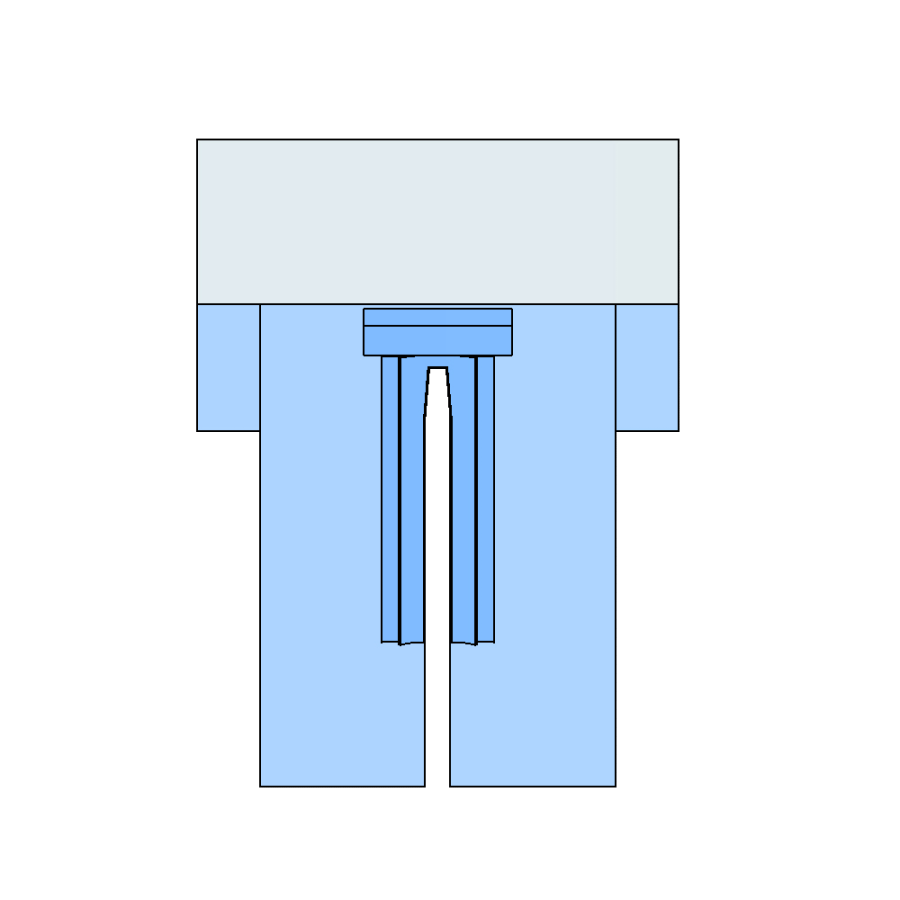
Many laparoscopic procedures are performed with the patient’s legs in supports: gynaecological surgery where a uterine manipulator is used, and colorectal resections where a stapler is passed from below. For these, a plain abdominal drape is not enough. A laparoscopy–lithotomy drape combines an abdominal fenestration with integrated leggings and a second, perineal opening, which is normally kept closed by a flap or cover until required. An under-buttock pouch may be added to catch fluid at the perineal end. Deciding whether your lists need this combined form, the abdominal-only form, or both is one of the first questions in specifying laparoscopic drapes.
Planning for conversion to open surgery
Any laparoscopic operation may need to be converted to an open one, sometimes quickly. Removing a drape and re-draping at that moment costs time and risks contamination, so the laparoscopic drape should be able to serve for an incision as it stands. Things to consider with the surgical team:
- Does the fenestration extend far enough for the incision that would be made on conversion?
- Is the material around it robust and impervious enough for an open case, even if it has less absorbent padding?
- Where specimen extraction or a hand-assist port involves a small planned incision, does that site fall inside the aperture?
- Are additional absorbent towels or a supplementary drape kept available to place around the wound if conversion occurs?
Some hospitals standardise on a single abdominal drape that is adequate for both approaches, accepting a compromise on each, in order to carry one stock line. Others keep two. Neither is wrong; it depends on case mix and on how often conversion occurs in your unit.
What to ask your supplier
For either type, ask for a dimensioned drawing and sterile samples for trial. Then check:
- the fenestration size and its distance from the head end, against your usual port map or incision;
- the number and position of tube holders and pockets;
- whether leggings and a perineal opening are integrated, and how the perineal cover is released;
- the construction and barrier evidence for the area around the fenestration;
- which covers and gowns can be packed with it.
Building the drape into a laparoscopy or laparotomy pack with the correct surgical gowns and table covers reduces the number of items opened per case. Shrisay Medical customises abdominal drapes by fenestration size, features and pack contents to the hospital’s requirement.
Frequently asked questions
Can a laparotomy drape be used for laparoscopy?
It can cover the patient, but its fenestration may not take in all port sites and it usually lacks the cable holders and instrument pockets that laparoscopy needs. The surgical team should decide under hospital protocol.
Why do laparoscopy drapes have so many tube holders?
Camera and light cables, insufflation tubing, suction–irrigation tubing and energy-device leads all cross the field. Holders stop them slipping off the drape and dragging instruments with them.
When is a laparoscopy drape with leggings needed?
When the patient is positioned with legs in supports and access from below is required, as in many gynaecological and colorectal laparoscopic procedures.