Key takeaways
- Drape manufacturers are converters: they turn bought-in rolls of non-woven and film into finished products by cutting, bonding, folding, packing and sterilising.
- Incoming inspection and lot recording at the start make later quality control and traceability possible.
- The fold pattern is a designed feature that determines whether a drape can be applied aseptically in sequence.
- A lot is released only after review of material, inspection, sealing and sterilisation records.
Drape manufacturers are known in the trade as converters. They do not usually make the non-woven fabric or the film; they buy these as roll goods and convert them into finished products by cutting, laminating, attaching components, folding, packing and sterilising. The account below follows the stages common across the industry. It is a general description, and the order of operations, the degree of automation and the checks applied differ from one factory and one product to the next.
Incoming material inspection
Everything starts with the materials: SMS-type non-woven or film laminate for the base sheet, absorbent laminate for reinforcement, polyethylene film for pouches, adhesive tapes, tube holders, and the pouches, wraps and cartons that will form the packaging. The fabric types are described in our guide to SMS, SMMS and SMMMS non-wovens.
Each delivery is held until it has been checked against the purchase specification. Typical checks include:
- supplier documents and roll labels, with lot numbers recorded for traceability;
- basis weight, roll width and colour;
- visual quality: holes, thin patches, contamination, creases and poor winding;
- functional properties relevant to the material, such as repellency or absorbency, by in-house test or supplier certificate, with periodic independent testing;
Accepted material is released to stores under its lot identity; rejected material is segregated. From this point the remaining steps normally take place in a controlled area.
Spreading and cutting
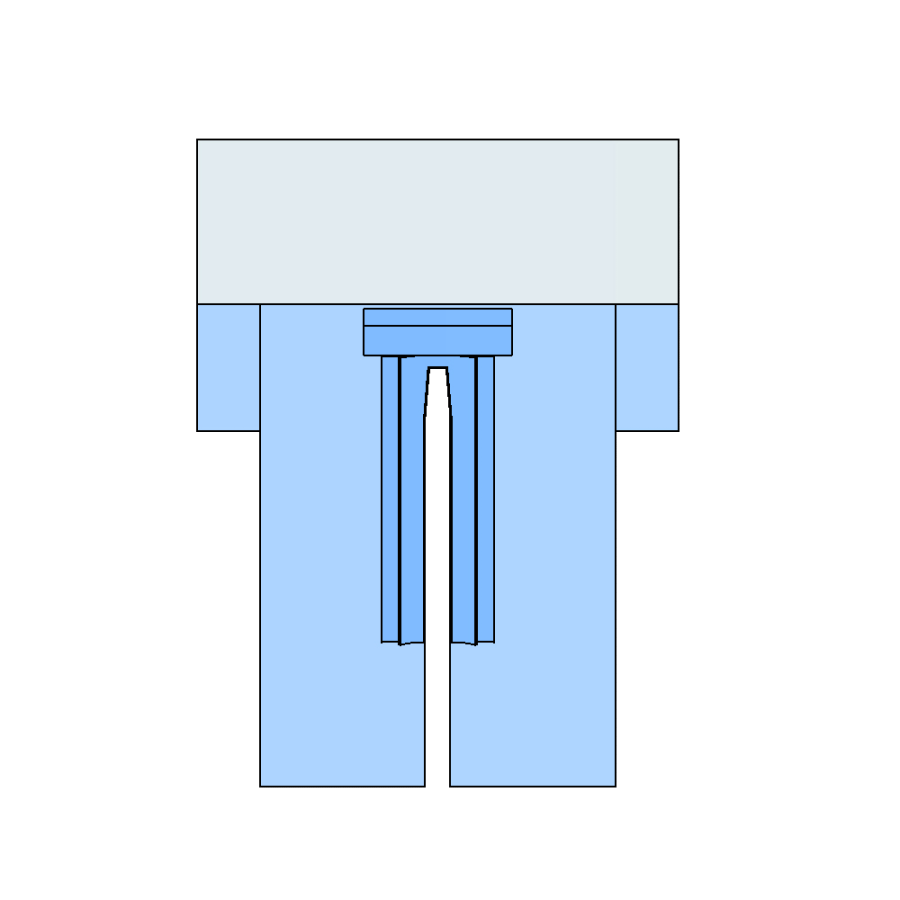
Rolls are unwound and either cut singly on a sheeting machine or laid up in multiple plies on a cutting table. The base sheet is cut to the finished length and width, and shaped products, such as U-drapes, split sheets and leggings, are cut to a pattern. Methods range from hand-guided straight knives and band knives to die presses and computer-controlled cutters.
Two things are watched closely. The first is dimensional accuracy, since a drape cut short cannot be corrected later. The second is the condition of the cut edge: a clean edge sheds few fibres, while a blunt blade tears the web and produces lint. Laminated material must be laid with the correct face uppermost so that the absorbent side ends up facing the surgical team.
Fenestration and reinforcement
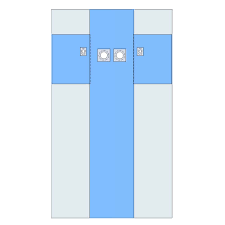
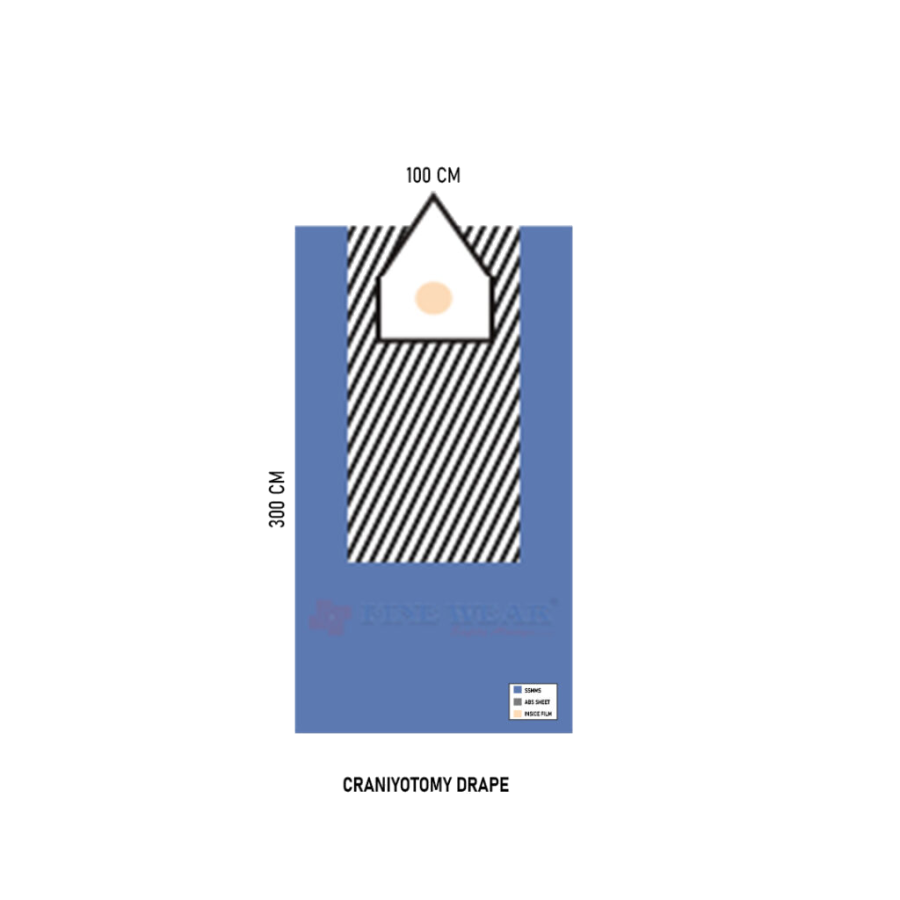
The fenestration, the opening through which the surgeon works, is die-cut or pattern-cut at a defined position in the base sheet. Its shape and size depend on the procedure, and both are frequent subjects of customisation, as explained in our article on fenestrated drapes and aperture types.
The reinforcement panel is cut separately and bonded over the area around the opening. Bonding is done with hot-melt adhesive applied in lines or a spray pattern, with double-sided adhesive tape, or by heat or ultrasonic welding, depending on the materials. The requirements are that the panel is centred on the fenestration, lies flat without wrinkles and is bonded continuously enough that fluid cannot track between the layers or the panel lift in use.
Adhesive strips, pouches and other attachments
The drape now receives its functional components. Which ones are fitted depends entirely on the design.
- Skin-contact adhesive. A medical-grade pressure-sensitive adhesive strip with a release liner is applied around or beside the fenestration, or along the edge of a utility drape. Placement and full contact with the fabric are checked, and the liner should carry a finger-lift tab or overlap that a gloved hand can grip.
- Incise film. Where specified, a transparent adhesive film is fixed across the opening.
- Fluid collection pouch. A film pouch is formed by heat sealing, fitted with a mouldable strip at the rim and a drainage port where required, and attached below the fenestration. Its seals are examined for continuity, because a leaking pouch defeats its purpose.
- Tube and cable holders. Hook-and-loop tabs or perforated film tabs are attached at agreed positions.
- Printed markings. Direction arrows, head and foot indicators and fold marks are applied so that theatre staff can orient the drape without opening it out.
Folding
Folding looks like a packing detail and is in fact part of the design. A drape is folded so that it can be placed on the patient and opened out in a set sequence, with the user’s hands protected behind a cuff of sterile material and the fenestration landing where it is needed. A drape folded in the wrong order has to be shaken out and repositioned, which is precisely what aseptic technique tries to avoid.
Large drapes are usually fan-folded from the sides towards the centre and then from the ends, by hand on a folding table or with machine assistance. The fold pattern is documented, operators work to a diagram or a reference sample, and the folded size must suit the pouch.
Packing, sterilisation and release
Primary and secondary packing
The folded drape, is placed in its sterile barrier pack, typically a pouch with a peelable seal designed for aseptic opening. The pack is sealed on a validated sealing machine whose temperature, pressure and dwell time are controlled and recorded. Seals are inspected for width, continuity, wrinkles and trapped material. The label carries the product description, lot number, dates and the symbols required by ISO 15223-1. Sealed packs go into shelf boxes and shipper cartons in a fixed configuration, because the carton arrangement forms part of the validated sterilisation load.
Sterilisation
The packed cartons are sterilised by a validated terminal process. Ethylene oxide is the method most widely used for non-woven drapes because of its compatibility with polypropylene, film and adhesives; the process, and the aeration that follows it, are covered in our article on ethylene oxide sterilisation.
Release
Sterilised goods remain in quarantine until the batch record has been reviewed. The review confirms that materials were approved, in-process and final inspections were passed, the sterilisation cycle met its parameters, and labelling and quantities reconcile. Only then is the lot released for dispatch.
The stages at a glance
| Stage | What happens | Typical checks |
|---|---|---|
| Incoming inspection | Rolls, tapes and packaging verified against specification | Documents, basis weight, width, visual defects |
| Cutting | Base sheets and panels cut to size or pattern | Dimensions, edge quality, correct face |
| Fenestration and reinforcement | Opening cut; panel bonded around it | Position, alignment, bond integrity |
| Attachments | Adhesive strips, pouches, holders and markings added | Placement, adhesion, pouch seals |
| Folding | Drape folded in its documented sequence | Fold order, orientation, folded size |
| Packing | Pouch sealed and labelled; cartons packed | Seal integrity, label content, counts |
| Sterilisation and release | Validated cycle, then batch record review | Cycle records, indicators, final approval |
For a buyer, the practical value of knowing the sequence is in knowing where a specification takes effect. Dimensions and materials are fixed at cutting, the position of the opening at fenestration, usability at folding, and sterility at packing and sterilisation. A sample should be judged at each of those points, not only as a flat sheet.
Shrisay Medical manufactures surgical drapes in Faridabad, made to order in the size, fabric and pack configuration the buyer specifies.
Frequently asked questions
Do drape manufacturers make their own fabric?
Usually not. Most are converters that buy non-woven fabric, laminates and film as roll goods from specialist producers and turn them into finished drapes.
Why does the folding of a drape matter?
The fold sequence controls how the drape opens on the patient and where the fenestration lands, and it protects the user’s gloved hands. A poor fold forces extra handling of the sterile surface.
At what stage is a drape sterilised?
After it has been sealed in its sterile barrier pack and loaded into cartons. Terminal sterilisation of the finished pack is followed by a review of records before the lot is released.