Key takeaways
- A theatre trial answers usability questions that test reports cannot, and it should compare only products already acceptable on barrier and sterility.
- Involve scrub staff, surgeons, infection control and purchase, with one coordinator and a period or case count fixed in advance.
- A one-page scoring form covering opening, unfolding, adhesion, fluid control, comfort, fit and linting makes results comparable.
- Guard against familiarity, brand and price bias, and record the outcome with reasons and an approved reference sample.
Test reports establish that a drape or gown meets a barrier standard. They say very little about whether the gown rides up at the wrist, whether the drape opens the right way round, or whether the adhesive lets go halfway through a hip replacement. Those things are learned only in use. A theatre trial is the means of learning them in an organised way, so that a purchasing decision rests on recorded observations from several users and not on the opinion of whoever spoke last.
The approach below is a general framework. A hospital’s own product evaluation or value analysis procedure, where one exists, takes precedence, as does the judgement of the surgical team on any case.
Decide what the trial is for
A trial needs a question. It might be whether a proposed product is an acceptable replacement for the current one, which of two shortlisted products performs better, or whether a new design solves a known problem such as strike-through in arthroscopy. Writing the question down, together with the conditions for acceptance, before any sample is opened keeps the exercise honest.
It is also worth agreeing at the outset that the trial product must be at least equivalent to the current one in barrier performance and sterility assurance. A trial compares usability between acceptable products; it is not a way of finding out in theatre whether a product is safe.
Who to involve
- Scrub nurses and theatre technicians, who open, unfold and place the products and see most of their faults.
- Surgeons and assistants from each speciality affected, who wear the gowns and work through the fenestration.
- Circulating staff, who handle outer packaging and labels.
- Infection prevention and control, to confirm that the product is suitable for trial and to review the result.
- Purchase and stores, to coordinate samples, documents and cost information.
- The anaesthetic team where the product affects their access, for example drape screens or warming equipment.
One person should coordinate: distributing samples and forms, briefing users and collecting the results.
How many cases, and which
There is no fixed number that suits every trial. The aim is enough use to reveal faults that occur only occasionally and to hear from more than a handful of people. The plan should therefore cover:
- each procedure type the product is intended for, including the longest and wettest;
- several different surgeons and scrub staff, across shifts;
- the range of body sizes among gown wearers, so that every size is tried;
- a defined period or number of cases, fixed in advance and not extended or cut short because of early impressions.
The supplier should provide samples from normal production in the final packaging, sterilised as the supplied product will be. Hand-made prototypes are useful for agreeing a design but are not a fair basis for a purchasing trial. The current product should remain available in theatre throughout, so that the team can revert at once if a sample is unsatisfactory.
The scoring form
A one-page form completed immediately after each case is the core of the trial. It should take a minute or two to fill in. A simple numerical scale for each criterion, with the current product as the reference point, makes results comparable; a space for free comment captures what the scale misses.
| Criterion | What the user assesses | Applies to |
|---|---|---|
| Opening | Pack peels cleanly; contents present aseptically; label is clear | Drapes and gowns |
| Unfolding | Fold sequence is logical; markings are understood; no re-handling needed | Drapes and gowns |
| Adhesion | Liner releases easily; edges hold on prepared skin for the whole case; removal is gentle | Drapes |
| Fluid control | Absorbent zone and pouch contain fluid; no strike-through to patient or wearer | Drapes and gowns |
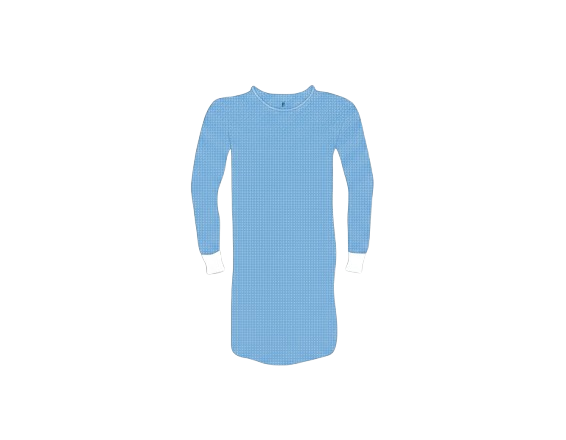
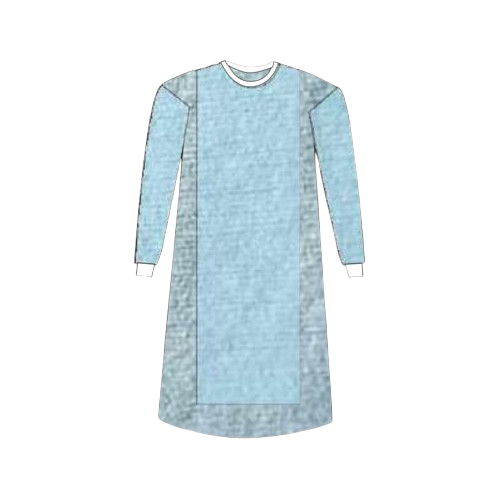
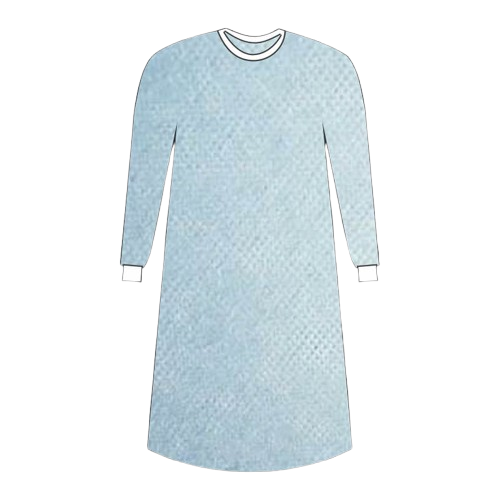
| Comfort | Heat build-up, weight and freedom of movement over the full duration | Gowns |
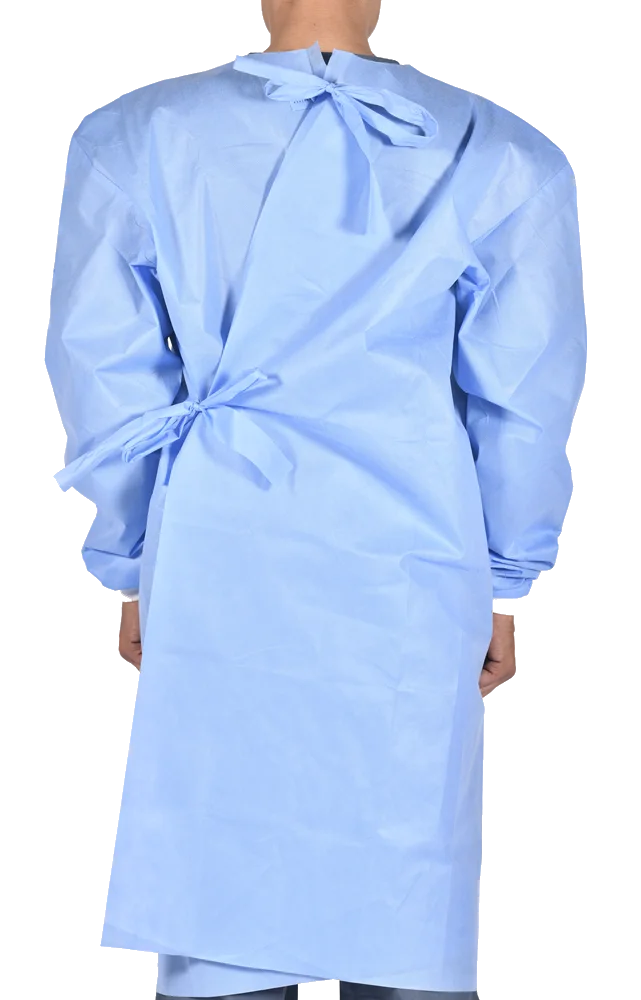
| Fit and coverage | Sleeve length, cuff grip, back closure; drape size and fenestration position | Drapes and gowns |
| Linting and integrity | No visible fibre shedding, tearing or seam failure, wet or dry | Drapes and gowns |
The form should also record the date, procedure, duration, the user’s role, the product code and the lot number. Without the lot number a reported fault cannot be traced by the manufacturer. Background on two of the criteria is available in our gown sizing and fit guide and our article on low-linting materials.
Documents to check in parallel
While theatre staff assess handling, the purchase and infection control teams can review the paperwork. Typical items are:
- the manufacturing licence and regulatory status under India’s Medical Devices Rules 2017, and BIS certification where the product falls under IS 17334:2019;
- quality management certification, commonly ISO 13485;
- test reports against the claimed barrier standard, with the laboratory, date and the component tested;
- sterilisation validation and packaging information, and the stated shelf life;
- a product specification sheet matching the sample actually supplied;
- the instructions for use and label content.
A wider checklist appears in our guide on how to evaluate a surgical drape manufacturer. A product that performs well in theatre but cannot be supported by documents should not proceed, and the reverse is equally true.
Avoiding bias
Trials of consumables are prone to a few predictable distortions.
- Familiarity. Staff are practised with the current product and will be slower with any new fold. A short briefing and a few practice openings before scoring begins reduce the effect.
- Brand and price. Knowing which product is cheaper, or which company supplied it, colours judgement. Where practicable, keep price out of the theatre and remove or cover branding.
- The loudest voice. Individual forms completed privately give a fairer picture than a discussion in the coffee room.
- Selective cases. Trying a product only on short, dry procedures flatters it. The difficult cases must be included.
- Supplier presence. A representative may brief staff on correct use, but should not complete forms or select the cases.
- Single incidents. One failure deserves investigation, including the lot number, before it is treated as typical.
Recording the outcome
At the end of the agreed period the coordinator collates the forms into a short report: the question asked, the number and type of cases, the number of respondents, scores by criterion, the comments and any incidents. The committee then records one of three outcomes: accept, reject, or accept subject to stated modifications, which is common with made-to-order products where a sleeve can be lengthened or a fenestration moved.
The reasons should be written down and the result shared with those who took part and with the supplier. Cost can be brought in at this stage on a per-procedure basis, as discussed in our article on cost per procedure. The approved sample, or its exact specification, should then be kept as the reference against which later deliveries are checked.
Shrisay Medical manufactures surgical gowns and drapes in Faridabad and can adjust size, fabric and pack configuration following trial feedback; to request samples for evaluation, please contact our team.
Frequently asked questions
How many cases should a drape or gown trial include?
There is no universal number. Plan enough cases to cover every intended procedure type, several surgeons and scrub staff and all gown sizes, and fix the number or period before the trial starts.
Should the supplier’s representative attend the trial?
A representative can usefully brief staff on correct opening and placement. Scoring and case selection should remain entirely with hospital staff to keep the results independent.
What if the trial product fails during a case?
The team reverts to the current product, which should remain available throughout. The incident is recorded with the lot number and reported to the supplier and the trial coordinator.