Key takeaways
- Unit price is one part of what a hospital spends on drapes and gowns for each operation; wastage, handling and disposal add to it.
- A cost-per-procedure comparison uses the hospital’s own data for each element rather than assumed figures.
- Matching the protection level to the procedure avoids both over-specifying routine cases and under-protecting high-fluid ones.
- Items opened and discarded unused are often the largest avoidable cost and can be measured by simple observation.
Purchase comparisons for surgical gowns and drapes usually come down to a column of unit prices. That is understandable, since unit price is the one number every supplier provides in the same form. It is also incomplete. Two gowns with similar prices can lead to different spending per operation once the hospital counts the gowns changed during a case, the packs opened and not used, the staff time taken to assemble a set-up, and the weight of waste sent for treatment. Cost per procedure is a way of bringing those elements into one figure so that options can be compared fairly.
What cost per procedure includes
The idea is to add up everything the hospital spends on draping and gowning for one operation of a given type. The main elements are shown below, with the source of data for each.
| Cost element | What it covers | Where the data comes from |
|---|---|---|
| Purchase price | All gowns, drapes and accessories used in the case, including taxes and freight | Quotations and invoices |
| Wastage | Items opened but not used; items discarded because of damage or expiry | Theatre observation, stock write-off records |
| Replacement in use | Gowns changed after strike-through or tearing; extra drapes added to correct a poor fit | Theatre observation, incident notes |
| Handling and set-up | Staff time to pick, check, open and lay out the items | Timed observation |
| Storage and ordering | Space occupied, number of stock codes managed, ordering effort | Stores records |
| Disposal | Segregation, collection and treatment of used items and packaging | Waste contractor charges and weights |
Not every element can be measured precisely, and it is not necessary to try. Even approximate figures for the two or three largest elements usually change the ranking between options.
A simple method for comparison
- Choose a specific procedure. Cost per procedure means little for surgery in general. Pick a high-volume operation, such as a caesarean section or a knee replacement.
- List what is actually used. Observe a number of cases and record every gown, drape and accessory opened, noting which were used, which were replaced and which were thrown away unused.
- Price the list for each option. Apply the quoted prices for the current product and for each alternative to the quantities observed.
- Add the measurable extras. Include unused items at full price, replacements, and disposal cost based on the weight or volume of waste per case.
- Note what cannot be priced. Comfort, ease of use and staff confidence in the barrier are legitimate factors even where they resist costing.
- Compare totals per case, then per year. Multiply by the annual number of procedures to see whether the difference justifies a change.
Use your own hospital’s figures throughout. Published or supplier-provided averages may not reflect your case mix, staff costs or waste charges.
Matching protection level to the procedure
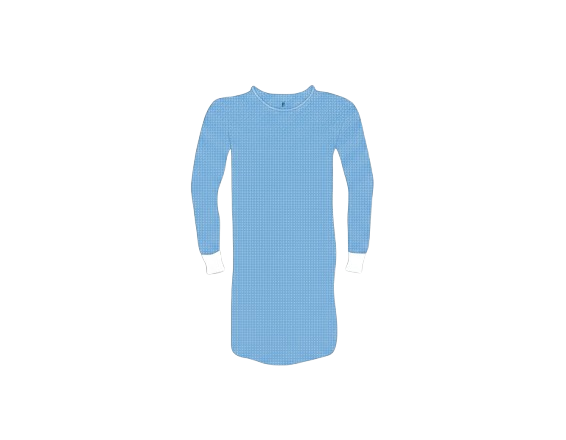
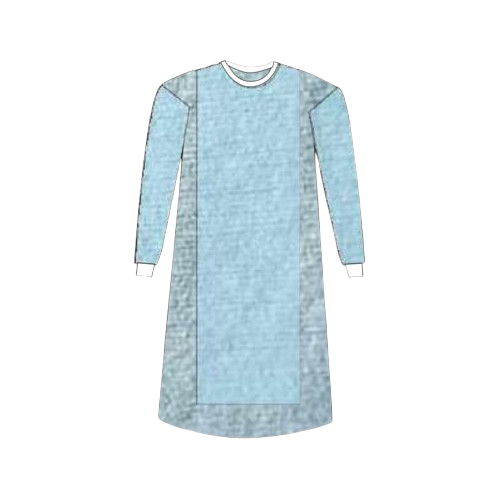
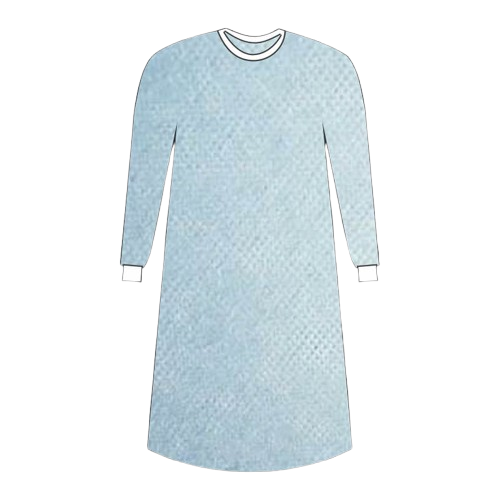
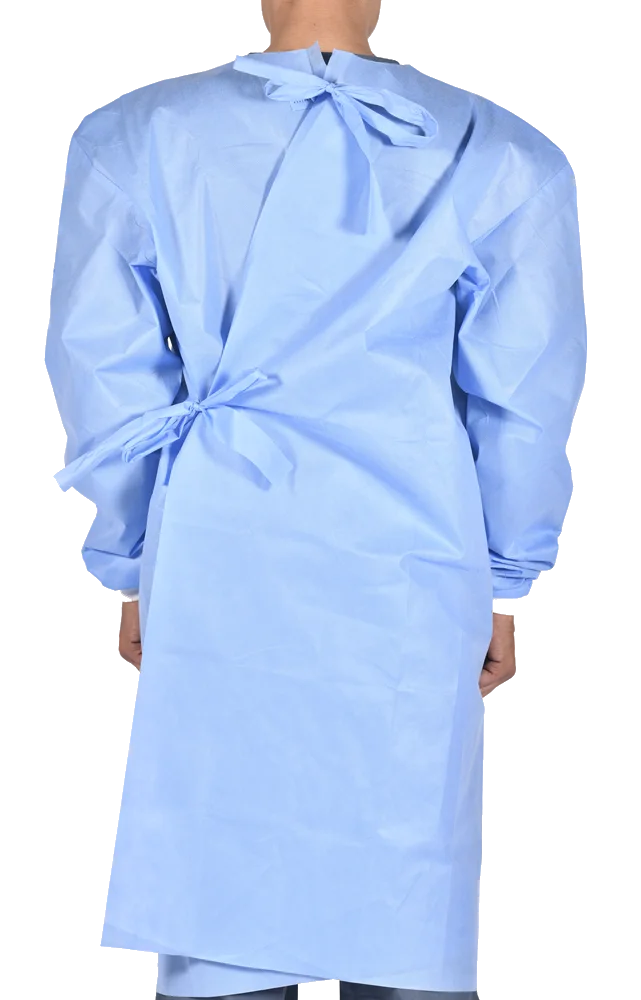
One of the clearest sources of unnecessary cost is using a single high-specification gown for everything. A reinforced gown offering the higher AAMI PB70 levels is appropriate where the team is exposed to large volumes of fluid or long operating times; for short procedures with little fluid, a standard gown of a lower level may be entirely adequate under the hospital’s risk assessment. The reverse error also carries a cost: a gown that is under-specified for a wet procedure may be changed mid-case, which doubles the gown cost for that team member and interrupts the operation.
A practical approach is to stock a small number of gown types and assign them to procedure groups in agreement with the infection control team. The differences between standard and reinforced designs are described on our surgical gowns page. The decision on which level suits which procedure belongs to the hospital’s own protocol.
Loose items compared with procedure packs
Buying each drape and gown separately gives the lowest visible price per item and complete flexibility. A procedure pack usually has a higher price than the sum of its cheapest equivalents bought loose, but it changes several other elements of the calculation:
- One pack is picked and opened instead of many separate packages, reducing set-up time
- One stock code replaces many, simplifying ordering and storage
- Less outer packaging is generated per case
- The risk of a missing item delaying the start of a case is reduced
Against this, a pack whose contents do not match practice builds waste into every case. The comparison therefore depends on how well the pack is specified. Typical configurations are shown in our kits and packs range.
Hidden costs that are easy to overlook
- Poor fit. A drape with a fenestration in the wrong place is supplemented with extra utility drapes and tape in every case.
- Inconsistent lots. Variation in size or adhesive performance leads to rejected cartons, complaints and emergency purchases at higher prices.
- Short shelf life at delivery. Stock that expires on the shelf is a direct loss.
- Waste weight. Used drapes and gowns contaminated with blood or body fluids are handled as biomedical waste under the applicable rules, and treatment is commonly charged by weight or by bed. Heavier or over-sized products add to this cost on every case.
- Supply interruptions. A supplier that cannot deliver on time forces substitutions that the team has not evaluated.
Disposable and reusable systems
Some hospitals also weigh single-use drapes and gowns against reusable textile systems. A fair comparison applies the same cost-per-procedure logic to both: for reusables, the cost of laundering, sterilisation, inspection, repair, replacement after a limited number of cycles and the management of that process; for single-use products, purchase, storage and disposal. The result depends heavily on local laundry and sterilisation capability and on waste treatment charges, so it should be worked out with local data rather than assumed in either direction.
What to ask your supplier
- Can you quote the same procedure as loose items and as a pack, so that we can compare?
- Which gown would you propose for each of our procedure groups, and what evidence supports its protection level?
- Can drape sizes and fenestrations be adjusted to remove the extras we currently add?
- What remaining shelf life will stock have on delivery?
- Can you supply samples for a trial on a defined number of cases?
Shrisay Medical manufactures surgical gowns, including a reinforced gown described as offering AAMI Level 3–4 protection, together with drapes and customised procedure packs, at its facility in Faridabad.
Frequently asked questions
What is cost per procedure in the context of drapes and gowns?
It is the total a hospital spends on draping and gowning for one operation of a given type, including purchase price, wastage, replacements, handling, storage and disposal, rather than the unit price of a single item.
Does a higher-priced gown always raise cost per procedure?
Not necessarily. If it prevents mid-case gown changes in high-fluid procedures it can lower the total, while using it for every minor procedure can raise it. The answer depends on matching the gown to the case.
How many cases should we observe to build a comparison?
There is no fixed number. Observe enough cases, across different surgeons and lists, to see a consistent pattern in what is opened, used and discarded.