Key takeaways
- A caesarean drape is designed around a large collection pouch because fluid arrives suddenly and in volume.
- Pouch capacity, a rim that stays open and a usable drain port decide whether the pouch works in practice.
- A calibrated pouch gives a volume reading that still has to be corrected for amniotic fluid and irrigation.
- Volumetric readings are normally combined with weighing of swabs under the hospital’s own protocol.
Few operations release as much fluid as quickly as a caesarean section. When the uterus is opened, amniotic fluid and blood arrive together within seconds, and the drape has either captured them or it has not. Obstetric drapes are therefore designed around fluid collection to a degree that general surgical drapes are not. This article looks at how caesarean and vaginal-delivery drapes are constructed, how their pouches work, and how collected volume fits into the measurement of blood loss.
Why obstetric draping is its own category
Several things set the obstetric theatre apart. The patient is usually awake under regional anaesthesia and, in many units, a birth partner is present, so comfort and a clear, calm field matter. The operation is frequently urgent, so the drape has to be opened and placed in very few movements. A newborn is delivered through the fenestration and handed away across the field. And the fluid that escapes is a mixture: liquor, blood and sometimes irrigation, which is a nuisance for anyone trying to know how much of it is blood.
Anatomy of a caesarean section drape
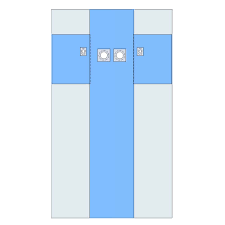
A typical caesarean drape is a single large sheet, commonly in a T or rectangular shape, that covers the patient from the anaesthetic screen to beyond the feet, with extensions over the arm boards. Its usual features are:
- Abdominal fenestration, sized for a low transverse incision and positioned low on the drape. It may be open with an adhesive surround, or spanned by an incise film, according to the surgeon’s preference.
- Impervious, absorbent reinforcement around the opening, since this area will be thoroughly wet.
- Fluid collection pouch surrounding the fenestration, or on both sides and the lower edge, formed from clear film.
- Mouldable rim: a soft wire or foam strip in the pouch edge so that it can be shaped to stand open.
- Drain ports at the lowest points of the pouch for suction tubing.
- Tube holders for suction and diathermy leads.
- Arm-board covers and a head-end section that reaches the anaesthetic screen.
Some designs include a clear panel or a flap at the head end that can be lowered so the mother can see the baby at delivery. If your unit offers this, the screen arrangement should be considered when the drape is specified.
How the pouch design affects performance
The pouch is the feature that most distinguishes one caesarean drape from another, and its weaknesses only show under load. Things to examine in a trial:
- Capacity and shape. The pouch has to accept a sudden surge without overflowing at the sides. A pouch that surrounds the fenestration catches fluid whichever way the table is tilted; side-only pouches depend more on patient position.
- Staying open. A pouch that lies flat against the drape collects nothing. The rim stiffener and the way the pouch is folded decide whether it opens by itself when the drape is unfolded.
- The seal to the patient. Fluid must run over the drape into the pouch and not underneath it. The adhesive around the fenestration is what achieves this, so it has to bond well to prepared skin.
- Drainage. Ports should accept the suction tubing in use, sit at the lowest point once the patient is positioned with lateral tilt, and be capped so they do not leak before connection.
- Seam strength. A full pouch is heavy. Welded seams must hold the weight without splitting.
- Visibility. Clear film lets the team see how much has collected and what it looks like.
Under-buttock drapes for vaginal delivery
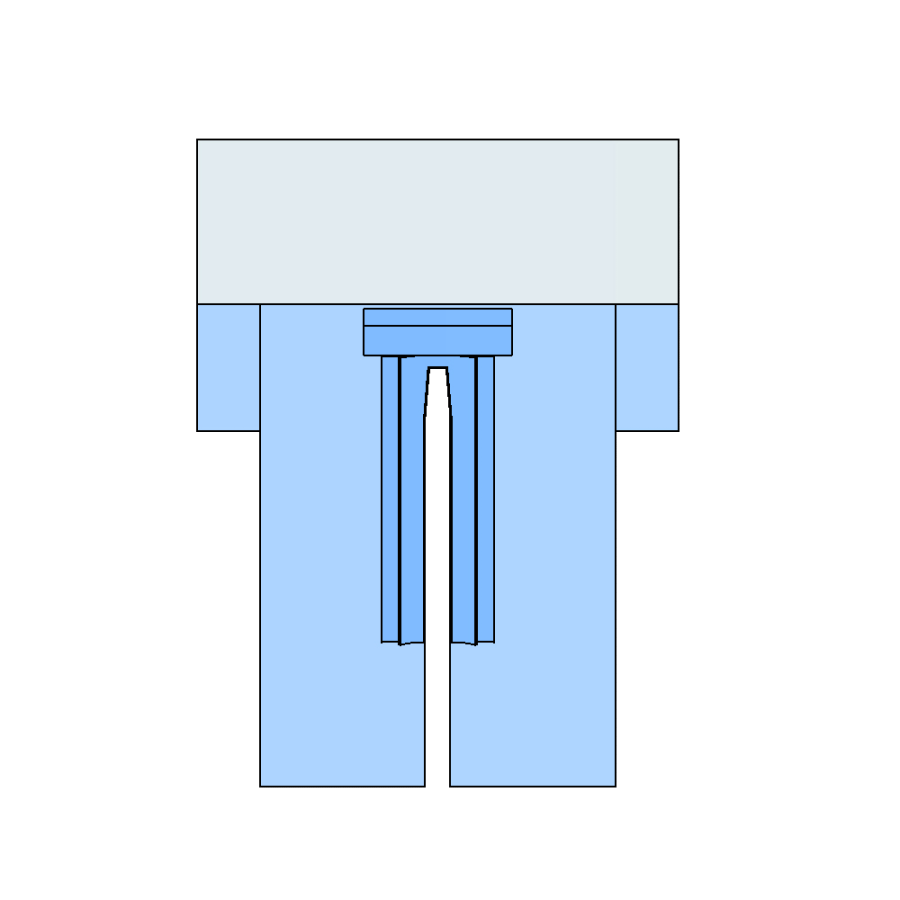
For vaginal birth, the equivalent product is the under-buttock drape. It is an impervious sheet placed beneath the mother’s buttocks, with a funnel-shaped or pocket-shaped pouch hanging below the perineum at the end of the bed. Fluid and blood run directly into it. The pouch may be plain or printed with a volume scale, and is often fitted with a drain port or a closure so the contents can be measured or emptied. Some designs have a filter or mesh to hold back clots. Under-buttock drapes are also used in gynaecological and urological procedures performed in the lithotomy position.
Since the pouch is intended partly for measurement, it is best positioned after the baby is delivered and the liquor has drained, where local practice allows, so that what is collected afterwards is mainly blood. Units differ on this, and local protocol decides.
Calibrated pouches and blood-loss measurement
Visual estimation of blood loss is widely acknowledged to be unreliable, and many maternity units now measure rather than estimate. A pouch printed with graduations supports the volumetric part of that process: the level of fluid is read directly against the scale. It is a simple, low-cost tool, and it has limits that users should understand.
| Method | How it works | Limitations |
|---|---|---|
| Visual estimation | Staff judge loss by eye | Subjective and inconsistent between observers |
| Volumetric (calibrated pouch or suction canister) | Collected fluid is read against a printed scale | Includes amniotic fluid and irrigation unless these are accounted for; misses blood on swabs and linen |
| Gravimetric | Swabs, pads and linen are weighed and the dry weight subtracted | Needs scales, known dry weights and staff time |
In practice the methods are combined. At caesarean section, a common approach is to note the volume in the suction canister or pouch after the liquor has been removed and before the placenta is delivered, so that later fluid can be attributed mainly to blood, and to add the weighed loss on swabs. The scale on a pouch is an aid to that calculation and not a clinical measuring instrument in its own right; readings are approximate and depend on the pouch hanging freely. Thresholds, timing and escalation belong to the unit’s clinical guidelines, not to the drape.
What to ask your supplier
- What is the pouch capacity, and is the pouch circumferential or on defined sides?
- Is the calibration printed in clear increments, and how was it established?
- Do the drain ports fit our suction tubing, and are they capped?
- Is the fenestration open or film-covered, and can its size and height be adjusted?
- Can the drape be packed with gowns, towels and a baby wrap as a caesarean set?
Shrisay Medical supplies caesarean and under-buttock drapes with pouch and fenestration details customised to the unit, individually or within delivery and caesarean packs; requirements can be sent through our enquiry page.
Frequently asked questions
What is the pouch on a caesarean drape for?
It collects the amniotic fluid and blood released when the uterus is opened, keeping the patient, staff and floor dry and allowing the fluid to be suctioned and its volume noted.
Does a calibrated drape measure blood loss accurately?
It gives an approximate volume of everything collected, which includes amniotic fluid and any irrigation. Hospitals normally correct for these and add the weighed loss on swabs under their own protocol.
What is an under-buttock drape?
It is an impervious sheet placed beneath the buttocks with a collection pouch hanging below the perineum. It is used for vaginal delivery and for procedures in the lithotomy position.