Key takeaways
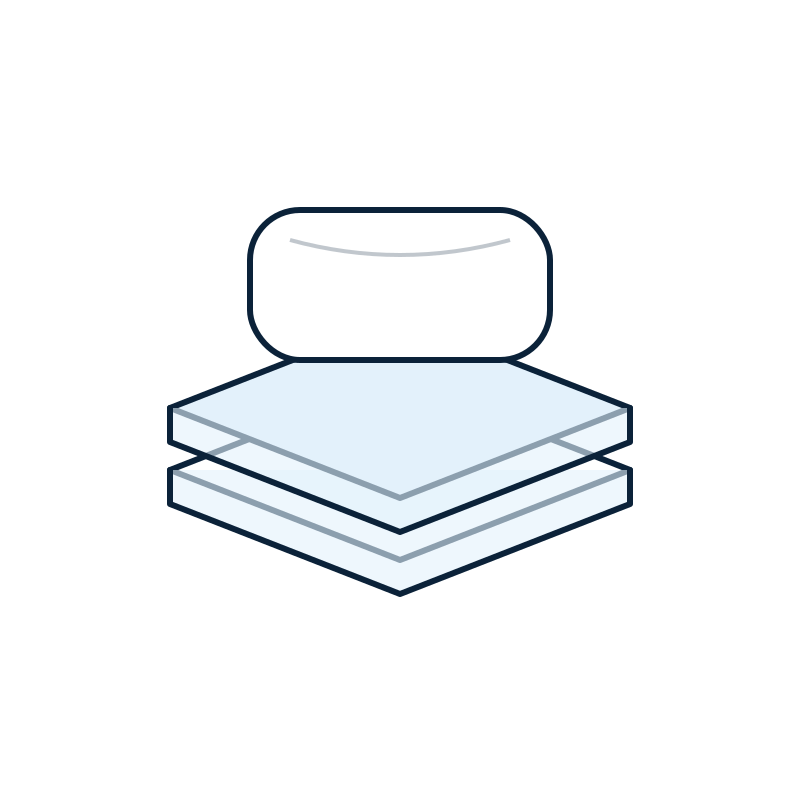
- A disposable underpad has three functional layers: a soft permeable top sheet, an absorbent core and a waterproof backing.
- Absorbency is determined mainly by the weight and composition of the core, so compare products on stated capacity and not on thickness alone.
- Choose size and grade by use: short procedures need less capacity than overnight use.
- Underpads are single-use items and are changed when soiled, with disposal following hospital or local municipal rules.
The disposable underpad is one of the most widely used consumables in healthcare and one of the least discussed. It is placed under a patient to protect the mattress and linen from urine, blood, wound exudate and other fluids, and to keep the patient’s skin as dry as the situation allows. It is found on maternity beds, examination couches, wheelchairs, dialysis chairs and in the homes of people being cared for by their families. Because it is bought in volume, small differences in specification add up, in both cost and performance.
What an underpad does, and does not do
An underpad is a surface protector. It absorbs fluid that reaches it and prevents that fluid from passing through to the bed. It is not a sterile field item unless supplied sterile for a specific purpose, and it is not a wearable continence product: it does not move with the patient and will not contain a large void in someone who is turning or sitting up. In many care settings it is used together with body-worn products, or for short periods during examination, changing and procedures. Decisions about continence and skin care for an individual patient are for the nursing and medical team.
The layers, from top to bottom
- Top sheet. A soft, hydrophilic non-woven, typically polypropylene, that lies against the skin. It must let fluid through quickly and stay comfortable. A good top sheet feels dry to the touch soon after wetting because fluid has moved into the core beneath.
- Absorbent core. Usually fluff pulp, sometimes with tissue layers that help spread fluid across the pad, and in higher grades with superabsorbent polymer (SAP), which locks liquid into a gel so that it is not squeezed back out under the patient’s weight. The core is commonly embossed in a diamond or channel pattern to hold it in place and guide fluid outward from the point of wetting.
- Back sheet. A polyethylene film that forms the waterproof barrier. It is often coloured, and may be embossed or lightly textured to reduce slipping on the bed.
The edges are sealed on all four sides so that fluid does not escape sideways and the core does not shed. Some designs add adhesive strips on the back to anchor the pad, or extended wings that tuck under the mattress.
What determines absorbency
Three properties are worth separating, because a pad may be good at one and poor at another:
- Capacity: how much fluid the pad can hold in total. This depends chiefly on the weight of the core and whether it contains SAP.
- Speed of uptake: how quickly fluid passes through the top sheet. Slow uptake leads to run-off over the edge before the core is full.
- Retention: how well the fluid stays in the core under pressure. Poor retention means a damp surface against the skin, often called rewet.
Thickness is an unreliable guide. A thick, loosely filled pulp pad may hold less, and release more under pressure, than a thinner pad with superabsorbent. Ask suppliers for the core weight or stated absorbent capacity and the method used to measure it, then confirm with a simple trial on your own beds.
Sizes and grades
Underpads are made in a range of sizes; 60 × 60 cm and 60 × 90 cm are among the most commonly stocked, with smaller and larger formats available. Sizes and core weights are typically customisable. The table offers a general way of matching product to use.
| Setting or use | Typical requirement | What to look for |
|---|---|---|
| OPD examination, dressing changes | Short contact, small fluid volume | Smaller size, light core |
| Labour and maternity | Large volume over a short time | Large size, high capacity, fast uptake |
| Post-operative and general wards | Moderate volume, several hours | Medium to large size, good retention |
| Overnight and long-term bed care | Extended contact with skin | Core with superabsorbent, soft top sheet, secure positioning |
| Chairs, wheelchairs, dialysis | Seated pressure on the pad | Compact size, strong retention, non-slip back |
| Home care | Varies with the individual | Size to suit the bed, grade to suit duration, convenient pack size |
Using underpads well
- Place the pad with the absorbent side up and the film side down, flat and without creases, positioned under the area where fluid is expected.
- Check regularly and change the pad when it is soiled or wet. A saturated pad left in place defeats its purpose.
- Do not layer several pads in the hope of extending the interval between changes; choose a higher-capacity grade.
- Remove a used pad by folding it inward, wearing gloves where body fluids are present, and perform hand hygiene afterwards.
- Do not reuse, wash or cut underpads. Cutting opens the sealed edge and releases the core.
- Store packs in a clean, dry place away from direct sunlight.
Disposal
In a hospital or clinic, underpads soiled with blood or body fluids are handled as biomedical waste under the facility’s policy and the Bio-Medical Waste Management Rules. At home, used pads should be wrapped and disposed of in line with the local municipal body’s arrangements for sanitary waste. They must not be flushed or burned in the open.
What to ask your supplier
- What is the core made of, and does it contain superabsorbent?
- What is the stated absorbent capacity or core weight for each size?
- Are all four edges sealed?
- What sizes, colours and pack counts are available, and can they be customised or private-labelled?
- Is the product certified to the relevant Indian standard?
- Can samples be supplied for a ward trial?
Shrisay Medical manufactures disposable underpad sheets in Faridabad, and they are among its BIS certified products; the range is listed under disposable sheets and underpads, with registrations set out on the quality and certifications page. Institutional buyers on the Government e Marketplace can also source from the company as a GeM registered OEM. Sizes and pack configurations to requirement can be discussed through the contact page.
Frequently asked questions
What are the layers of a disposable underpad?
A typical underpad has a soft non-woven top sheet, an absorbent core of fluff pulp that may include superabsorbent polymer, and a waterproof polyethylene back sheet, sealed at the edges.
Is a thicker underpad always more absorbent?
No. Absorbency depends on the weight and composition of the core. A thinner pad containing superabsorbent can hold more and stay drier under pressure than a thicker pulp-only pad.
Can disposable underpads be reused?
No. They are single-use products and should be changed and discarded once soiled, following hospital waste policy or local municipal rules for sanitary waste.