Key takeaways
- Disposable apparel mainly controls what the wearer brings into a clean area and protects their clothing; most items are not high-level fluid barriers.
- Each item has a defined purpose: caps contain hair, shoe covers limit tracked-in soil, aprons protect the torso from splashes and lab coats cover everyday clothing.
- Material and weight should match the task, from light spunbond for caps to film for waterproof aprons.
- These items support, and do not replace, sterile surgical gowns and the hospital’s zoning and hygiene protocols.
In a hospital’s consumables budget, caps, shoe covers, aprons and disposable coats rarely attract much attention. They are inexpensive, bought in large numbers and often specified in a single line. Yet they are used by more people, more often, than any other item of protective clothing, and they are frequently used in the wrong place or expected to do something they were never designed for. A clear view of what each item is for helps stores stock the right things and helps staff use them properly.
What this category of apparel is for
Disposable apparel serves two broad purposes. The first is containment: reducing the hair, skin particles, lint and outdoor soil that people carry into controlled areas such as the operating theatre complex, the CSSD, intensive care or a clean manufacturing room. The second is clothing protection: keeping splashes and soiling off the wearer’s own clothes or uniform during routine tasks.
What most of these items are not is a tested liquid barrier for use at the surgical field. A lab coat is not a surgical gown, and a non-woven apron is not a substitute for a reinforced gown front. Where exposure to blood and body fluids is expected, hospital protocol will call for apparel with a stated barrier performance.
The items, one by one
Headwear
Bouffant caps are loose, elasticated caps that enclose all the hair, including long hair. Surgeon caps are closer fitting, usually with ties at the back, and suit shorter hair. Hoods extend the coverage to the ears, neck and beard. All are normally made from light, breathable spunbond non-woven, since the task is to contain hair and shed skin, not to resist fluid. The key checks are coverage and comfort over several hours.
Shoe covers
Shoe covers go over outdoor or ward footwear to limit what is tracked into a clean area, and they protect footwear from floor contamination. They are made from non-woven for general use or from polyethylene film where floors are wet, and some have an anti-skid pattern on the sole. Elastic at the opening holds them on. Policies on shoe covers vary considerably between hospitals, with many preferring dedicated theatre footwear, so follow local protocol.
Aprons
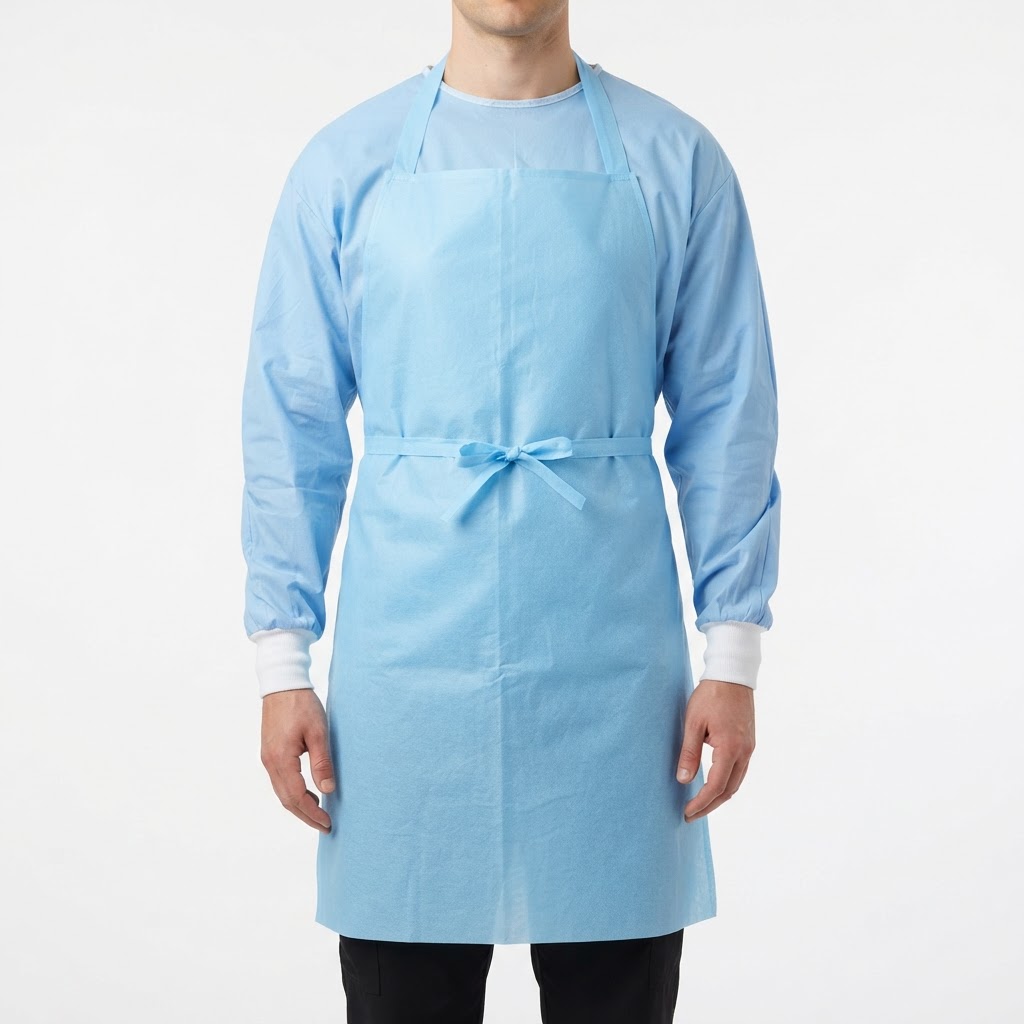
Aprons protect the front of the torso. Thin polyethylene aprons are waterproof and are widely used on wards for patient care tasks and under surgical gowns in wet procedures. Non-woven aprons are more comfortable for longer wear and are used for lighter splash protection and general hygiene. An apron leaves the arms and back uncovered, which is a limitation to keep in mind when choosing between an apron and a gown.
Lab coats
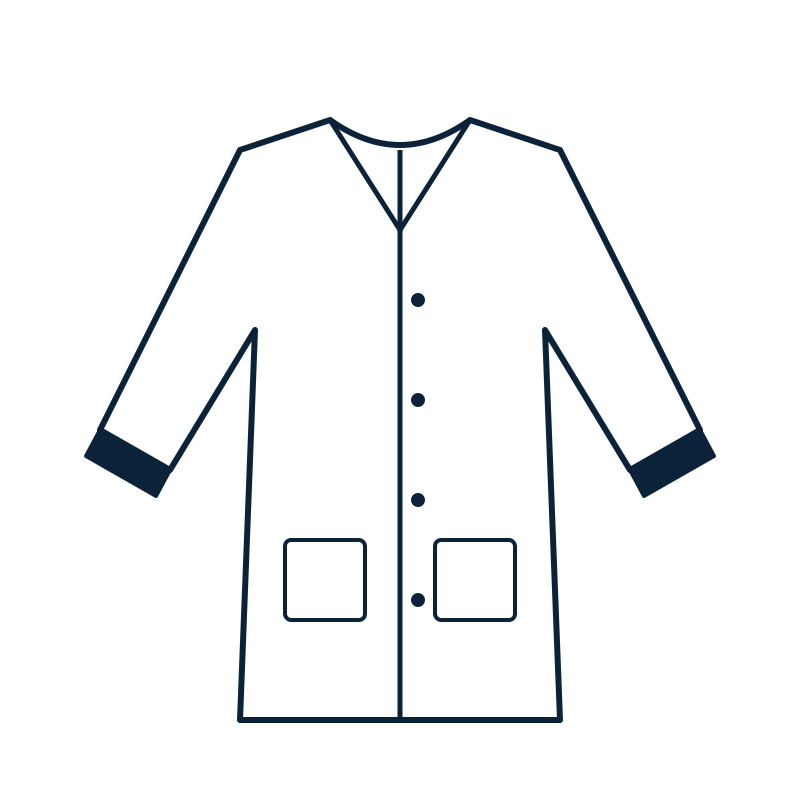
Disposable lab coats, sometimes called visitor coats, are long-sleeved, front-opening coats with snaps or hook-and-loop closure and elastic or knitted cuffs. They cover everyday clothing in laboratories, pharmacies, clean rooms and food or pharmaceutical production, and are issued to visitors and engineers entering restricted areas. They are a hygiene garment and are not designed as protection against significant chemical or biological splash unless specifically tested for it.
Summary: item, material and place
| Item | Typical material | Main purpose | Typical areas of use |
|---|---|---|---|
| Bouffant cap | Light spunbond non-woven with elastic | Full hair containment | OT complex, CSSD, ICU, kitchens, clean rooms |
| Surgeon cap | Spunbond or SMS non-woven with ties | Hair containment for short hair | Operating theatre |
| Shoe cover | Non-woven or PE film, elastic opening | Limits tracked-in soil; protects footwear | Entry to OT, ICU, laboratories, visitor areas |
| PE apron | Polyethylene film | Waterproof torso protection | Wards, procedure rooms, under gowns in wet cases |
| Non-woven apron | Spunbond or SMS non-woven | Light splash protection and hygiene | Wards, examination rooms, support services |
| Lab coat | Spunbond or SMS non-woven; weight to requirement | Covers personal clothing | Laboratories, pharmacies, visitors, clean rooms |
The materials listed are typical configurations. Fabric, weight, colour and dimensions are normally customisable to the buyer’s requirement.
Matching material and weight to the task
The right material follows from three questions: how long will it be worn, is liquid involved, and how much physical wear will it take?
- Short wear, no liquid. The lightest spunbond is adequate and coolest. Caps and visitor coats fall into this group.
- Longer wear, occasional splashes. A somewhat heavier non-woven or an SMS fabric gives more opacity, durability and some fluid resistance.
- Wet work. Film is the appropriate choice, accepting that it does not breathe. This is why wet-area aprons and shoe covers are polyethylene.
For lab coats, weight is the main variable. Shrisay Medical offers them in 25 GSM and 35 GSM: the lighter coat suits brief visits and warm environments, while the heavier one is more opaque and holds up better over a working shift. Neither should be taken as a statement of barrier performance; GSM describes weight only.
Where each belongs in a zoned hospital
Operating theatre suites are commonly divided into zones with increasing restrictions, from an outer unrestricted area through a semi-restricted corridor to the restricted theatre itself. The names and rules differ between hospitals, but apparel requirements generally step up as one moves inward.
- Entry and changing area: outdoor clothing is exchanged for scrub attire; visitors may be given a coat, cap and shoe covers.
- Semi-restricted areas: scrub suit, cap or hood covering all hair, and designated footwear or shoe covers.
- Restricted theatre: as above, with masks; scrubbed staff add sterile gloves and a sterile surgical gown.
Apparel worn inside the theatre complex should not be worn outside it, and soiled or wet items should be changed. Used items are discarded according to the hospital’s waste segregation policy. In every case the facility’s own infection control protocol is the authority.
A buying checklist for apparel
Because these items are bought in volume, small specification details have a large effect on cost and on daily use. Confirm the following with any supplier:
- material, weight and colour for each item;
- sizes offered, particularly for coats and shoe covers, which need to fit a wide range of people;
- closure type and cuff style on coats;
- sterile or non-sterile supply, as most of these items are non-sterile;
- pack quantities and whether dispensers or dispenser-friendly packing are available;
- any certification that applies to the specific product.
Shrisay Medical manufactures a range of accessories and apparel in Faridabad, including BIS certified non-woven aprons, and is a GeM registered OEM; for sizes, weights or private-label packing, please send us your requirement.
Frequently asked questions
Can a disposable lab coat be used instead of a surgical gown?
No. A lab coat is a non-sterile hygiene garment that covers personal clothing. Surgical procedures require a sterile surgical gown with tested barrier performance.
What is the difference between a 25 GSM and a 35 GSM lab coat?
The 35 GSM coat uses heavier fabric, so it is more opaque and durable, while the 25 GSM coat is lighter and cooler for short wear. GSM indicates fabric weight, not barrier level.
Are shoe covers required in every operating theatre?
Practice varies. Many hospitals use dedicated theatre footwear instead, so the facility’s infection control protocol should be followed.