Key takeaways
- Specify performance by reference to a recognised standard and level, not by fabric weight alone.
- Give dimensions with tolerances and define features such as fenestrations and reinforcement in measurable terms.
- State the evidence required with the bid and the tests that will be applied on delivery, so acceptance is not left to opinion.
- Avoid brand-specific wording and contradictory clauses, which invite representations and delay awards.
A tender for surgical drapes and gowns often runs into difficulty well after the award. The delivered gown feels thinner than the sample, the fenestration is a different size, the bidder points out that the specification did not say otherwise, and the hospital finds it has little basis for rejection. The remedy lies in the drafting. A specification that states what is required in measurable terms, what proof must accompany the bid, and how deliveries will be checked gives both sides the same reference point. This article sets out the clauses that do most to prevent disputes. It is general guidance; public buyers should apply it within their own procurement rules and seek legal advice on contract conditions.
Describe performance, not only material
The most common weakness is a line such as “SMS gown, 40 GSM”. Fabric weight is easy to check but it does not define barrier performance: two fabrics of the same weight can behave very differently depending on their construction and treatment. A stronger clause names a standard and the level required, and uses fabric weight only as a supporting description.
- For gowns, state the standard and classification, for example the performance level under AAMI PB70, or standard or high performance under EN 13795, or the corresponding requirement of IS 17334:2019. State whether the gown is to be reinforced and where.
- For drapes, state the standard and whether standard or high performance is needed, and identify the critical area around the incision where the higher requirement applies.
- Allow equivalents deliberately. If more than one standard is acceptable, say so and name them. An open-ended “or equivalent” without definition is a frequent cause of argument.
Check the current edition of each standard before citing it, and cite it consistently throughout the document.
Dimensions, tolerances and features
Every dimension needs a tolerance, because no converted non-woven product is cut to the exact millimetre. Without one, any deviation can be argued either way.
- Give length and width for each drape, and size designations with key measurements for gowns
- State a tolerance, as a percentage or a fixed figure, agreed with what manufacturers can normally hold
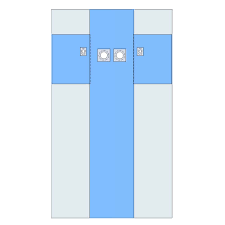
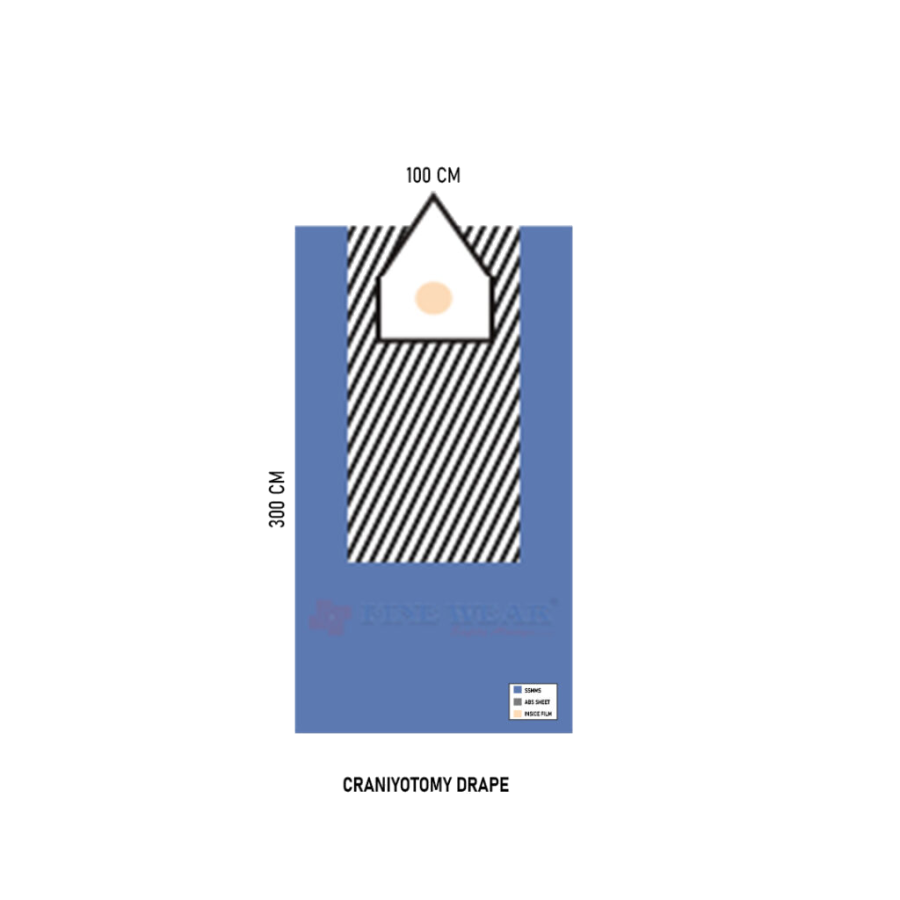
- For fenestrated drapes, give the opening size, shape and position measured from a named edge
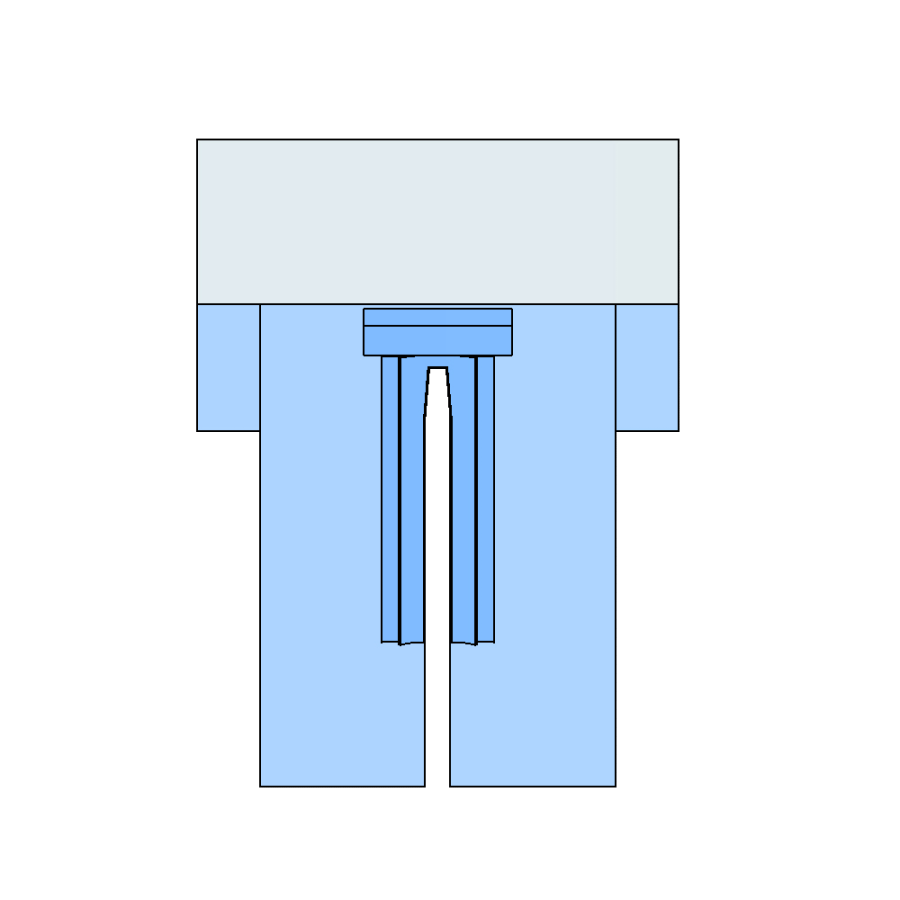
- Describe reinforcement by its size and location, adhesive strips by their length and position, and fluid pouches by their capacity or dimensions and whether a drain port is required
- For gowns, state the cuff type, neck closure, tie arrangement and whether a hand towel is included
A simple dimensioned sketch attached to the specification removes more ambiguity than a paragraph of description. The options commonly available are shown on our surgical drapes and surgical gowns pages.
Sterility, packaging, labelling and shelf life
These clauses are short but often omitted.
- Sterility. State that the product is to be supplied sterile, the acceptable sterilisation method or methods, and that the process is to be validated to the relevant standard, such as ISO 11135 for ethylene oxide.
- Packaging. Require a sterile barrier pack that can be opened aseptically, and state the number of units per inner box and per carton if that matters for your stores.
- Labelling. List what the label must show: product name and size, lot number, manufacturing and expiry dates, sterilisation method, manufacturer’s name and address and licence details as required by the applicable rules.
- Shelf life. State the minimum total shelf life and the minimum proportion remaining at the time of delivery.
Evidence to be submitted with the bid
State exactly which documents are mandatory, so that evaluation is a matter of checking rather than judgement.
| Requirement | Vague wording to avoid | Clearer wording |
|---|---|---|
| Barrier performance | “Good quality fluid-resistant fabric” | Named standard and level, with a test report from an accredited laboratory identifying the product offered |
| Manufacturer status | “Reputed manufacturer” | Valid manufacturing licence or registration for the item; authorisation letter if the bidder is not the manufacturer |
| Quality system | “ISO certified” | Current certificate naming the standard, the site and a scope that covers the product |
| Sterilisation | “Properly sterilised” | Declaration of method and validation, with a specimen sterilisation certificate |
| Size | “Standard size” | Dimensions with tolerance, and a drawing where features are involved |
Where certificates are requested, ask for those that relate to the product and are relevant to the purchase. Long lists of unrelated certifications narrow competition without improving quality.
Samples, inspection and acceptance
The specification should describe the whole chain from sample to delivered lot.
- Bid samples. State how many samples are required, in what packaging, and how they will be evaluated. Publish the evaluation criteria, such as dimensions, workmanship, ease of aseptic opening and user assessment, so that rejection of a sample can be explained.
- Reference sample. Provide that the approved sample of the successful bidder will be sealed and retained, and that supplies must conform to it as well as to the written specification.
- Inspection on delivery. Describe the sampling plan and the checks to be made: quantity, labelling, dimensions and visual defects.
- Independent testing. Reserve the right to send samples from any delivery to an accredited laboratory, state which tests may be applied, and state who bears the cost in the event of a pass and of a failure.
- Consequences. Define what happens when a lot fails: replacement within a stated period, and the further remedies available under the contract.
Drafting mistakes that lead to disputes
- Copying a brand’s catalogue. Specifications lifted from one manufacturer’s data sheet, including its exact dimensions or trade names, attract objections and may conflict with procurement rules on neutrality.
- Contradictory clauses. A requirement for a high barrier level combined with a very low fabric weight, for instance, may be impossible to satisfy.
- Mixing standards. Citing levels from one standard and test methods from another without stating how they relate.
- Undefined terms. Words such as “premium”, “soft” or “heavy duty” cannot be verified.
- No pre-bid clarification. A pre-bid meeting or query period lets manufacturers point out errors before bids are submitted.
- Ignoring the users. A specification written without theatre staff may be technically sound and still deliver a product that is awkward in use.
A short check before publication
- Is every requirement measurable or verifiable by a document?
- Does each dimension carry a tolerance?
- Are the standards cited in their current editions and used consistently?
- Are the mandatory bid documents listed in one place?
- Is the acceptance procedure, including testing and its cost, fully described?
Manufacturers are generally willing to comment on a draft specification from a technical standpoint. Shrisay Medical, a GeM-registered OEM manufacturing drapes and gowns in Faridabad, can be reached through our contact page.
Frequently asked questions
Should a tender specify fabric GSM for gowns and drapes?
Fabric weight can be included as a supporting description, but it should not be the only requirement. Barrier performance is better defined by a recognised standard and level, backed by test reports.
Can a tender name more than one standard?
Yes. Many buyers accept compliance with any of several named standards, such as IS 17334, EN 13795 or AAMI PB70. Name them explicitly and state the level required under each.
Why keep a sealed reference sample after award?
It gives both parties a physical standard for later deliveries, covering aspects such as workmanship and folding that are difficult to capture fully in a written specification.